Introduction
Tuna sushi rolls are a beloved classic for good reason—their silky texture, umami-rich flavor, and satisfying bite have made them a staple in sushi restaurants worldwide. But you can recreate the same oceanic, savory experience entirely from plants, at home, using ingredients found at any grocery store. Whether you're vegan, vegetarian, or simply looking to reduce mercury exposure and environmental impact, this plant-based version delivers on taste, texture, and authenticity.
This complete guide covers the science behind vegan tuna, a detailed ingredient list, step-by-step rolling instructions, and pro tips to nail it the first time. The recipe takes approximately 50 minutes total (including 30 minutes of marinating) and includes a spicy variation option.
By the end, you'll have restaurant-quality vegan tuna sushi rolls on your table.
TLDR
- Vegan "tuna" filling: blanched Roma tomatoes marinated in soy sauce, nori, sesame oil, mirin, and liquid smoke
- Seasoned sushi rice spread on nori and rolled tight with a bamboo mat
- Yields 4–6 rolls, sliced into 6–8 pieces each
- Takes about 50 minutes total, including a 30-minute tomato marinade
- Optional spicy variation adds sriracha and vegan mayo
What Is Vegan Tuna and Why Tomatoes Work So Well
Vegan tuna is a plant-based alternative that replicates raw tuna's color, mild oceanic flavor, and tender texture without any fish. That makes it a natural fit for vegans, vegetarians, and flexitarians alike — and unlike real tuna, it carries zero mercury risk.
Roma tomatoes are the ideal base for this transformation. When blanched, peeled, deseeded, and marinated, their fibrous flesh takes on a silky, slightly meaty texture that closely resembles raw tuna slices.
The science behind it is straightforward: tomatoes naturally accumulate high levels of free glutamic acid during ripening, which provides the same savory umami baseline found in raw fish. Paired with nori and liquid smoke, the result is a distinctly oceanic flavor that activates the same taste receptors as traditional tuna.
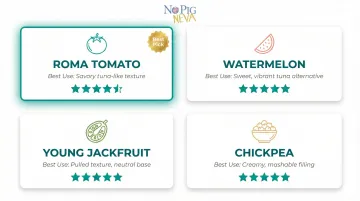
Other vegan tuna bases exist, but marinated tomato is the most accessible and reliable choice for sushi rolls specifically. Here's how the alternatives compare:
- Roma tomato — Best for raw sashimi-style rolls; silky texture after blanching and marinating
- Watermelon — Requires extensive roasting to shed excess water and mask sweetness
- Young jackfruit — Better suited to cooked "tuna salad" applications than raw preparations
- Chickpea — Works well mashed or seasoned, but lacks the clean sliceability needed for sushi
Ingredients You'll Need
Vegan Tuna Filling
Here's what goes into the filling and why each ingredient matters:
- Roma tomatoes – Texture base that mimics raw tuna when blanched and marinated
- Soy sauce or tamari – Delivers saltiness, umami, and osmotic dehydration; tamari is the gluten-free alternative
- Mirin – Adds subtle sweetness and creates a glossy finish
- Roasted sesame oil – Provides richness and nutty depth
- Liquid smoke – Recreates oceanic smokiness and cured flavor
- Finely cut nori – Contributes authentic sea flavor
Shortcut option: Ready-made plant-based vegan tuna — available at NoPigNeva's online store — can substitute the marinated tomato filling entirely. It's a solid time-saver that still delivers the full vegan-tuna flavor.
Sushi Rice and Roll Components
You'll also need:
- Short-grain Japanese sushi rice – Essential for sticky, well-formed rolls
- Rice vinegar – For seasoning the rice
- Sugar and salt – Balance the vinegar's acidity
- Full nori sheets – Seaweed wrappers
- Optional fillings – Thin-sliced cucumber and avocado add texture and variety
Special tools: A bamboo rolling mat (makisu) and a sharp knife are the only equipment required.
Step-by-Step: Making the Vegan Tuna Filling
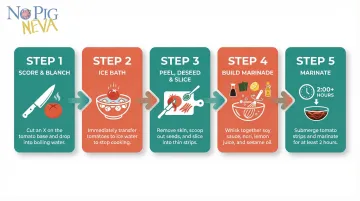
Step 1 — Prep the tomatoes
Score a shallow "X" on the bottom of each Roma tomato, then submerge them in boiling water for exactly 1–2 minutes until the skin begins to peel. Immediately transfer to an ice bath to stop cooking. This step is critical—overcooking creates mushy texture, while the ice bath preserves the firm, meaty bite.
Step 2 — Peel, deseed, and slice
Peel the cooled tomatoes, cut into quarters, and remove the inner seeds and watery flesh with a knife. Slice the firm outer flesh into 1/2-inch-wide strips resembling tuna sashimi cuts.
Step 3 — Build the marinade
Whisk together the marinade ingredients:
- 3 tablespoons soy sauce or tamari
- 1 tablespoon mirin
- 1 teaspoon roasted sesame oil
- 1/4 teaspoon liquid smoke
- 1 nori sheet, finely scissor-cut
Step 4 — Marinate
Coat tomato strips evenly in the marinade and rest for a minimum of 30 minutes (up to 1 hour for deeper flavor). The longer the marination, the more intensely "tuna-like" the flavor becomes. Salt in the marinade pulls moisture from the tomato flesh, which tightens the texture and builds that satisfying chew.
Step 5 — Optional bake for texture
For a firmer, more tuna-like bite, bake the marinated tomatoes at 350°F for 15–20 minutes. This step further reduces moisture and deepens color, though it's optional.
Step-by-Step: Assembling Your Vegan Tuna Sushi Roll
Step 1 — Season the sushi rice
Cook short-grain sushi rice according to package directions. While the rice is still warm, fold in a mixture of:
- 4 tablespoons rice vinegar
- 2 tablespoons sugar
- 1 teaspoon kosher salt
Use a slicing motion at a 45-degree angle to avoid mashing the grains. Let the rice cool to room temperature before spreading to avoid tearing nori.
Step 2 — Prepare the rolling station
Set up your workspace:
- Wrap the bamboo mat in plastic wrap to prevent sticking
- Cut a full nori sheet in half with scissors (for hosomaki-style thin rolls)
- Keep a small bowl of water nearby to wet fingers while handling rice
Step 3 — Spread rice and add filling
Place the half-sheet of nori shiny-side-down on the mat. Wet your fingers, then spread 1/2 to 2/3 cup of rice in a thin, even layer, leaving a 1/2-inch strip at the top edge uncovered.
Lay 2–3 marinated tomato strips in the center. Add optional cucumber or avocado strips alongside for a fuller roll.
Step 4 — Roll it tight
Lift the near edge of the mat, folding it over the filling while pressing gently with your fingertips. Roll forward with firm, even pressure. Wet the uncovered nori strip to seal the roll and press into shape.
Step 5 — Slice and garnish
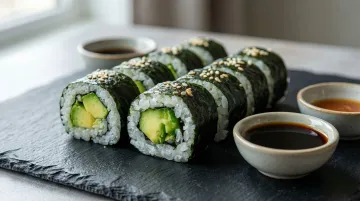
Use a damp, sharp knife in a back-and-forth sawing motion to cut the roll first in half, then each half into thirds for 6 pieces. Dip the blade in water between each cut to prevent tearing. Garnish with a dot of sriracha mayo for the spicy version, plus sesame seeds.
Pro Tips, Common Mistakes and Variations
Common mistakes to avoid
- Overcooked tomatoes — Blanch for 1–2 minutes maximum, then transfer immediately to an ice bath.
- Rice that's too wet or warm — Let it cool fully to room temperature and go easy on the vinegar mixture.
- Loose rolls that fall apart — Apply consistent inward pressure while rolling and wet the nori edge thoroughly so it seals.
Spicy vegan tuna roll variation
Mix drained marinated tomato strips with a spoonful of vegan sriracha and a drizzle of sesame oil before filling the roll. For extra heat, pipe a line of sriracha mayo (vegan mayo + sriracha) over the sliced pieces before serving.
Make-ahead and storage tips
Marinated tomato filling can be prepped up to 24 hours ahead and stored drained in the fridge. Assembled rolls are best consumed same-day but can be tightly wrapped in plastic and refrigerated for up to 2 days. Avoid freezing—rice texture degrades significantly.
Serving suggestions
Serve with traditional accompaniments:
- Pickled ginger – Cleanses the palate between pieces
- Wasabi paste – Mix wasabi powder with a few drops of water
- Tamari or soy sauce – For dipping
- Side dishes – Edamame or miso soup for a restaurant-style vegan sushi experience at home
Frequently Asked Questions
Is there such a thing as vegan tuna?
Yes, vegan tuna exists both as homemade versions (marinated tomatoes, watermelon, jackfruit) and as commercially available plant-based products sold by brands carried at vegan specialty stores like NoPigNeva.
What is vegan tuna made of?
The most popular DIY vegan tuna is made from blanched Roma tomatoes marinated in soy sauce, nori, sesame oil, mirin, and liquid smoke to mimic raw tuna's flavor and texture.
What is a vegan substitute for tuna?
Top substitutes include marinated tomatoes (best for sushi), chickpea tuna (great for sandwiches), young jackfruit, and ready-made store-bought vegan tuna products.
What is vegan spicy tuna made of?
Vegan spicy tuna uses the same marinated tomato base mixed with sriracha and vegan mayo (or sriracha alone), replicating the classic spicy tuna filling found in Japanese sushi restaurants.
What is plant-based sushi made of?
Plant-based sushi uses the same base ingredients as traditional sushi—seasoned short-grain rice, nori, and fresh vegetables—with plant-based proteins like marinated tomato, tofu, avocado, or cucumber replacing fish.
Is vegan sushi actually healthy?
Vegan sushi is a genuinely nutritious option—rice provides carbohydrates, nori delivers iodine and minerals, and vegetable fillings add fiber. It's also lower in mercury and saturated fat than conventional fish sushi, according to the FDA. Just watch your sodium intake, since soy sauce and nori both contribute meaningfully.