

Introduction
Picture this: you're at a Japanese restaurant, scanning the menu, and your eyes land on tempura. The dish looks promising — crispy battered vegetables, golden and light. No obvious meat. But before you order, a familiar question surfaces: Can I actually eat this?
Most vegans have been there. Tempura appears deceptively plant-friendly, but the answer is more nuanced than it seems. Traditional tempura often hides animal ingredients that even careful diners miss.
This guide breaks it all down: what tempura actually is, why the classic version isn't vegan, which non-vegan ingredients to watch for, and how to make or find a fully vegan version that still delivers that signature crispy texture.
What Is Tempura?
Tempura is a Japanese cooking technique—not a single dish—where ingredients are dipped in a light batter and deep-fried until crispy and golden. The method was introduced to Japan by Portuguese missionaries in the mid-16th century during the Nanban trade era, primarily through the port of Nagasaki.
The name likely derives from the Latin "Quatuor Tempora" (Ember Days), Catholic fasting periods when missionaries ate fried vegetables and seafood instead of meat.
How Traditional Tempura Evolved
The technique underwent significant transformation in Japan:
- Nagasaki tempura (early form): Used a thicker, seasoned batter fried in lard
- Edo-style tempura (1603-1868): Became popular street food in Tokyo with a much lighter batter made from flour, water, and egg, fried in vegetable oil and served with tentsuyu dipping sauce
The Traditional Batter
The classic tempura batter (called koromo) consists of three canonical ingredients:
- Low-gluten wheat flour
- Egg (often just the yolk)
- Ice-cold water
The essential technique is keeping everything ice-cold and mixing minimally—lumps are fine. This prevents gluten development, which would create a heavy, sticky coating instead of the light, lacy texture tempura is known for.
What Goes Inside
Tempura can be made with vegetables, seafood, or both. Common fillings include:
Seafood options (not vegan):
- Shrimp (ebi) — the most popular
- Fish like Japanese whiting, whitebait, and sweetfish
Vegetable options (potentially vegan):
- Sweet potato, kabocha pumpkin, eggplant
- Mushrooms (shiitake, enoki, maitake)
- Green beans, bell peppers, lotus root
- Zucchini, asparagus, broccoli
Whether tempura is vegan comes down to two things: what's inside and what's in the batter — and traditional recipes have animal products in both.
Is Traditional Tempura Vegan?
The direct answer: No, traditional tempura is generally NOT vegan.
The classic batter includes egg yolk, and the most popular fillings—shrimp and fish—are animal-derived. Vegans need to be cautious on both counts.
Why Egg Yolk Is a Problem
Traditional tempura batter uses egg yolk to achieve its signature light, crispy texture. Egg yolk provides:
- Binds the batter smoothly via lecithin's emulsifying properties
- Builds the delicate, lacy crust through proteins and fats
- Deepens the golden color during frying via the Maillard reaction
Without substitution, any tempura made with classic batter is not vegan-friendly, even if the filling is vegetable-based.
The Dipping Sauce Issue
The standard dipping sauce, tentsuyu, is made from:
- Dashi (fish or bonito stock)
- Mirin (sweet rice wine)
- Soy sauce
Traditional dashi combines kombu (dried kelp) and katsuobushi (dried, fermented, smoked bonito fish flakes). This makes even vegetable tempura non-vegan in most restaurant settings unless the sauce is specifically made vegan with kombu-only dashi.
Tempura Flakes: Another Hidden Source
Tempura flakes (tenkasu or agedama) are crispy batter bits used as toppings on ramen, soba, and rice bowls. Most conventional versions contain egg, making them non-vegan and a potential cross-contamination source worth watching for.
The Good News
Vegetable tempura CAN be vegan if both the batter and sauce are modified. With the right substitutions—covered throughout this guide—vegan tempura is entirely achievable at home and increasingly available in restaurants.
Hidden Non-Vegan Ingredients to Watch For
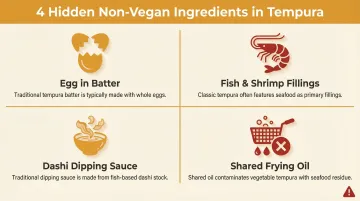
Four main non-vegan culprits lurk in tempura:
- Egg in the batter - Used for emulsification and texture
- Fish/shrimp fillings - The most popular tempura ingredients
- Dashi-based dipping sauce - Contains bonito fish flakes
- Shared frying oil - Cross-contamination from seafood tempura
Understanding Dashi
Dashi is one of the most commonly overlooked non-vegan ingredients in Japanese cooking. It appears in soups, sauces, and broths throughout the cuisine.
Traditional dashi combines two ingredients:
- Kombu (dried kelp seaweed) — vegan
- Katsuobushi (bonito fish flakes) — not vegan
Kombu-dashi — made with kombu alone — delivers the same umami depth without any fish.
Restaurant Cross-Contamination
Dashi is just one layer of the problem. Even when the ingredients themselves are plant-based, the cooking equipment can introduce animal products. It's common practice for restaurants offering "vegetable tempura" to use the same frying oil for both seafood and vegetable items. According to food allergy authorities like FARE (Food Allergy Research & Education), shared fryers pose significant cross-contact risks.
What to ask:
- Does the restaurant use separate fryers for vegetables?
- Is the oil dedicated to plant-based items only?
- Can they confirm no seafood has been fried in the same oil?
If the restaurant can't confirm a dedicated fryer, the safest move is to skip the tempura — no matter what's inside the batter.
How to Make Vegan Tempura at Home
Making tempura at home is the most reliable way to ensure every component is 100% vegan. The process is straightforward once you understand three key principles: cold batter, hot oil, and minimal mixing.
Egg Substitute Options
Aquafaba (chickpea brine):
- Most popular vegan substitute
- Mimics egg white's structure and binding
- Use 3 tablespoons per egg
- Whip until slightly frothy before adding to batter
Ice-cold sparkling water:
- Creates similarly light, crispy texture
- Carbonation introduces bubbles that expand during frying
- Results in porous, airy structure
- Combine with small amount of cornstarch for best results
Core Vegan Batter Recipe
You'll need:
- 1 cup rice flour (or mix of rice flour and cornstarch for gluten-free)
- 2 tablespoons cornstarch
- 1/4 teaspoon baking soda
- 1/4 teaspoon salt
- 1 cup ice-cold sparkling water or 3/4 cup aquafaba
- Ice bath under mixing bowl
Once your ingredients are measured out, technique makes all the difference:
- Keep everything as cold as possible
- Mix briefly with chopsticks — lumps are fine
- Do NOT overmix (develops gluten = heavy, chewy coating)
- Use batter immediately after mixing
Frying Technique
Start with the right oil and temperature:
- Use neutral oil: sunflower, canola, or vegetable
- Heat to 340-360°F (170-180°C)
- Fry vegetables at the lower end (340°F) to cook through without burning
Once your oil is ready, these tips keep every batch crisp:
- Work in small batches to maintain oil temperature
- Temperature drops cause soggy tempura
- Drain on wire rack, not paper towels (prevents steam buildup)
- Serve immediately for maximum crispness
Vegan Dipping Sauce (Tentsuyu)
Combine these in a small saucepan:
- 1/4 cup tamari or soy sauce
- 1/4 cup mirin (or rice wine vinegar)
- 1 tablespoon maple syrup
- 3/4 cup kombu dashi or vegetable stock
Heat gently until warmed through. This sauce can be made ahead and refrigerated. Serve with grated daikon radish if you have it on hand.
The Best Vegan Fillings for Tempura
Classic Vegetable Options
These vegetables work beautifully in tempura batter:
- Sweet potato - Slice thin (1/4 inch) for even cooking
- Zucchini/courgette - Cut into rounds or strips
- Eggplant/aubergine - Fan-shaped cuts are traditional
- Broccoli - Small florets work best
- Bell pepper - Cut into wide strips
- Green beans - Fry in small bunches
- Mushrooms - Enoki and shiitake are especially good
- Asparagus - Whole spears or halved lengthwise
- Kabocha pumpkin - Thin slices for sweetness
- Lotus root - Beautiful lacy appearance when sliced
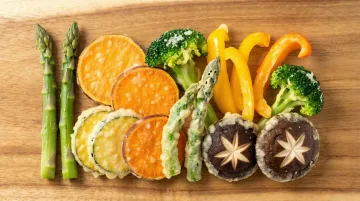
Pro tip: Dense vegetables like sweet potato benefit from thinner slicing to ensure they cook through before the batter burns.
Plant-Based Seafood Alternatives
For vegans who miss shrimp or fish tempura, today's plant-based seafood alternatives closely replicate the texture and bite of the real thing.
NoPigNeva carries options like Vegan Shrimp by Be Leaf — pre-cooked, frozen, and shaped to hold up well in tempura batter.
Other vegan seafood for tempura:
- Plant-based fish fillets (like Gardein Fishless Filets)
- Vegan scallops with dusted coating
- Vegan lobster pieces
Pat these alternatives dry before battering — excess moisture is the main reason plant-based seafood loses its crisp coating in the fryer.
Protein-Forward Options
For a more substantial meal:
- Firm tofu - Press and pat dry before battering
- Avocado - Sliced thick, provides creamy contrast
- Vegan cheese - Mozzarella-style works well for melty filling
Ordering Vegan Tempura at Restaurants
Questions to Ask
When dining out, ask specifically:
- "Does the tempura batter contain egg?" - Traditional koromo includes egg yolk
- "Is the dipping sauce made with fish stock?" - Standard tentsuyu uses dashi with bonito
- "Are vegetables fried in separate oil from seafood?" - Shared fryers create cross-contamination
Shared fryers are a real concern — the Food Allergy Research & Education (FARE) organization flags cross-contact from shared oil as a meaningful risk. Skip fried items at any restaurant that can't confirm dedicated equipment for vegetables.
Finding Vegan-Friendly Options
Japanese restaurants in major cities and vegan-friendly areas are increasingly able to accommodate these requests. Many now offer:
- Egg-free batter options
- Kombu-only dashi for sauces
- Separate vegetable fryers
A few habits make the search easier:
- Check menus online before you go — many restaurants now include vegan or allergen sections
- Dedicated vegan Japanese restaurants typically offer fully vegan tempura without the guesswork
- Plant-based sushi spots frequently carry tempura options as well
If the standard tentsuyu turns out to contain fish stock, plain soy sauce works as a straightforward, vegan-safe substitute.
Frequently Asked Questions
Is tempura usually vegan?
Traditional tempura is usually not vegan due to egg in the batter, seafood fillings, and fish-based dipping sauces. That said, egg-free batter and vegetable fillings make vegan versions easy to prepare at home and increasingly available at restaurants.
Does tempura have egg or dairy?
Traditional tempura batter contains egg yolk but typically no dairy. The egg can be replaced with aquafaba or ice-cold sparkling water for a fully vegan batter that maintains the light, crispy texture.
What is tempura made of?
Tempura consists of a light batter of flour, egg, and cold water coating vegetables or seafood, which is then deep-fried and served with a dipping sauce. Vegan versions swap out the egg and use plant-based fillings.
Why is tempura not vegan?
Three ingredients make traditional tempura non-vegan: egg yolk in the batter, animal-derived fillings like shrimp or fish, and dashi (fish stock) in the dipping sauce.
Is tempura flakes vegan?
Most conventional tempura flakes (tenkasu) are made with an egg-based batter and are therefore not vegan. Homemade tenkasu using a vegan batter recipe is an easy swap.