As a dietitian-backed resource for vegans, vegetarians, and flexitarians, this article will help you navigate misleading food labels, spot hidden animal ingredients, and make confident choices at the grocery store or sushi counter.
The Short Answer (TLDR)
- Imitation crab is not vegan — it's made from fish (surimi) and frequently contains egg whites
- It's also not vegetarian because fish are animals, not plants
- Most imitation crab is dairy-free, but it still contains animal-derived ingredients
- Plant-based crab alternatives made from hearts of palm, jackfruit, or konjac deliver similar texture and flavor with zero animal products
What Is Imitation Crab, Exactly?
Imitation crab — also sold as "surimi," "seafood sticks," or "kani" in sushi restaurants — is a processed seafood product engineered to mimic the look, texture, and taste of real crab meat. It is not a plant-based substitute. According to FDA Compliance Policy Guide Sec. 540.700, imitation crab is defined as a "processed and blended seafood product made primarily with fish protein."
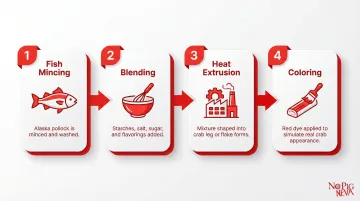
Manufacturing the product involves several steps:
- White-fleshed fish (Alaska pollock or Pacific whiting) is minced into a paste and washed to remove fat and pigments
- Starches, binders, flavorings, salt, and sugar are blended in
- The mixture is heat-processed and extruded into crab leg or flake shapes
- Red dye is applied to simulate the color of real crab
What Are the Main Ingredients in Imitation Crab?
A typical imitation crab ingredient panel includes:
- Fish paste (surimi) — usually Alaska pollock, Pacific whiting, or cod
- Starch — modified tapioca starch, potato starch, or wheat starch for binding
- Egg white powder — used as a structural binder during processing
- Sugar and sorbitol — added as cryoprotectants to improve frozen shelf life
- Salt and flavorings — including natural and artificial crab flavoring (often derived from real crab, lobster, or other shellfish)
- Colorings — paprika and carmine (cochineal extract), a red dye derived from crushed insects
Trans-Ocean Crab Classic Chunk Style, one of the most widely stocked brands, lists Alaska pollock, egg whites, natural and artificial flavor (extracts of blue crab, snow crab, and lobster), and carmine — confirming that these non-vegan ingredients show up across mainstream products, not just specialty versions.
From a nutritional standpoint, imitation crab is heavily processed and high in sodium. A standard 85g (3 oz) serving contains roughly 430–450 mg of sodium — nearly 20% of the daily value — while delivering only 6–6.5g of protein. Real crab provides 14–19g of protein per equivalent serving, more than double.
Why Imitation Crab Is Not Vegan (or Vegetarian)
Imitation crab contains fish — an animal product. The "imitation" label means it resembles crab but is nutritionally inferior, not that it's plant-based.
Under FDA labeling regulations (21 CFR 101.3), a food is labeled "imitation" if it substitutes for and resembles another food but is nutritionally inferior. In this case, surimi-based products have significantly less protein than real crab, so they must be called "imitation crabmeat."
Many people assume "imitation" or "fake" means plant-based — understandably so, since terms like "vegan" and "dairy-free" signal ingredient origin. "Imitation" is a regulatory term about nutritional content, not what the food is made from.
That distinction also matters for different diets:
- Vegetarians exclude all meat, fish, and poultry
- Pescatarians eat a primarily plant-based diet but include fish and shellfish
- Imitation crab fits a pescatarian diet but not a vegetarian or vegan one
The Egg White Problem
Beyond the fish base, most imitation crab products contain egg white powder as a binding agent during the extrusion process. This makes them non-vegan on two counts.
For example:
- Trans-Ocean Crab Classic explicitly lists egg whites in its ingredient panel
- Louis Kemp Crab Delights also includes egg whites
Even brands that omit egg whites still rely on fish as the primary ingredient, so no standard imitation crab product qualifies as vegan.
Is Imitation Crab at Least Dairy Free?
Yes, most imitation crab products are dairy-free because they contain fish and egg whites but no milk-derived ingredients. However, dairy-free does not mean vegan.
Someone with a dairy allergy or lactose intolerance can safely consume imitation crab, but a vegan cannot. This distinction is critical for anyone reading labels: "dairy-free" only addresses one category of animal products, not all of them.
For example, neither Trans-Ocean Crab Classic nor Louis Kemp Crab Delights list milk or dairy derivatives in their ingredient panels or allergen "Contains" statements. That said, always check individual product labels — formulations vary by brand, and some packages carry cross-contamination warnings for dairy.
How to Read Labels and Avoid Hidden Animal Ingredients
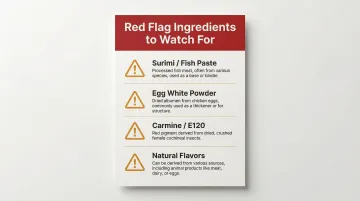
When scanning imitation crab or similar processed seafood products, watch for these ingredient red flags:
- Surimi, fish paste, Alaska pollock, Pacific whiting, cod — all indicate fish content
- Egg white, egg white powder — animal-derived binders
- Carmine, cochineal extract, E120 — red dye made from crushed insects
- Natural flavors — under FDA regulations (21 CFR 101.22), "natural flavor" can legally include extracts from meat, seafood, poultry, eggs, or dairy
Your safest shortcut: look for **certified vegan labels** such as the Vegan Action "Certified Vegan" logo or The Vegan Society Trademark. These third-party certifications confirm a product is free from all animal-derived ingredients and has not been tested on animals — no label-decoding required.
The Best Vegan Substitutes for Imitation Crab
If you're craving the flaky texture and mild flavor of crab without any animal products, these plant-based alternatives deliver.
Hearts of Palm
Hearts of palm are harvested from the inner core of palm trees and offer a naturally firm, flaky texture that closely mimics crab meat when shredded or chopped. They have a briny, slightly tangy flavor that absorbs seasoning beautifully, making them ideal for:
- Vegan crab cakes
- Crab-style salads
- Sushi rolls and poke bowls
Canned hearts of palm are low in calories, with about 2.5g of protein per 100g.
Jackfruit
Young, unripe jackfruit has a fibrous, stringy structure that visually and texturally resembles pulled crab or shredded seafood. It's highly versatile and works well in:
- Crab-style dips
- Seafood tacos
- Crab rangoon filling
Raw jackfruit provides approximately 1.7g of protein per 100g — lower than other options, so pair it with a protein-rich sauce or base.
Tofu-Based Options
Firm or extra-firm tofu, crumbled and seasoned with nori (seaweed), Old Bay seasoning, lemon juice, and a pinch of salt, can replicate the flavor profile of seafood-style crab dishes. Tofu is higher in protein than hearts of palm or jackfruit, making it a more nutritionally balanced choice.
Commercial Vegan Crab Products
If you'd rather skip the prep work, several brands now offer ready-to-eat vegan crab alternatives made from plant-based proteins and fibers:
- Sophie's Kitchen Vegan Crab Cakes : made with pea protein and konjac powder, available at Sprouts and specialty retailers
- Mind Blown Plant Based Crab Cakes : made with wheat gluten (hydrated wheat protein), available direct-to-consumer with frozen shipping
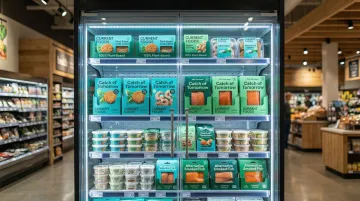
These products replicate the chewy, firm texture of surimi using konjac or wheat gluten, while pea protein or soy protein replaces the protein lost from fish.
For a wider selection of specialty options, NoPigNeva carries a curated range of vegan seafood-style products — including crab alternatives — with free nationwide shipping on orders over $99.99 and no membership required.
Frequently Asked Questions
Can a vegan eat imitation crab?
No, vegans cannot eat imitation crab because it is made from fish (surimi) and often contains egg whites — both animal-derived ingredients that are excluded from a vegan diet.
What is imitation crab made from?
Imitation crab is made primarily from surimi (ground white fish such as Alaska pollock), mixed with starch, egg whites, flavoring, and colorings to mimic the taste and texture of real crab meat.
Is imitation crab meat dairy free?
Yes, most imitation crab is dairy-free. However, dairy-free does not mean vegan — it still contains fish and eggs, making it off-limits for anyone following a vegan diet.
Do vegans eat crab meat?
No, vegans do not eat crab meat — real or imitation — because both contain animal products. Plant-based seafood alternatives are the go-to swap.
What is a good substitute for imitation crab meat?
Hearts of palm, jackfruit, and commercial vegan crab products made from konjac or soy are the top plant-based alternatives. They replicate the flaky texture and mild seafood flavor without any animal ingredients.