Introduction
Plant-based seafood is showing up everywhere—from grocery freezer aisles to upscale restaurant menus—but most people who reach for these products have no idea what's actually inside the package. Fair question: how do you actually make "shrimp" or "salmon" from plants?
For some people, the draw is ethics and environmental impact—avoiding overfishing, bycatch, and marine habitat destruction. For others, it's familiar seafood flavors and textures without the mercury, microplastics, or animal products.
Either way, knowing what's actually in these products matters. Not all plant-based seafood is created equal. Some deliver solid nutritional profiles with algal oil fortification, while others are highly processed with minimal protein and sky-high sodium.
This guide covers:
- The core ingredients that make plant-based seafood possible
- How food scientists mimic real seafood taste and texture
- How these products compare nutritionally to conventional fish
- The types of plant-based seafood available today
- How to shop smart for quality options
TLDR
- Plant-based seafood relies on protein bases like soy, pea protein, and wheat gluten, combined with seaweed, starches, and natural flavorings
- Seaweed and nori extracts deliver the oceanic, briny flavor that makes these products taste like the sea
- Most products lack omega-3s (EPA/DHA), vitamin B12, and vitamin D unless fortified with algal oil
- Product formats range from breaded fish fillets and shrimp to canned tuna, smoked salmon, and sushi-grade cuts
- Check for 100% vegan and Non-GMO certifications, and look for algal oil fortification on the label
What Is Plant-Based Seafood Made Of?
Plant-based seafood is a category of food products engineered entirely from plant-derived ingredients to replicate the appearance, taste, and texture of fish and shellfish. No animal products are involved — just carefully selected plant proteins, seaweed extracts, starches, and flavorings processed to mimic the real thing.
Protein Bases: The Structural Foundation
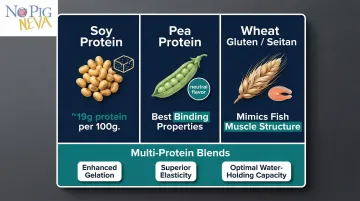
The protein source is what gives plant-based seafood its body and chewiness. The most commonly used proteins are:
- Soy protein — Provides a firm, dense texture with high protein content (around 19g per 100g in products like Good Catch tuna)
- Pea protein — Delivers a neutral flavor and good binding properties; often blended with other proteins for better texture
- Wheat gluten (seitan) — Creates a chewy, fibrous structure that mimics fish muscle when processed correctly
Research shows that multi-protein blends outperform single sources in high-moisture extrusion, the industrial process used to create meat-like textures. Combining proteins — such as soy with wheat gluten or pea with fava bean — enhances gelation, elasticity, and water-holding capacity, producing a more convincing seafood analog.
Some brands take this further with multi-legume blends. Good Catch, for example, uses a proprietary 6-legume mix — chickpeas, lentils, fava beans, navy beans, and others — to achieve the flaky texture of tuna and crab.
Seaweed and Algae: Flavor, Color, and Omega-3s
Seaweed (nori, kelp, dulse) and algae are added primarily as flavoring agents to deliver the characteristic briny, oceanic taste that makes plant-based seafood convincing. Seaweeds contain compounds like dimethyl sulfide and bromophenols, which are responsible for the "crustacean-like" aromas of the ocean. They also contribute color and minor nutritional value.
Algae plays a second, more critical role: marine microalgae (specifically Schizochytrium sp.) is the only vegan-compatible source of EPA and DHA omega-3 fatty acids. Only products specifically fortified with algal oil qualify as genuine omega-3 sources, not just any product containing seaweed for flavor.
Binders, Starches, Oils, and Additives
To hold everything together and create the right mouthfeel, manufacturers use:
Functional Binders:
- Methylcellulose gels when heated and melts when cold — the key to holding breaded fish fillets and crab cakes together during cooking
- Konjac glucomannan forms translucent, firm gels with high water-holding capacity, making it critical for vegan shrimp and sashimi-style cuts
Starches (tapioca, potato, corn): retain moisture, bind ingredients, and create a flaky or tender mouthfeel depending on the ratio used
Oils (sunflower, coconut): add richness and replicate the fatty mouthfeel of real seafood
Flavor Enhancers: seaweed extract, lemon, smoked paprika, vinegar, yeast extract, and natural colorants — beet juice for salmon pinkness, paprika extract for shrimp color
How Plant-Based Ingredients Recreate Seafood Taste and Texture
Conventional seafood has a distinctive flaky or springy texture and a briny, umami-rich flavor that are difficult to replicate. Food scientists combine advanced processing techniques with strategic ingredient pairings to replicate both — and the results are getting remarkably close.
Texture Replication
High-Moisture Extrusion Cooking (HMEC):
This industrial process operates at moisture levels above 50% and temperatures around 150–165°C. Intense mechanical shear forces plant proteins to unfold, cross-link, and realign into anisotropic (directionally aligned), laminar structures that closely mimic fish muscle. The result is a fibrous, layered texture that resembles the flakiness of real fish.
Konjac and Glucomannan Gels:
For products like vegan shrimp and sashimi-style cuts, konjac glucomannan forms translucent, firm, and thermally stable gels that mimic the "snap" of raw seafood. This is why konjac is the foundational ingredient for raw-format seafood analogs.
Whole-Food Substitutions:
Artisan-style plant-based seafood uses minimally processed vegetables:
- Trumpet mushrooms for scallops — Sliced into thick medallions, scored, and pan-seared
- Carrot-cured as lox — Thinly sliced, salt-baked, and marinated in liquid smoke and seaweed
- Eggplant as eel — Steamed, butterflied, pan-fried, and braised in sweet soy glaze
- Celery root smoked for whitefish — Smoked and canned in oil for a dense, flaky texture
Each works because its natural cellular structure mirrors marine tissue once heat is applied.
Flavor Mimicry
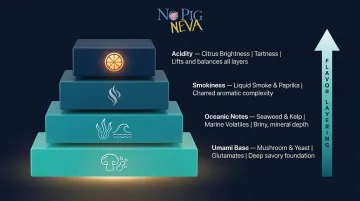
Achieving seafood flavor from plants requires a layered approach:
- Umami base: Yeast extracts, mushroom powders, and soy deliver foundational savory depth through glutamates
- Oceanic notes: Nori and seaweed extracts introduce marine volatiles — the compounds behind briny, ocean-like aromas
- Smokiness: Liquid smoke or smoked paprika replicates cooked or cured profiles (think smoked salmon)
- Acidity: Citric, acetic, or lactic acid adds the brightness and tartness of fresh fish
Emerging Technique: Microbial fermentation is being used by startups to develop complex seafood-like umami flavors and fibrous textures from scratch, without traditional plant protein bases.
Nutritional Profile: Plant-Based Seafood vs. Conventional Seafood
Plant-based seafood has real nutritional merits but also notable gaps when compared to conventional fish and shellfish. The two aren't nutritionally equivalent.
Nutritional Strengths
Plant-based seafood typically excels in these areas:
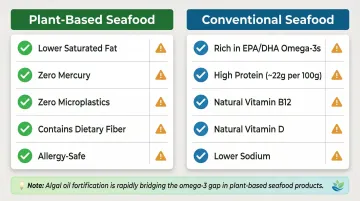
- Lower saturated fat than some conventional seafood preparations
- Zero mercury and microplastic contamination — conventional seafood carries well-documented risks of methylmercury bioaccumulation and increasing microplastic contamination
- Contains dietary fiber — Conventional seafood has zero fiber
- Suitable for seafood allergies — No shellfish or fish allergens
Nutritional Gaps to Be Aware Of
Omega-3 Fatty Acids (EPA/DHA):
The most significant gap is omega-3 fatty acids. Terrestrial plants only provide ALA (alpha-linolenic acid), which converts poorly to EPA and DHA in the human body. Marine microalgae is the only vegan-compatible source of preformed EPA and DHA.
Most plant-based seafood products are not fortified with algal oil. Only a handful of brands, like Good Catch and Oshi, explicitly fortify their products.
Protein Content:
Protein levels can be significantly lower, especially in konjac-based shrimp (around 4g per 100g compared to 22.8g in real shrimp).
Sodium:
Plant-based seafood is often higher in sodium due to seasoning and flavor masking (560mg per 100g in Good Catch tuna vs. 247mg in canned light tuna).
Vitamins B12 and D:
Conventional seafood is a primary dietary source of these vitamins, which are virtually absent in plant-based alternatives unless explicitly fortified.
Practical Solutions:
- Look for products fortified with algal oil, vitamin B12, and vitamin D
- Consider algal oil supplements if relying heavily on plant-based seafood
- Check labels for fortification details — seaweed flavoring alone does not provide meaningful omega-3s
From Shrimp to Sushi: Types of Plant-Based Seafood Available Today
The plant-based seafood aisle looks very different depending on where you shop. Formats range from everyday frozen staples to restaurant-only innovations — here's how the current market breaks down.
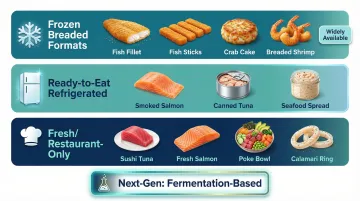
Frozen Breaded Formats (Most Widely Available):
- Fish fillets (Gardein)
- Fish sticks
- Crab cakes (Good Catch)
- Breaded shrimp
Ready-to-Eat Refrigerated Formats:
- Smoked salmon slices (Sophie's Kitchen)
- Canned tuna (Good Catch)
- Pouched tuna spreads
Fresh/Restaurant-Only Formats (Limited Retail Availability):
- Sushi-grade tuna and salmon (Oshi, New School Foods)
- Poke bowl cuts
- Calamari
Next-Generation Innovation:
Beyond the grocery shelf, fermentation-based seafood is pushing the category forward. Companies like Aqua Cultured Foods use biomass fermentation (mycoprotein) to create shrimp, scallops, and calamari with authentic textures and marine-like aroma compounds — and far shorter ingredient lists than most extruded alternatives.
One category worth clarifying: cultivated (cell-cultured) seafood is grown from actual aquatic animal cells in bioreactors. It's biologically animal tissue — not vegan and not safe for people with seafood allergies. Plant-based seafood carries none of those concerns.
How to Shop for Plant-Based Seafood
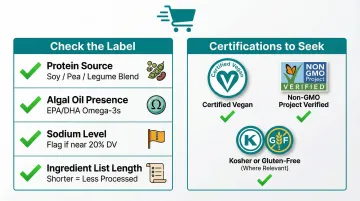
What to Look for on an Ingredient Label:
- Protein source: Soy, pea protein, or a legume blend signals a quality base ingredient
- Algal oil: Its presence means the product is fortified with EPA/DHA omega-3s — the kind found in real seafood
- Sodium: 20% Daily Value or more is considered high — many plant-based seafood products land close to that threshold
- Ingredient list length: Shorter lists with recognizable names typically signal less processing
Key Certifications to Look For:
- Certified Vegan (Vegan Action) — Guarantees no animal products or animal testing
- Non-GMO Project Verified — Indicates rigorous GMO avoidance and supply chain traceability
- Kosher or Gluten-Free labels — Indicate additional ingredient sourcing standards where relevant
If you want to skip the label-reading exercise, retailers like NoPigNeva pre-screen for these standards — every product they carry is 100% vegan and Non-GMO verified, including konjac-based shrimp and vegan crab cakes.
Practical Shopping Advice:
- Frozen options are the most widely available format
- Canned plant-based tuna is a convenient pantry staple
- Check brand websites for detailed nutritional breakdowns—they often reveal more than the front-of-pack label
- Whole-food artisanal swaps (like mushroom scallops) are best for consumers seeking minimally processed options
Common Misconceptions About Plant-Based Seafood
Myth: Plant-Based Seafood Is Automatically Healthier Than Conventional Seafood
Not necessarily. While it avoids mercury and may be lower in saturated fat, it is not a nutritional replica. Processed varieties can be high in sodium and additives, and most lack the omega-3s, vitamin D, and B12 found in conventional fish.
Myth: Seaweed in the Ingredients Means You're Getting Omega-3s
This is a major misconception. Seaweed used for flavoring does not deliver adequate EPA or DHA. Only products specifically fortified with algal oil qualify as genuine omega-3 sources. Avoid using "contains seaweed" as a proxy for heart and brain health benefits.
Myth: All Plant-Based Seafood Is Whole-Food or Minimally Processed
Many products are highly processed using industrial techniques like high-moisture extrusion. Common ingredients include:
Many products are highly processed using industrial techniques like high-moisture extrusion. Common ingredients include:
- Protein isolates (soy, pea, wheat gluten)
- Methylcellulose (a binding agent)
- Added flavorings and colorants
Under the NOVA classification system, many commercial plant-based seafood analogs qualify as Ultra-Processed Foods. A "plant-based" label does not inherently mean clean ingredients—reading the full ingredient list remains essential.
Frequently Asked Questions
Can I eat seafood on a plant-based diet?
Conventional seafood is not part of a strictly plant-based or vegan diet. However, plant-based seafood alternatives made entirely from plants allow people to enjoy seafood-style dishes without animal products, making them fully compatible with vegan diets.
What is plant-based seafood made of?
Plant-based seafood is made from soy protein, pea protein, wheat gluten, legume blends, seaweed, konjac, starches, vegetable oils, and natural flavorings. These ingredients are engineered through processes like high-moisture extrusion and gel formation to replicate the taste, texture, and appearance of fish and shellfish.
Is plant-based seafood healthier than regular seafood?
Plant-based seafood avoids mercury and microplastic contamination and tends to be lower in saturated fat. Most products lack the omega-3s (EPA/DHA), vitamin D, and B12 found in conventional seafood, so they aren't a direct nutritional swap unless fortified with algal oil.
Does plant-based seafood taste like real seafood?
Modern products have improved significantly. Seaweed extracts and advanced processing deliver convincing oceanic flavors and textures, though quality varies widely by brand and product format. Breaded and heavily seasoned products tend to be more convincing than unbreaded whole cuts.
Can you cook plant-based seafood the same way as conventional seafood?
Most plant-based seafood handles pan-frying, baking, and air-frying well. Avoid boiling or prolonged steaming — the texture tends to break down faster than conventional fish because the protein structures are more delicate.
Where can I buy plant-based seafood?
Specialty vegan grocery retailers like NoPigNeva carry a curated range of plant-based seafood products — including hard-to-find formats like whole fillets and shrimp — shipped nationwide. Local health food stores and some mainstream grocery chains also stock common options like fishless fillets and crab cakes.