Here's the tension: plant-based sounds inherently wholesome, but highly processed products don't always live up to the label. Consumers are genuinely confused by conflicting claims about nutrition, ingredients, and whether swapping beef for a plant-based patty is actually a smart health move.
This post breaks down the ingredients, nutritional data, real benefits, key concerns, and how to make the best choice for your health goals.
TL;DR
- Plant-based burgers aren't automatically healthy — they're often highly processed, high in sodium, and contain significant saturated fat
- They offer benefits: comparable protein, zero cholesterol, and a smaller environmental footprint than beef
- Ultra-processing strips out nutrients from whole plant foods and replaces them with additives, oils, and flavorings
- Lentil and black bean burgers are nutritionally superior to most meat-mimicking alternatives
- Read labels: prioritize lower sodium, shorter ingredient lists, and Non-GMO certifications
What Are Plant-Based Burgers Made Of?
Plant-based burgers designed to mimic meat — like pea protein or soy-based patties — are fundamentally different from traditional veggie burgers made from whole ingredients like black beans or lentils. The nutritional profiles and health implications of these two categories differ dramatically, so understanding what's actually in each matters.
Meat-Mimicking Burger Ingredients
Modern plant-based burgers that replicate the taste and texture of beef rely on a specific set of highly processed ingredients:
| Ingredient Category | Common Examples |
|---|---|
| Protein base | Soy protein isolate, pea protein isolate, wheat gluten |
| Fats | Coconut oil (high in saturated fat), sunflower oil, canola oil |
| Binders & flavoring | Methylcellulose, yeast extract, natural flavors, starches |
| Added micronutrients | Vitamin B12, zinc, iron |
One controversial ingredient is soy leghemoglobin (also called heme — the molecule responsible for meat's metallic, bloody flavor), derived from genetically engineered yeast to simulate the bloody appearance of beef. The FDA has issued "no questions" letters on its safety and permanently listed it as a color additive, but its approval process involved animal testing — a concern for some vegan consumers.
Whole-Food Veggie Burgers
In contrast, traditional veggie burgers skip the lab-derived additives and rely on minimally processed whole foods:
- Cooked lentils, black beans, or chickpeas
- Whole grains like brown rice or oats
- Vegetables (onions, peppers, mushrooms)
- Herbs and spices
The result is a patty rich in fiber, phytonutrients, and natural fats — with far fewer additives and no refined oils.
Nutritional Profile: Calories, Protein, Fat, and Sodium
The numbers tell a more complicated story than most packaging suggests. Here's how two leading plant-based burgers stack up against a standard 80/20 beef patty at the same serving weight.
Side-by-Side Comparison
| Nutrient | Beyond Burger (113g) | Impossible Burger (113g) | 80/20 Beef (113g cooked) |
|---|---|---|---|
| Calories | 230 | 230 | 306 |
| Protein | 21g | 19g | 29g |
| Total Fat | 14g | 13g | 20g |
| Saturated Fat | 2g | 6g | 7.6g |
| Sodium | 310mg | 370mg | 85mg |
| Fiber | 2g | 5g | 0g |
| Cholesterol | 0mg | 0mg | 103mg |
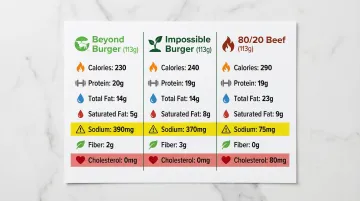
Data from Beyond Meat, Impossible Foods, and USDA FoodData Central
The Sodium Problem
Plant-based burgers contain nearly 4 times the sodium of plain beef — 310-370mg versus just 85mg in an 80/20 beef patty. For context, the American Heart Association recommends limiting sodium to 2,300mg per day (ideally 1,500mg for those with high blood pressure). A single plant-based burger uses 13-16% of your daily limit before you add buns, condiments, or sides.
Saturated Fat from Coconut Oil
Coconut oil — a common fat source in plant-based burgers — contains 11.2g of saturated fat per tablespoon. This explains why some plant-based patties have saturated fat levels approaching beef.
The American Heart Association recommends limiting saturated fat to 5-6% of total daily calories for those managing LDL cholesterol — about 13g per day on a 2,000-calorie diet. An Impossible Burger's 6g of saturated fat consumes nearly half that allowance in a single patty.
How Your Body Actually Absorbs Plant-Based Protein
While plant-based burgers match beef in total protein grams, bioavailability differs. The Digestible Indispensable Amino Acid Score (DIAAS) measured in pig models shows:
- Beef and pork: DIAAS >100 (excellent)
- Soy-based burgers (Impossible): DIAAS 91-107 (comparable to beef)
- Pea-based burgers (Beyond): DIAAS 71-83 (good, but limited by sulfur amino acids)
This means your body may absorb and utilize protein from pea-based burgers less efficiently than from beef or soy alternatives.
Fortified Micronutrients
Plant-based burgers are fortified with B12, iron, and zinc — nutrients typically found in animal products. However, these are added through fortification, not naturally occurring. Whole plant foods like lentils or tempeh deliver the same minerals alongside fiber and phytonutrients — without the sodium load — making them a denser nutritional option when the goal is micronutrient intake rather than burger-for-burger substitution.
The Real Health Benefits of Plant-Based Burgers
Zero Dietary Cholesterol
Plant-based burgers contain 0mg of cholesterol, compared to 103mg in a beef patty. This matters for cardiovascular health, particularly for people with elevated LDL cholesterol or a family history of heart disease. The SWAP-MEAT clinical trial found that replacing animal meat with plant-based alternatives for 8 weeks significantly lowered LDL cholesterol, body weight, and TMAO — an emerging cardiovascular risk factor.
Fiber Content
Cholesterol isn't the only advantage — plant-based patties also deliver 2–5g of dietary fiber per serving, a nutrient entirely absent from beef. Fiber supports:
- Gut health and digestive regularity
- Blood sugar regulation
- Satiety and weight management
Brand choice matters here: Impossible Burger provides 5g per serving, while Beyond Burger provides 2g.
Environmental and Ethical Upside
Plant-based burgers have a meaningfully smaller ecological footprint than beef:
| Environmental Impact | Plant-Based vs. Beef |
|---|---|
| Greenhouse gases | 89–90% reduction |
| Land use | 93–96% reduction |
| Water use | 87–99% reduction |
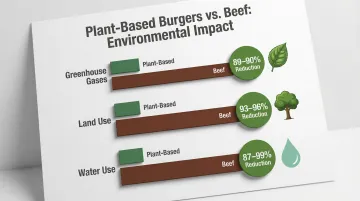
Data from University of Michigan and Quantis Life Cycle Assessments
These reductions are consistent across major brands — so whether you're choosing plant-based for health or environmental reasons, the ecological case is hard to dispute.
The Health Concerns and Drawbacks You Should Know
Ultra-Processing Is the Central Issue
Leading meat-mimicking burgers are classified as NOVA Group 4 ultra-processed foods (UPFs). The NOVA system defines UPFs as industrial formulations made from substances extracted from foods (oils, fats, proteins, starches) or synthesized in laboratories, using processes like extrusion and molding (industrial shaping methods) that bear little resemblance to traditional cooking.
The processing strips out many natural benefits of whole plant foods — fiber, phytonutrients, and intact fats. What goes back in are isolated proteins, refined oils, and a long list of additives.
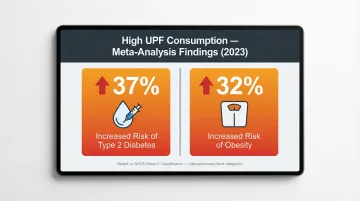
A 2023 meta-analysis of prospective cohort studies found that high UPF consumption increased the risk of:
- Diabetes: 37% increased risk
- Obesity: 32% increased risk
As Lindsey Wohlford, a wellness dietitian at MD Anderson Cancer Center, warns: "The reality is that something isn't healthy just because it is plant-based."
High Sodium Accumulation
For people eating plant-based burgers regularly — not just as an occasional treat — sodium accumulation becomes a genuine concern for blood pressure and kidney health. The Beyond Burger, for example, contains 390mg per patty before any toppings. Add a processed bun, condiments, and a vegan cheese slice, and a single meal can easily exceed 1,000mg of sodium — nearly half the daily recommended limit.
Saturated Fat from Plant Sources
While coconut oil is plant-derived, it's still a significant source of saturated fat. The American Heart Association's strict guidance for LDL lowering recommends limiting saturated fat to 5-6% of total calories — about 11-13g per day. A single plant-based burger can consume 15-55% of that allowance depending on the brand.
GMO Ingredients and Additives
Some popular brands use genetically modified soy or GMO-derived heme. While the FDA considers these safe, some consumers prefer to avoid them entirely. For those who do, verified Non-GMO options are available:
Non-GMO certified options include:
- Beyond Meat (entire US portfolio)
- Gardein Ultimate Plant-Based Burger
- Dr. Praeger's Perfect Burger
Not a Substitute for Whole-Food Plant-Based Eating
Eating plant-based burgers is not the same as eating a plant-based diet. Whole foods like lentils, chickpeas, tofu, and tempeh are nutritionally richer, lower in sodium, and less processed — making them better everyday choices.
Nutritional comparison (per 100g cooked):
| Food | Calories | Protein | Fiber | Fat | Sodium |
|---|---|---|---|---|---|
| Beyond Burger | 250 | 20g | 2g | 18g | 390mg |
| Impossible Burger | 240 | 19g | 3g | 14g | 370mg |
| Lentils | 116 | 9g | 7.9g | 0.4g | 2mg |
| Black beans | 132 | 8g | 9g | 0.5g | 1mg |
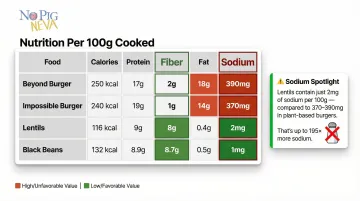
Burger data from product nutrition labels; whole food data from USDA FoodData Central
How to Choose a Healthier Plant-Based Burger
What to Look for on the Label
Prioritize products with:
- Sodium under 400mg per serving — ideally closer to 300mg per patty
- Fewer than 10 ingredients — shorter lists signal less processing
- Minimal added oils, particularly coconut oil, which raises saturated fat significantly
- Non-GMO Project Verification, if avoiding GMOs matters to you
- Saturated fat under 4g per serving
Use the Percent Daily Value (%DV) as a quick reference: 5% DV or less is "low," 20% DV or more is "high." Aim for the low end on both sodium and saturated fat.
Reserve meat-mimicking burgers for occasional meals rather than daily staples.
Whole-Food Alternatives to Consider
For everyday consumption, choose minimally processed options:
- Lentil burgers — naturally high in fiber and protein, with no added sodium
- Black bean patties — a solid source of folate, iron, and resistant starch
- Chickpea burgers — versatile base that holds up well on a grill or skillet
- Tempeh — fermented soy with complete protein and gut-friendly probiotics
These deliver fiber, plant protein, and micronutrients without heavy processing or added oils.
Where to Find Cleaner Options
For readers committed to a vegan lifestyle, NoPigNeva offers a curated selection of 100% vegan, Non-GMO plant-based products — including burger alternatives — delivered nationwide. Orders over $99.99 ship free, and a 10% membership discount is available with no fees or minimum order requirements.
Frequently Asked Questions
How healthy are plant-based burgers?
Plant-based burgers are not inherently healthy. While they offer benefits like zero cholesterol and added B12, they're typically highly processed, high in sodium, and contain comparable saturated fat to beef. They're best treated as an occasional option, not a daily health food.
What is the healthiest plant-based burger?
Lentil, black bean, or chickpea patties are the healthiest choice — minimally processed and naturally high in fiber and nutrients. Among commercial brands, look for Non-GMO certified, lower-sodium options with short ingredient lists.
Are plant-based burgers healthier than beef burgers?
Plant-based burgers have no cholesterol and some fiber, but often match beef in calories and saturated fat — and typically exceed it in sodium. A lean beef patty may actually be less processed than some commercial plant-based options.
Are plant-based burgers considered processed food?
Yes, most meat-mimicking plant-based burgers fall into the "ultra-processed" category under the NOVA classification system, meaning they've undergone significant industrial processing and contain ingredients you wouldn't find in a home kitchen.
Are plant-based burgers good for weight loss?
Calorie-wise, plant-based burgers are roughly on par with beef burgers — they're not a weight-loss food. Bean-based patties with higher fiber may support satiety, but weight management ultimately comes down to overall diet quality and portions.
Can plant-based burgers be part of a healthy diet?
Yes, in moderation. Plant-based burgers can fit into a balanced diet as an occasional treat, especially for those reducing red meat intake — just don't treat them as a health food. Whole plant foods like legumes, tofu, and vegetables should be the everyday staples.