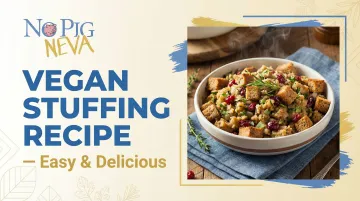
This 100% plant-based stuffing changes that. It delivers the same moist interior, crispy top, and holiday flavor as the traditional version, using simple, accessible ingredients. No compromises, no missing out — just delicious stuffing everyone at the table can enjoy.
TLDR
- Uses dried bread cubes, classic aromatics, vegetable broth, and vegan butter
- Takes about 1 hour total (including prep and bake time)
- Serves 6–8 people
- Perfect for Thanksgiving, Christmas, or weeknight comfort meals
- Achieves a crispy top with a tender, moist center
What Goes Into This Vegan Stuffing
The Bread Foundation
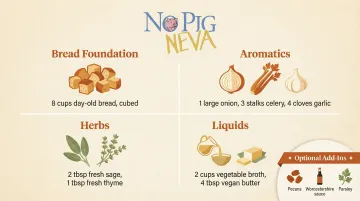
The foundation of great stuffing is the bread. Use a sturdy, crusty loaf — sourdough, ciabatta, or a French bakery loaf work best. These breads hold up during baking, absorbing broth without turning to mush. Soft sandwich bread lacks the structure and turns soggy quickly.
Why it matters: Oven-dried bread actively evaporates moisture, leaving the crumb structure intact and ready to absorb maximum flavor. Stale bread, meanwhile, undergoes starch retrogradation — a process that traps moisture inside and prevents proper absorption.
Aromatics Build the Flavor Base
The savory base comes from aromatics: onion, celery, garlic, and optional leeks. Sautéing these until soft develops deep, complex flavor through caramelization and the Maillard reaction. Don't rush this step — properly caramelized onions take 12–15 minutes to develop their natural sweetness and savory depth.
Herbs That Make Stuffing Taste Like Stuffing
Fresh sage is the non-negotiable classic. Thyme, rosemary, and parsley round it out. Dried herbs can substitute in a pinch, but fresh herbs deliver noticeably brighter flavor. Hardy herbs like sage and thyme retain their flavor when dried, but culinary experts recommend fresh sage for special holiday dishes to achieve the most vibrant flavor.
Substitution ratio: 1 tablespoon fresh herbs = 1 teaspoon dried herbs.
The Liquid Component
Vegetable broth replaces chicken broth 1:1 and keeps the stuffing moist. Use low-sodium broth so you can control salt levels. Vegan butter adds richness, though olive oil works as an oil-free swap.
Optional Add-Ins That Elevate
- Toasted pecans bring a buttery crunch and nutty depth
- Vegan Worcestershire sauce layers in umami (traditional versions contain anchovies, but vegan alternatives use soy sauce, tamarind, and mushrooms)
- Plant-based sausage makes it a heartier, more filling dish
For the trickier items — vegan Worcestershire, specialty plant-based sausage — NoPigNeva stocks a range of hard-to-find pantry staples shipped nationwide.
Ingredients List
For 8×11 casserole (6–8 servings):
- 10 cups dried bread cubes (1-inch pieces)
- ¼ cup vegan butter or olive oil
- 1 large onion, diced
- 3 celery stalks, diced
- 4 garlic cloves, minced
- 2 tablespoons fresh sage, chopped
- 1 tablespoon fresh thyme leaves
- 2½–3 cups vegetable broth (low-sodium)
- ½ teaspoon salt
- ¼ teaspoon black pepper
Optional:
- ½ cup toasted pecans, chopped
- 1 tablespoon vegan Worcestershire sauce
- ¼ cup fresh parsley, chopped
How to Make Vegan Stuffing: Step-by-Step
Step 1 — Dry the Bread
Two methods:
Overnight air-dry method:
- Cut bread into 1-inch cubes
- Spread on baking sheet
- Leave uncovered at room temperature for 8+ hours
Oven-dry method (faster and more reliable):
- Preheat oven to 275°F (135°C)
- Spread cubes on baking sheet
- Bake 45–50 minutes, stirring occasionally
Properly dried bread absorbs broth like a sponge without turning to mush. Skip it, and you'll end up with soggy stuffing no matter how carefully you bake it.
Step 2 — Sauté the Aromatics
- Heat vegan butter in large pan over medium-low heat
- Add onion and sage
- Cook 12–15 minutes until onion begins to brown and soften
- Add celery, garlic, and remaining herbs
- Cook another 3–5 minutes until fragrant
This slow cook builds the flavor base. Rush it, and the stuffing will taste thin no matter what else you add.
Step 3 — Combine
- Add dried bread cubes to large bowl or greased casserole dish
- Pour sautéed vegetable mixture over top
- Gradually add warm vegetable broth, stirring gently for several minutes
- Continue until all bread is evenly moistened (it will seem dry at first — be patient)
- Mixture should feel moist but not have liquid pooling at bottom
Step 4 — Bake
- Cover casserole dish tightly with foil
- Bake at 350°F (177°C) for 30 minutes
- Remove foil
- Bake another 20–25 minutes until top is golden brown and bread tips are lightly crispy
The two-stage bake achieves the classic moist-inside, crispy-top texture. Covering traps steam to heat evenly, while uncovering allows surface moisture to evaporate for browning.
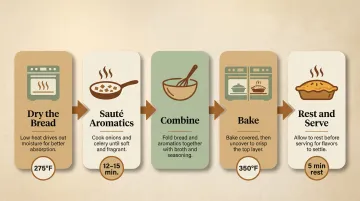
Step 5 — Rest and Serve
Let stuffing rest 5 minutes before serving — this gives the interior time to set and makes it easier to scoop cleanly. Serve alongside vegan gravy, roasted vegetables, or whatever else is on the holiday table.
Tips for the Best Vegan Stuffing Every Time
Dry Bread is Non-Negotiable
Dry bread pulls in broth evenly and holds its texture through baking. Fresh or stale bread turns soggy. Oven-drying is faster and more reliable than air-drying because it removes all moisture evenly rather than just the surface.
Don't Rush the Onion Cook
Slow-cooked onions develop natural sweetness and deep savory flavor that carries the entire dish. Cutting this step short results in flat-tasting stuffing. Aim for 12–15 minutes over medium-low heat, not a quick 3-minute sauté.
Add Broth Gradually and Taste as You Go
The amount of broth needed varies by bread type and how dry it is. Add ¾ of the broth, mix well, then add more as needed. The stuffing should feel thoroughly moist but not wet or soupy before it goes in the oven.
Common Mistakes to Avoid
- Skip soft sandwich bread — it turns mushy under the broth
- Cover the dish with foil for the first bake or the inside dries out
- Taste and adjust seasoning before the pan goes in the oven
- Grease the baking dish well or the stuffing will stick
- Cut bread into uniform, bite-sized pieces for even cooking
Follow these steps closely and the stuffing will come out moist in the center, golden on top, and full of flavor every time.
Easy Variations and Substitutions
Gluten-Free Version
This recipe works with gluten-free bread — a sturdy GF sourdough or GF sandwich loaf works best. Note that GF bread may dry out faster in the oven, so check early.
Add-Ins to Customize Flavor and Texture
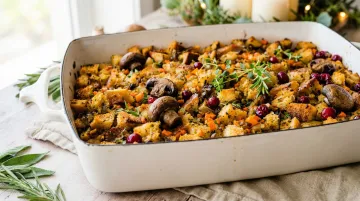
- Diced mushrooms: Sauté alongside the aromatics to build umami depth
- Dried cranberries: Stir in before baking for a sweet-savory contrast
- Roasted butternut squash cubes: Fold in for color, sweetness, and bulk
- Chestnuts: A classic holiday addition with a slightly sweet, nutty bite
- Vegan sausage crumbles: Brown first, then mix in — NoPigNeva carries several plant-based sausage options that add protein and hearty texture
Stuffing Balls Variation
UK-style method for party-style serving:
- After soaking bread mixture in hot stock for 5 minutes, mix with hands to break down bread slightly
- Form into 10–12 balls
- Bake on lined tray for 20 minutes
Ideal for holiday spreads where guests serve themselves.
How to Store, Make Ahead, and Reheat
Make-Ahead Instructions
Stuffing can be fully assembled (combined but unbaked) up to 24 hours in advance. Cover tightly and refrigerate, then bring to room temperature for 20–30 minutes before baking. Alternatively, bake a day ahead and store in the fridge.
Storage
Leftover stuffing keeps in an airtight container in the refrigerator for up to 4 days. To reheat:
- Oven: Cover with foil and bake at 350°F for 15–20 minutes
- Microwave: Heat individual portions in 60-second intervals until warmed through
Freezing
Stuffing freezes well for up to 3 months. Here's how:
- Transfer to an airtight, freezer-safe container
- Thaw overnight in the refrigerator before reheating
- Add a splash of vegetable broth before reheating to keep the texture moist
Frequently Asked Questions
Can vegans eat stuffing?
Traditional stuffing is often not vegan because it contains butter, chicken broth, or eggs. However, stuffing is completely vegan-friendly when made with vegetable broth, vegan butter, and plant-based ingredients, as in this recipe.
What to put in vegan stuffing?
Key components include dried bread, aromatics (onion, celery, garlic), fresh herbs (sage, thyme), vegetable broth, and vegan butter. Optional additions like mushrooms, pecans, or dried fruit make it even more flavorful.
What can I use instead of eggs for stuffing?
In vegan stuffing, the starch from the bread combined with broth is enough to hold everything together. Cornstarch mixed into the bread cubes is another reliable binder option.
What stuffing mix is vegan?
Not all boxed stuffing mixes are vegan — many contain chicken fat or dairy. Check labels carefully for animal-derived ingredients. This homemade recipe is the easiest way to guarantee it's 100% vegan.
What are common stuffing mistakes to avoid?
Top mistakes include using fresh (undried) bread, rushing the onion sauté, adding too much liquid at once, skipping the foil during the first bake, and not greasing the casserole dish.