
Introduction
Traditional lobster bisque is built on depth of flavor, subtle brininess, and a luxurious mouthfeel that seems impossible without shellfish. Plant-based cooking has a convincing answer.
This vegan lobster bisque uses lobster mushrooms, kelp powder, and cashew cream to hit every note of the original — without shellfish, dairy, or any shortcuts on taste.
TLDR
- Built on lobster mushrooms (or oyster/shiitake), kelp powder for brininess, and cashew cream for body
- Ready in 45–60 minutes; suitable for beginner to intermediate cooks
- 100% plant-based, naturally gluten-adaptable, with no dairy or shellfish
- Stores well for up to 4 days refrigerated; freezes for 2 months
What Makes This Vegan Lobster Bisque Taste Like the Real Thing
Traditional lobster bisque gets its character from four distinct qualities: briny ocean flavor, natural sweetness, luxurious richness, and savory depth. Each one can be matched with plant-based ingredients—and the science behind why they work is surprisingly straightforward.
The Ocean Flavor: Sea Vegetables
The "marine" or "seaside fresh" aroma that defines seafood comes primarily from dimethyl sulfide (DMS) and other volatile compounds found naturally in seaweeds like kelp and nori. Research shows that these sea vegetables contain high concentrations of naturally occurring free amino acids—specifically L-glutamate and L-aspartate—which create the savory, briny profile we associate with the ocean. Kelp powder or nori sheets are what provide authentic oceanic taste without a single shellfish.
The Savory Depth: Umami Synergy
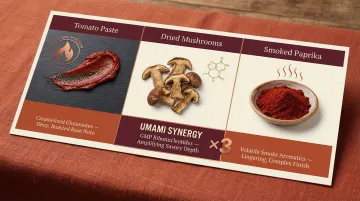
To match the complex depth of shellfish stock, this bisque relies on umami synergy—a phenomenon where glutamate-rich ingredients combine with 5'-ribonucleotide-rich ones to amplify savory intensity far beyond what either achieves alone. Studies confirm the effect is multiplicative, not additive.
Three ingredients do the heavy lifting here:
- Tomato paste (caramelized): Triggers the Maillard reaction, concentrating glutamic acid while adding roasted, sweet, and deeply savory notes
- Dried mushrooms: Provide guanosine monophosphate (GMP), a 5'-ribonucleotide that multiplies the savory signal from glutamate-rich ingredients
- Smoked paprika: Contributes phenolic compounds like guaiacol and syringol—the same molecules responsible for a rich, meaty, smoky aroma
Ingredients and Substitutions
Aromatics
- 1 large shallot (or 1 small onion), diced
- 1 medium carrot, diced
- 2 celery stalks, diced
- 4 garlic cloves, minced
Liquids
- 4 cups vegetable broth (mushroom-based preferred)
- ½ cup dry white wine (Sauvignon Blanc or Pinot Grigio)
Flavor Boosters
- 2 tablespoons tomato paste
- 1–2 teaspoons kelp powder (or nori/dulse substitute)
- 1 teaspoon smoked paprika
- 1 teaspoon fresh thyme (or ½ teaspoon dried)
- ¼ teaspoon cayenne pepper
- 1 bay leaf
- Salt and black pepper to taste
Cream Base
- 1 cup raw cashews (soaked 3+ hours) OR 1 can (13.5 oz) full-fat coconut milk
- 1 tablespoon cornstarch or all-purpose flour (for thickening)
Lobster Mushrooms
- 8–10 oz lobster mushrooms (fresh or dried and rehydrated)
Lobster Mushrooms: The Star Ingredient
Lobster mushrooms aren't a distinct species—they're the result of a parasitic relationship. Hypomyces lactifluorum is a parasitic fungus that attacks white mushrooms like Russula brevipes, transforming them with a hard, bright red-orange crust that resembles a cooked lobster shell. This process yields a firm, dense, meaty texture and a mild, slightly briny aroma that makes them ideal for vegan seafood dishes.
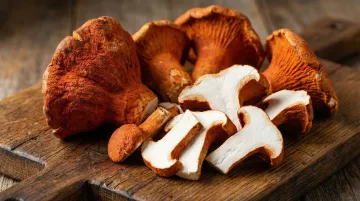
Where to Find Them:
- Fresh lobster mushrooms are available late summer to fall (July–November) at farmers markets, specialty grocers, or foraged in Pacific Northwest and New England forests
- Dried lobster mushrooms are available year-round online and at gourmet food stores; rehydrate by soaking in warm water 15–20 minutes
Lobster Mushroom Substitutes:
Can't find lobster mushrooms? Use a blend of:
- Oyster mushrooms (meaty texture)
- Shiitake mushrooms (umami depth)
- Chanterelle mushrooms (subtle earthiness)
Alternatively, plant-based vegan seafood products like vegan shrimp or plant-based scallops (available at stores like NoPigNeva) can serve as a "lobster" element.
Cream Base Options
Cashew Cream:
- Soak 1 cup raw cashews overnight (or 3+ hours)
- Blend with 1 cup vegetable broth until ultra-silky
- Produces a neutral, velvety bisque
- Naturally gluten-free
Coconut Milk:
- Use 1 can (13.5 oz) full-fat coconut milk
- No soaking required
- Adds slight sweetness that complements smoked paprika
- May separate if boiled rapidly—add gently and simmer low
Oat Cream (Nut-Free Option):
- Use 1 cup commercial oat cooking cream
- Highly stable under heat
- Neutral flavor, slightly sweet
- Excellent for those with nut allergies
Kelp Powder Substitutes
If kelp powder isn't available:
- Nori sheets: Pulse in a blender to a fine powder
- Dulse flakes: Use 1–2 teaspoons for a smoky, savory flavor
Nutritional Note: Kelp is exceptionally high in iodine—containing 1,200 to 3,257 mcg per 100g dried—and is a concentrated source of calcium, magnesium, iron, and vitamin K. Use kelp powder in moderation, as excessive iodine intake can exceed safe upper limits.
How to Make Vegan Lobster Bisque Step by Step
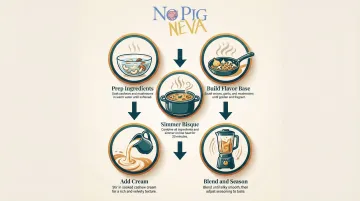
Prep Your Ingredients
- Soak cashews: If using cashew cream, soak 1 cup raw cashews in water for at least 3 hours (or overnight). Drain before blending.
- Rehydrate dried lobster mushrooms: If using dried mushrooms, soak in warm water for 15–20 minutes until softened and plump. Save the soaking liquid (it adds rich, earthy depth to the broth), then roughly chop the mushrooms.
Building the Flavor Base
- Heat 2 tablespoons olive oil or vegan butter in a large pot over medium heat.
- Add shallot, carrot, celery, and garlic. Sauté for 3–5 minutes until softened and fragrant.
- Stir in 2 tablespoons tomato paste. Cook for 1–2 minutes, stirring constantly, to caramelize slightly—this deepens the flavor and adds essential sweetness.
Simmering the Bisque
- Add the chopped lobster mushrooms (or substitute), vegetable broth (including mushroom soaking liquid if available), white wine, smoked paprika, thyme, cayenne, and bay leaf.
- Bring to a gentle boil, then reduce to low and simmer for 15–20 minutes so the broth develops depth.
- Remove the bay leaf.
Making and Adding the Cream
- For cashew cream: Blend soaked cashews with 1 cup vegetable broth, kelp powder, and 1 tablespoon cornstarch until smooth (1–2 minutes in a high-speed blender). Pour into the simmering bisque and stir to combine.
- For coconut milk: Stir the full can of coconut milk and kelp powder directly into the bisque at this stage. Heat gently—do not boil rapidly, as this can cause separation.
Blending to Bisque Consistency
- Use an immersion blender to partially blend the soup—about half the pot—creating a thick, creamy texture while leaving some mushroom pieces for bite. For a fully smooth bisque, blend the entire pot and strain through a fine mesh.
⚠️ Safety Note: When blending hot liquids, vent the blender by removing the center cap, cover with a folded towel, hold the lid down firmly, and start on the lowest speed. Never fill more than halfway. Hot liquids expand and generate steam, which can forcefully eject the lid and cause severe burns.
Final Seasoning and Serving
- Taste and adjust salt, pepper, and heat (add more cayenne or a dash of hot sauce if desired).
- Serve immediately in warm bowls. Garnish with reserved sautéed mushroom slices, a drizzle of vegan cream or olive oil, fresh chives or green onion, and cracked black pepper.
Tips, Variations, and Serving Suggestions
Pro Tips for the Best Bisque
- Don't skip the tomato paste caramelization step: This adds essential sweetness and umami that can't be replicated by simply stirring it in.
- Use a good dry white wine: Choose one you'd drink. Culinary authorities warn against commercial "cooking wine," which contains added salt (often 1.5%+) that concentrates when reduced, leading to an overly salty bisque.
- Boost umami depth: Use mushroom-based vegetable broth, add 1 teaspoon mushroom seasoning, or splash in a bit of tamari for extra savory richness.
Variations to Try
- Gluten-free: Swap all-purpose flour for cornstarch, or use the cashew cream method — both are naturally gluten-free.
- Restaurant-style richness: Finish with both cashew cream and a swirl of vegan butter for an extra-luxurious mouthfeel.
- Cajun-inspired: Increase cayenne to ½ teaspoon and stir in a Creole spice blend. Creole seasoning — paprika, garlic powder, oregano, thyme, and basil — adds herbaceous heat without overwhelming the bisque.
Storage, Reheating, and Make-Ahead
- Refrigerator: Store in an airtight container for up to 4 days. The bisque thickens overnight — stir in a splash of vegetable broth when reheating.
- Freezer: Freezes well for up to 2 months. Thaw overnight in the refrigerator and reheat gently on the stovetop.
- Make-ahead: Prepare the bisque base (everything before adding cream) up to 2 days in advance and refrigerate. Stir in the cashew cream or coconut milk just before serving. Specialty ingredients like sea vegetables and mushroom broth are available through NoPigNeva with free nationwide shipping on orders over $99.99.
What to Serve With Vegan Lobster Bisque
This bisque suits an elegant dinner party starter as easily as a weeknight meal. Pair it with:
- Crusty sourdough or vegan baguette for dipping
- Simple green salad with champagne vinaigrette
- Roasted asparagus
- Vegan oyster crackers
Frequently Asked Questions
Can lobster bisque be made vegan?
Yes. Swap shellfish for lobster mushrooms or a meaty mushroom blend, use cashew or coconut cream in place of dairy, and add kelp powder or nori for oceanic depth. The result is a rich, creamy bisque that holds up to the original.
What can be used as a lobster substitute in vegan lobster bisque?
Lobster mushrooms are the closest match in texture and brininess, but a blend of oyster and shiitake mushrooms or vegan seafood products like vegan shrimp also work well. Pair any substitute with kelp powder or nori to replicate the seafood flavor.
Where can I find lobster mushrooms?
Fresh lobster mushrooms are seasonal (late summer to fall) and can be found at farmers markets, specialty grocery stores, and online retailers. Dried lobster mushrooms are available year-round on Amazon and in many specialty food stores.
Can I make this recipe gluten-free?
Yes—simply use the cashew cream method (which uses no flour) or substitute cornstarch for all-purpose flour. All other ingredients in this recipe are naturally gluten-free.
How do I store and reheat vegan lobster bisque?
Store in an airtight container in the refrigerator for up to 4 days. Reheat gently on the stovetop over low-medium heat with a splash of vegetable broth to loosen, as the bisque thickens as it cools. Can be frozen for up to 2 months.
What gives vegan bisque its "seafood" flavor without shellfish?
Sea vegetables—kelp powder, nori, or dulse flakes—do the heavy lifting here. Their natural compounds deliver a briny, ocean-like taste that, paired with umami-rich mushrooms and a savory vegetable base, makes this bisque genuinely convincing.