Introduction
Most people assume sushi means seafood—but home kitchens across the country are rewriting that assumption with plant-based rolls that rival anything on a restaurant menu. You don't need tuna or salmon to roll restaurant-quality sushi at home. You just need fresh vegetables, clever protein swaps, and a little confidence.
The pain points are real: "vegan sushi near me" searches come up short, rolling at home feels intimidating, and plenty of people doubt plant-based rolls can match traditional sushi on flavor and texture.
This guide solves all three. You'll get 21 plant-based rolls and bowls organized by skill level, plus ingredient guides, rolling tips, and sauce pairings that make sushi night a full success—without the fish or the mercury.
TLDR:
- Plant-based sushi swaps fish for veggies, tofu, tempeh, mushrooms, hearts of palm, and creative seafood alternatives—zero flavor compromise
- Short-grain sushi rice, nori sheets, seasoned rice vinegar, and a sharp knife are your non-negotiables
- 21 recipes cover beginner maki, creative rolls, seafood-style options like carrot lox, and no-roll bowls
- A bamboo mat helps but isn't required—plastic wrap works just as well
- The right sauces (spicy mayo, ponzu, vegan eel sauce) transform a simple roll into something restaurant-worthy
Why Plant-Based Sushi Deserves a Spot on Your Menu
Plant-based sushi isn't a compromise—it's a creative expansion of what sushi can be. Traditional sushi fish carry real concerns: FDA data classifies bigeye tuna as a "Choice to Avoid" due to high mercury levels averaging 0.689 ppm, and raw fish handling requires careful sourcing and storage. Plant-based sushi eliminates mercury worries, raw fish anxiety, and the ethical questions around overfishing.
Going fish-free also makes sushi noticeably easier to prepare at home. Key practical benefits include:
- No fishy odors in your kitchen during prep or cleanup
- Longer ingredient prep window — no freshness clock ticking
- No specialty seafood sourcing or fish counter trips required
- More affordable for regular weeknight cooking
Plant-based fillings also pack a nutritional punch. Avocado, edamame, and sesame naturally deliver fiber, antioxidants, and healthy fats. These ingredients align with heart-healthy eating patterns recommended by the American Heart Association—vegetable-forward, low in saturated fat, and rich in unsaturated fats like those found in avocados and nuts.
What You Need: Key Ingredients for Plant-Based Sushi
Short-grain sushi rice is non-negotiable. Its high amylopectin content creates the sticky, cohesive texture that holds rolls together. Season cooked rice with rice vinegar, sugar, and salt while still warm, then cool completely before rolling.
Brown rice or cauliflower rice work as alternatives—cauliflower rice cuts carbs dramatically (5.3g per 100g vs. 28.7g in white rice) and adds a fiber boost.
Produce That Does the Heavy Lifting
These vegetables form the foundation of plant-based sushi:
- Avocado – Creamy, rich, and loaded with healthy fats
- Cucumber – Crisp, refreshing crunch in every bite
- Sweet potato – Natural sweetness and substance, especially when roasted or tempura-fried
- Asparagus – Elegant texture and mild flavor
- Bell pepper – Bright color and satisfying crunch
- Shiitake and king oyster mushrooms – Umami depth and meaty texture
- Cabbage – Peppery crunch and vibrant color
Plant-Based Proteins That Mimic Seafood Texture
- Tofu – Bake, fry, or marinate for a chewy, protein-packed filling
- Hearts of palm – Flaky and tender, ideal as a crab substitute
- Jackfruit – Shreds easily and takes on marinades well, mimicking pulled seafood
- Tempeh – Firm, nutty bite that works great grilled or sliced thin
- Edamame – Adds protein and a pop of green color
For harder-to-find specialty items—plant-based tuna, vegan shrimp, vegan crab cakes, carrot lox, and vegan lobster—NoPigNeva carries a curated selection delivered nationwide.
Building Umami Without Fish
Umami is the fifth taste—the savory depth that makes sushi satisfying. In plant-based rolls, umami comes from multiple sources. Nori itself is packed with naturally occurring glutamate (170–1350 mg per 100g), which triggers that savory sensation. Layer in soy sauce or tamari, miso paste, sesame oil, and roasted mushrooms, and you've built the depth that makes every bite worth repeating.
21 Plant-Based Sushi Rolls & Bowls to Make at Home
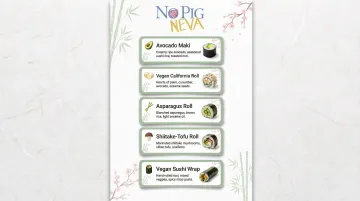
Start here if you're new to sushi-making. These five rolls use minimal ingredients and forgiving techniques, so you can nail the basics before experimenting with bolder flavors.
Classic Rolls (Beginner-Friendly)
Avocado Maki — Just sushi rice, ripe avocado, and nori. The simplest starting point for learning to roll without juggling multiple fillings.
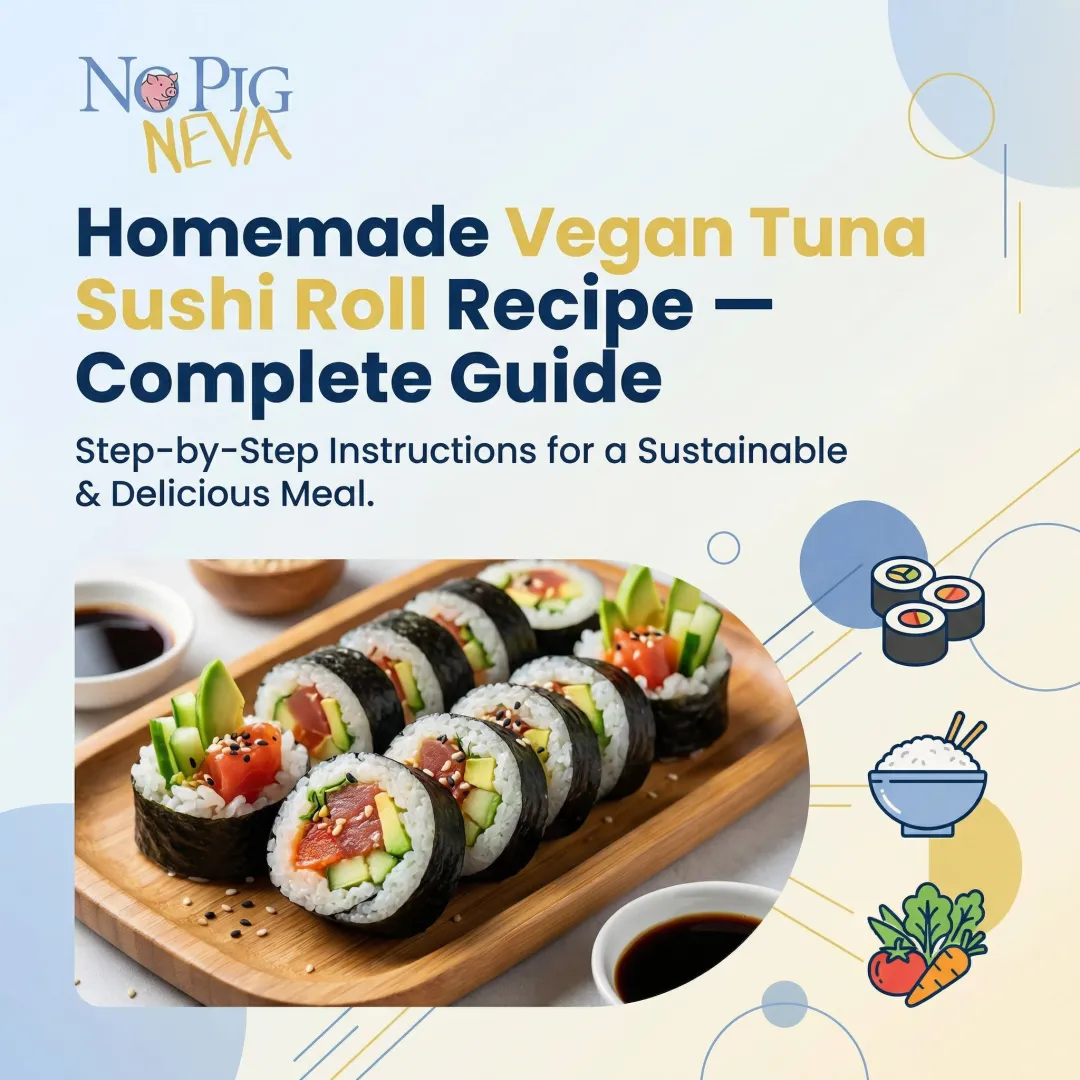
Vegan California Roll — Swap imitation crab for hearts of palm "crab," add avocado and cucumber, and you've got the most recognizable sushi roll in America, 100% plant-based.
Asparagus Sushi Roll — Blanched asparagus spears with creamy avocado and a dab of wasabi. Clean, elegant, and foolproof.
Shiitake-Tofu Roll — Pan-sear tofu until golden, sauté shiitake mushrooms in soy sauce, then roll together for a savory, umami-rich bite.
Vegan Sushi Wrap — The viral nori + rice paper format. Fill with tofu-avocado mix and shredded red cabbage. No rolling mat required.
Once you're comfortable with rolling, these six recipes push flavor and texture further — think crispy coatings, bold sauces, and unexpected ingredients.
Bold & Creative Rolls
Sweet Potato Tempura & Avocado Roll — Tempura-battered sweet potato adds crunch and sweetness. Drizzle with teriyaki glaze for a sticky-sweet finish.
Vegan Dynamite Roll — Crispy king oyster mushrooms (sliced thick and pan-seared) tossed in spicy vegan mayo. Bold, rich, and seriously addictive.
Tofu Crunch Roll — Crispy fried tofu, cucumber, and a generous drizzle of teriyaki sauce. Textural contrast in every slice.
Peanut Tofu Sushi — Marinated tofu with pickled radish and a peanut glaze. Sweet, tangy, and nutty all at once.
Bell Pepper Sushi — Marinated sweet peppers mimic fish texture surprisingly well. Add avocado and a touch of sesame oil.
Crispy Enoki Mushroom Roll — Delicate enoki mushrooms crisped in a pan, layered with shiso leaf and spicy mayo. Light but packed with flavor.
These five rolls recreate the taste and texture of classic fish-based sushi using clever plant-based techniques — marinated vegetables, specialty mushrooms, and vegan cream cheese do most of the heavy lifting.
Seafood-Style Plant-Based Rolls
Spicy Carrot Lox Sushi — Thinly sliced carrots marinated in liquid smoke, soy sauce, and nori flakes taste remarkably like smoked salmon. Add vegan cream cheese and cucumber for a classic lox roll.
Amaranth-Beet Caviar Sushi (Gunkan-Maki Style) — Tiny amaranth grains boiled in beet juice create jewel-like vegan caviar. Serve in gunkan-maki (battleship) style with a strip of nori cupping the rice.
Everything Bagel Sushi — Vegan cream cheese, cucumber, and everything bagel seasoning. All the flavors of brunch in sushi form.
Vegan Futomaki — A thick roll with tofu-based tamagoyaki (sweet omelet), pickled vegetables, and avocado. A rainbow of colors in every slice.
Vegan Tempura Maki — Crispy lobster mushroom tempura, creamy avocado, and tangy kimchi. Crunchy, spicy, and satisfying.
No rolling mat? No problem. These five formats deliver every sushi flavor without any of the technique — just layer, assemble, or press.
Bowls, Burritos & Beyond (No-Roll Options)
Spicy Vegan Sushi Bowl — All the sushi flavors deconstructed over rice. Top with toasted panko, sesame seeds, and a drizzle of spicy mayo.
Watermelon Tuna Poke Bowl — Cubed watermelon marinated in soy sauce and sesame oil mimics tuna's texture. Serve over sushi rice with edamame, cucumber, and sambal mayo.
Vegan Poke Bowl — Use marinated plant-based "tuna" from NoPigNeva, crisp veggies, and edamame over fluffy rice.
Tofu Katsu Onigirazu — A handheld sushi sandwich: breaded tofu katsu, rice, and nori pressed into a square. Perfect for lunch boxes.
Sushi Burrito — Go big. Fill a whole nori sheet with hearts of palm crab, avocado, sriracha peas, and umami mayo. Roll it tight and slice in half.
How to Roll Like a Pro: Tools & Techniques for Home Sushi
Bamboo Mat or Not?
A bamboo mat wrapped in plastic wrap gives you the most control for tight, uniform rolls. But if you don't have one, a clean kitchen towel or plastic wrap alone works fine. For inside-out rolls (rice on the outside), plastic wrap is essential to prevent sticking. Nori-on-outside rolls are simpler and more forgiving for beginners.
Sushi Rice Handling
Wet hands are non-negotiable. Sushi rice is sticky by design—damp hands prevent it from clinging to your fingers. Always use fully cooled rice. Hot rice wilts nori and makes rolls soggy and impossible to slice cleanly. Spread rice in a thin, even layer—about ¼ inch thick. Overpacking is the #1 beginner mistake.
Knife Technique for Clean Cuts
A sharp knife wetted with hot water (or wiped with a damp cloth between cuts) is essential. Dip the blade, slice once, wipe, and repeat. Use the half-then-quarters method: cut the roll in half first, then cut each half into thirds or quarters for uniform slices. Never saw back and forth—one smooth downward motion prevents crushing.
Ingredient Prep Methods That Transform Fillings
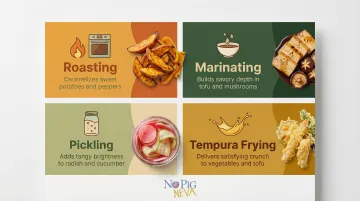
Each prep method brings something different to the roll:
- Roasting caramelizes natural sugars in sweet potatoes and bell peppers
- Marinating builds deep savory flavor in tofu, mushrooms, and carrot lox
- Pickling adds tangy brightness to radish, cucumber, and ginger
- Deep-frying tempura-style delivers satisfying crunch to vegetables and tofu
Don't Overfill
Less filling makes a better roll. Keep these in mind:
- Stick to one or two main fillings plus a sauce or garnish
- Pat softer fillings like avocado dry before placing to prevent slipping
- Treat rice as the base, not an afterthought — overpacked rolls fall apart when sliced
Sauces, Dips & Garnishes That Make Every Roll Pop
Four sauces cover most plant-based sushi situations:
- Spicy mayo: vegan mayo + sriracha, whisked smooth — drizzle over rolls or serve as a dip
- Vegan eel sauce: soy sauce, mirin, and sugar simmered until glossy and thick
- Ponzu: citrus-forward and tangy, best with lighter vegetable rolls
- Ginger-soy drizzle: fresh grated ginger + soy sauce + sesame oil for bowls
Classic condiments round out the spread:
- Wasabi — sharp heat, use sparingly
- Pickled ginger — palate cleanser between rolls
- Soy sauce or tamari — tamari is the gluten-free option for dipping
Keep these on the side so they don't overpower delicate flavors.
Quick garnish ideas elevate presentation in seconds:
- Toasted sesame seeds (white or black)
- Microgreens or sprouts
- Sliced scallions
- A drizzle of sesame oil
- Vegan cream cheese for Philadelphia-style rolls
Pick one or two per roll — more than that gets busy.
Frequently Asked Questions
What are some vegan sushi rolls?
Popular vegan sushi rolls include avocado maki, vegan California roll (with hearts of palm), spicy carrot lox rolls, sweet potato tempura rolls, and peanut tofu sushi. Most classic rolls adapt easily with plant-based swaps.
What is the best sushi for diabetics?
Low-glycemic options like cauliflower rice sushi, vegetable-heavy rolls without sugary sauces, and edamame or avocado-based fillings are better choices. Individuals with diabetes should speak with a registered dietitian for guidance specific to their needs.
Is sushi good for heart patients?
Plant-based sushi is generally heart-friendly, with fiber-rich vegetables and healthy fats from avocado replacing saturated fat. Limit sodium by choosing tamari or coconut aminos over soy sauce, and ask your doctor about what works for your situation.
What sushi is Whole30 compliant?
Standard sushi rice is off-limits on Whole30 due to grains and added sugar. Cauliflower rice rolls or hand rolls wrapped in nori or cucumber sheets with fillings like avocado and fresh vegetables are compliant alternatives.
Do I need a bamboo sushi mat to make rolls at home?
A mat is helpful but not required; plastic wrap or a clean kitchen towel works just as well. For no-roll formats like sushi bowls, burritos, or onigirazu, no mat is needed.
Can I make plant-based sushi gluten-free?
Yes. Swap soy sauce for tamari or coconut aminos, and check that any vegan seafood alternatives or pre-made sauces are labeled gluten-free. Sushi rice itself is naturally gluten-free.