TLDR
- Made from recognizable plant proteins—seitan, soy, pea protein, or mycoprotein—with no mystery ingredients
- Modern products achieve taste parity with real chicken in blind tests
- "Plant-based" doesn't guarantee 100% vegan—some contain egg or dairy binders
- Nutritionally solid: comparable protein, zero cholesterol, less saturated fat than animal chicken
- Look for certified vegan and Non-GMO labels to skip the guesswork
What Is Vegan Chicken, Really?
Vegan chicken is a plant-based food designed to replicate the taste, texture, and versatility of chicken using entirely animal-free ingredients. No animals involved — just plants shaped, seasoned, and cooked to behave like the real thing.
Available formats include:
- Nuggets and tenders
- Strips and fillets
- Popcorn bites
- Deli-style slices
- Breaded cutlets
- Boneless wings
These products slot directly into familiar recipes — stir-fries, sandwiches, salads, wraps — without requiring any major adjustments to how you already cook.
What Is Vegan Chicken Made Of? The Core Ingredients
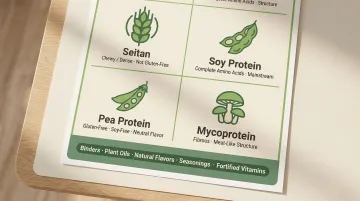
Most vegan chicken products are built around one of four protein bases — each with distinct textures, nutritional profiles, and best-use cases. Here's what's actually inside.
Seitan (Vital Wheat Gluten)
Seitan is made by isolating vital wheat gluten—the protein that remains after washing away wheat starch and soluble carbohydrates. The result is a dense, fibrous, chewy base that closely mimics the texture of chicken muscle, especially in fillets and strips.
Important: Seitan is NOT suitable for people with celiac disease or gluten sensitivity.
Soy Protein
Soy protein isolate or textured soy protein (TSP/TVP) creates a meaty texture and is a nutritional powerhouse. Soy is a complete protein containing all nine essential amino acids, making it nutritionally comparable to animal protein. It's the base for many mainstream vegan chicken brands.
Pea Protein
Pea protein has gained significant ground in vegan chicken products, largely because it's both soy-free and gluten-free — two of the most common dietary restrictions. Its neutral flavor profile absorbs seasonings easily, which is why manufacturers lean on it for convincingly chicken-like results.
Mycoprotein
Mycoprotein is derived from Fusarium venenatum, a naturally occurring fungus, and forms the base of Quorn products. It's grown through a continuous fermentation process — similar to beer or yogurt production — and its naturally fibrous structure produces a texture that's genuinely meat-like. Technically fungi-derived rather than plant-based, current Quorn vegan-labeled products use no animal-derived ingredients.
Other Bases
Less common but noteworthy alternatives:
- Jackfruit - Prized for its pulled-meat texture but low in protein (only 1.72g per 100g). Best for texture-forward dishes like BBQ "chicken"
- Tofu - Versatile soy-based option that absorbs flavors well
- Legume blends - Combinations of beans and lentils for added nutrition
Binders, Flavors, and Fortifiers
Raw protein alone doesn't taste like chicken. Supporting ingredients transform the base into something delicious:
- Binders (methylcellulose, starches) hold the product together and give it a sliceable, cohesive texture
- Plant oils add the moisture and mouthfeel that protein alone can't provide
- Natural flavors and yeast extract build savory, umami depth — the core of that "chicken" taste
- Seasonings and spices deliver the characteristic flavor profile consumers recognize
- Fortified vitamins (B12, iron) compensate for nutrients naturally present in animal protein
How Vegan Chicken Gets Its Texture and Taste
The Extrusion Process
Commercial vegan chicken gets its texture from high-moisture extrusion (HME) — a process that subjects plant proteins to heat, pressure, and mechanical force inside industrial extruders. The proteins unfold and realign into long, parallel fibers that mimic the structure of animal muscle.
A cooling die at the exit locks in 40–70% moisture before the product can lose steam, producing that juicy, pull-apart quality cooked chicken is known for.
The Critical Role of Seasoning
Real chicken has a mild flavor on its own and relies heavily on seasoning. Vegan chicken works exactly the same way. Manufacturers use yeast extract, plant-derived chicken-style flavoring, and smoked or savory notes to close the flavor gap.
Texture varies significantly by base:
- Seitan produces the chewiest, densest bite — closest to whole-muscle chicken
- Pea protein yields a softer, lighter result that absorbs marinades well
- Mycoprotein has a naturally fibrous, layered structure that pulls apart like slow-cooked meat
The base ingredient is usually the single biggest factor in how convincing a product tastes, so it's worth checking the label before you buy.
Separating Fact from Fiction: Common Myths About Vegan Chicken
Myth 1: "Vegan Chicken Is Ultra-Processed Junk Food"
The NOVA classification system—used by nutritional researchers to categorize food by degree of processing—puts The NOVA classification system places both conventional fast-food chicken nuggets and vegan equivalents in the same ultra-processed category.
| Product | Primary Protein | Binders & Starches | Additives |
|---|---|---|---|
| McDonald's McNuggets | White boneless chicken | Enriched flour, bleached wheat flour, yellow corn flour, modified starches | Baking soda, sodium aluminum phosphate, sodium acid pyrophosphate, dextrose |
| Gardein Plant-Based Nuggets | Pea protein, vital wheat gluten | Enriched wheat flour, ancient grain flour, potato starch | Methylcellulose, titanium dioxide, ascorbic acid, sodium bicarbonate |
Both rely on multiple refined flours, modified starches, and chemical leavening agents. The difference? Many vegan versions use recognizable, whole-food-derived ingredients. Read labels rather than relying on headlines.
Myth 2: "It Doesn't Actually Taste Like Chicken"
In 2025, Nectar conducted the world's largest blind taste test of plant-based meats with 2,684 omnivore participants — and plant-based chicken nuggets came out ahead of conventional nuggets in overall consumer preference.
Multiple brands—including Impossible Foods and MorningStar Farms—achieved "taste parity," meaning participants couldn't statistically distinguish them from real chicken. Since real chicken has a mild flavor itself, it's easier to replicate than most people expect.
Myth 3: "All Plant-Based Chicken Is Vegan"
"Plant-based" doesn't guarantee 100% vegan. Some products contain egg whites (as binders), dairy-derived ingredients, or honey-based glazes.
Example: Quorn's Meatless Chicken Nuggets contain both egg white and milk proteins as texturizers. Terms like "meatless" and "vegetarian" only indicate the absence of slaughtered animal flesh—not animal by-products.
When in doubt, look for a certified vegan label rather than relying on "plant-based" alone.
Myth 4: "Vegan Chicken Has No Real Protein"
Leading vegan chicken products deliver protein that's closer to animal chicken than most people realize.
| Brand & Product | Serving Size | Protein per Serving |
|---|---|---|
| Gardein Crispy Golden Nuggets | 87g (5 nuggets) | 14g |
| Beyond Chicken Nuggets | 90g (5 pieces) | 14g |
| Daring Original Pieces | 70g (2.5 oz) | 14g |
| USDA Roasted Chicken Breast | 100g | 31g |
While animal chicken breast has higher protein density per 100g, a typical serving of vegan chicken provides substantial protein—14g is equivalent to about 2 eggs.
That said, soy protein — a common ingredient in many of these products — carries its own set of misconceptions worth addressing directly.
Myth 5: "Soy in Vegan Chicken Is Bad for You"
Concerns about phytoestrogens in soy don't hold up against current evidence. A 2021 meta-analysis of 41 clinical studies found that soy protein and isoflavones do not affect testosterone, estradiol, or estrone levels in men, regardless of dose or duration.
Similarly, a 2024 systematic review found soy isoflavones do not exhibit estrogenic effects in postmenopausal women. The American Cancer Society confirms soy foods are safe as part of a healthy diet. Research consistently links soy consumption to decreased cancer risk — or no change at all.
Is Vegan Chicken Healthy? The Nutritional Breakdown
Key Nutritional Comparisons
| Nutrient | USDA Roasted Chicken Breast (per 100g) | Gardein Crispy Golden Nuggets (per 87g) |
|---|---|---|
| Dietary Fiber | 0g | 0.96g |
| Cholesterol | 85mg | 0mg |
| Saturated Fat | 1.01g | 1g |
| Sodium | 74mg | 340.2mg |
Plant-based advantages:
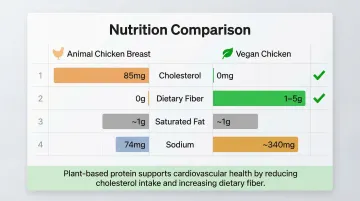
- Contains zero cholesterol, versus 85mg per 100g in animal chicken
- Delivers 1-5g of dietary fiber per serving — something real chicken provides none of
- Matches or beats conventional chicken on saturated fat in most formulations
Those cardiovascular benefits aren't just theoretical. A meta-analysis of controlled clinical trials found that higher plant protein intake — primarily from soy — is associated with meaningful reductions in total cholesterol, LDL, triglycerides, and Apolipoprotein B levels.
The Sodium Consideration
Many commercial vegan chicken products are higher in sodium than plain chicken breast. Gardein nuggets contain 340mg of sodium per 87g serving, compared to 74mg in 100g of unseasoned roasted chicken breast.
If managing blood pressure or heart health, check sodium per serving on the label.
Nuance Matters
Vegan chicken isn't automatically health food. A deep-fried, heavily breaded vegan tender shares many of the same calorie and fat considerations as its animal-based counterpart. When evaluating a product, check the full nutrition panel — sodium, added oils, and breading all affect the final picture more than the "vegan" label does.
How to Choose the Right Vegan Chicken
Label-Reading Essentials
Look for:
- Certified 100% vegan seal, not just "plant-based" labeling
- Non-GMO certification for verified ingredient standards
- Recognizable protein bases: seitan, soy, pea protein, or mycoprotein
- Clear allergen information (gluten, soy)
- Shorter ingredient lists with fewer additives and fillers
Match Protein Base to Dietary Need
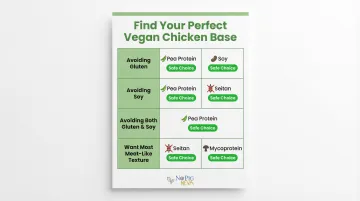
- Avoiding gluten? Choose pea protein or soy-based options (seitan is wheat-based — skip it)
- Avoiding soy? Look for pea protein or seitan
- Avoiding both gluten and soy? Pea protein is your safest pick
- Want the most meat-like texture? Seitan and mycoprotein come closest
Simplify Your Shopping
Once you know what to look for, finding the right product gets much easier. NoPigNeva offers a curated selection of certified 100% vegan and Non-GMO chicken alternatives delivered nationwide — no local store hunting required. With free shipping on orders over $99.99 and a 10% membership discount (no fees, no minimums), options like Gardein Seven Grain Crispy Chicken Tenders ($9.99) and Daring Original Breaded Chicken Pieces ($9.99) ship straight to your door.
Frequently Asked Questions
What is plant-based chicken made out of?
Plant-based chicken is primarily made from seitan (vital wheat gluten), soy protein, pea protein, or mycoprotein. Supporting ingredients include plant oils, binders like methylcellulose, natural flavors, yeast extract, and seasonings that create the familiar chicken taste and texture.
Can vegans eat plant-based chicken?
Most vegan chicken products are safe for vegans, but "plant-based" doesn't always mean 100% vegan. Some products contain egg whites or dairy-derived binders. Always check for a certified vegan label to guarantee full animal-free status.
Is vegan chicken healthy?
Vegan chicken can be a healthy protein source with lower saturated fat and zero cholesterol compared to animal chicken. That said, sodium levels vary widely by brand, and breaded or fried versions carry similar calorie counts as conventional chicken — so always check the nutrition label on the specific product.
What is surprisingly not vegan?
Beyond the obvious ingredients, some "plant-based" or "vegetarian" chicken products sneak in egg whites, milk proteins, or honey-based glazes. Certain food colorings like carmine and processing aids such as gelatin-based carriers are also animal-derived — and rarely flagged on front-of-pack labeling.
Does vegan chicken taste like real chicken?
Modern vegan chicken has come a long way in flavor and texture. Real chicken has a relatively mild flavor that relies heavily on seasoning, which means well-seasoned plant-based versions can be genuinely convincing. In blind taste tests, some brands score as well as conventional chicken.
Is vegan chicken gluten-free?
Seitan-based vegan chicken is NOT gluten-free, as it's made from wheat gluten. Products made from pea protein or soy protein are typically gluten-free, but always check the label and look for a certified gluten-free designation to be certain.