
TLDR
- Oyster mushrooms, seitan, or freeze-thawed tofu each deliver a unique texture and flavor
- A vegan buttermilk soak builds flavor and helps the coating stick
- Double dredging with flour and cornstarch creates a thick, crispy shell
- Frying at 350–375°F is essential for crunch without greasiness
- A second fry at higher heat locks in a shatteringly crisp, golden crust
What Is Vegan Fried Chicken?
Vegan fried chicken replicates the taste and texture of traditional fried chicken using entirely plant-based ingredients. Instead of meat, it relies on protein-rich bases like:
- Oyster mushrooms — shred like pulled chicken and crisp up beautifully when fried
- Seitan — wheat-based and dense enough to mimic a chicken breast or thigh
- Tofu — absorbs marinades well and holds its shape through a full fry
These bases get coated and fried the same way as the original, delivering that crunchy exterior and tender interior most people are after.
The numbers tell the story: the U.S. retail plant-based food market reached $8.1 billion in 2024, with plant-based meat and seafood alone accounting for $1.2 billion. Perhaps more interesting — 96% of households buying plant-based meat also purchase conventional animal meat, meaning flexitarians, not just vegans, are driving demand.
Plant-based chicken nuggets and tenders saw double-digit pound sales growth in U.S. foodservice in 2023, showing that comfort-food formats are what's pulling new buyers in.
Choosing Your Base: Oyster Mushrooms, Seitan, or Tofu
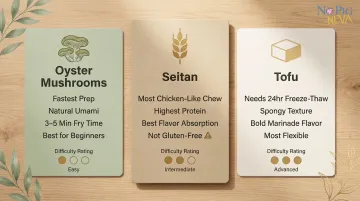
Your choice of base determines the texture, flavor, and cooking time of your vegan fried chicken. Here's how each option performs:
Oyster Mushrooms
Oyster mushrooms are the most popular modern base for a reason:
- Natural umami flavor: High concentrations of glutamate and aspartate deliver a savory, meaty taste without extra seasoning
- Fibrous, meaty texture: They naturally tear into wing-shaped clusters with a satisfying chew
- Minimal prep: No freezing, pressing, or kneading required
- Quick cooking: Fries in just 3–5 minutes
Pick oyster mushrooms if you want dinner on the table fast — they're the lowest-effort option without sacrificing flavor.
Seitan
Seitan is the most "chicken-like" option in terms of chew and density:
- Highest protein content: 75.16g of protein per 100g, far exceeding mushrooms or tofu
- Realistic texture: The gluten network creates an elastic, fibrous bite that closely mimics chicken
- Absorbs marinades deeply: Holds flavor exceptionally well
- Holds shape when fried: Won't fall apart during cooking
Note: Seitan is pure gluten — avoid it if you have celiac disease or gluten sensitivity.
Making seitan from scratch takes time. If you'd rather skip that step, NoPigNeva stocks ready-to-use seitan-based vegan chicken alternatives, shipped nationwide with next-day delivery available on many orders.
Tofu (Freeze-Thaw Method)
Freezing firm tofu, then fully thawing it, transforms its texture:
- Spongy, chewy structure: Ice crystals puncture the protein network, creating a porous, meat-like consistency
- Superior marinade absorption: The sponge-like texture soaks up flavor far more effectively than fresh tofu
- Ideal for KFC-style results: Produces chunky, irregular pieces that fry up crispy and juicy
Choose tofu if you want bold, deeply marinated flavor and a pulled-meat texture — just plan ahead, since the freeze-thaw cycle takes at least 24 hours.
Not sure which to start with? Oyster mushrooms are the easiest entry point. Seitan delivers the most convincing chicken experience. Tofu sits in between — more prep than mushrooms, more flexibility than seitan.
Ingredients You'll Need for This Recipe
Base and Marinade Ingredients
- Protein base: 1 lb oyster mushrooms, seitan, or freeze-thawed firm tofu
- Vegan buttermilk: 1 cup unsweetened plant milk + 1 tablespoon lemon juice or apple cider vinegar
- Seasonings: 1 teaspoon garlic powder, 1 teaspoon onion powder, ½ teaspoon white pepper, 1 teaspoon salt
- Optional flavor boosters: 1 tablespoon hot sauce or 1 tablespoon soy sauce
The buttermilk soak serves two critical purposes: it tenderizes the base by breaking down the proteins, and it gives the dry coating something to grip — which is where the next set of ingredients comes in.
Dredge and Coating Ingredients
- Flour: 1 cup all-purpose flour (provides structure)
- Cornstarch: 1 cup cornstarch (creates a light, glassy, extra-crispy crust)
- Spices: 1 tablespoon paprika, 1 teaspoon garlic powder, 1 teaspoon cayenne pepper, 1 teaspoon black pepper
- Optional Southern flavor: ½ teaspoon celery salt or 1 teaspoon Old Bay seasoning
Flour alone produces a soft coating. Cornstarch contains 25–28% amylose and zero protein, which forms a rigid, brittle, glassy crust when heated—delivering that signature shatter-crisp texture.
Frying Essentials
- Neutral oil: Canola, peanut, or vegetable oil (high smoke point)
- Cooking thermometer: Essential for hitting and holding the right oil temperature
- Wire cooling rack: Keeps pieces elevated so steam can't soften the crust
How to Make the Best Ever Vegan Fried Chicken: Step-by-Step
Prepare and Marinate Your Base
- Prep your base: Tear oyster mushrooms into wing-sized pieces along natural grain lines. (For tofu: freeze-thaw, press out moisture, break into chunky irregular pieces. For seitan: cut into tender-sized strips.)
- Make vegan buttermilk: Combine plant milk with lemon juice or vinegar and let sit for 5 minutes until thickened.
- Add seasonings: Whisk garlic powder, onion powder, white pepper, salt, and optional hot sauce or soy sauce into the buttermilk.
- Marinate: Submerge the base completely and refrigerate for 30 minutes up to 4 hours.
Set Up Your Dredging Station
- Bowl 1 (Dry dredge): Combine flour, cornstarch, and all dry spices.
- Bowl 2 (Wet batter): Reserve ½ cup of the dry mix and whisk in plant milk to a loose pancake-batter consistency.
- Arrange stations: Marinated base → wet batter → dry dredge → clean rack.
Double Dredge for Maximum Crust
- Coat each piece first in the dry dredge
- Dip into the wet batter
- Return to the dry dredge, pressing gently to ensure full adhesion
Double dredging creates a thicker, craggier crust than a single coat. The wet layer acts as glue, letting the second dry layer build up a substantial shell with real crunch.

Fry to Golden Perfection
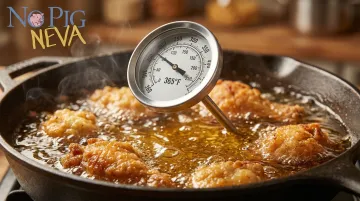
- Heat oil to 350–375°F in a deep pan or fryer
- Fry in small batches: Never crowd the pan, which drops oil temperature and results in soggy, oil-soaked crust
- Cook 3–5 minutes: Fry until deep golden brown, flipping as needed
- Drain on a wire rack: Not paper towels—elevation keeps the base crispy on all sides
Keep oil steady at 350–375°F throughout. Too low, and the crust absorbs oil. Too high, and the outside burns before the interior heats.
Optional Double-Fry for Ultimate Crunch
For restaurant-level crispiness:
- Allow fried pieces to cool to room temperature
- Return to oil heated to 400°F for 1–2 minutes
This second fry drives out residual moisture from the interior without overcooking the base, creating an ultra-crispy shell that stays crunchy longer.
Pro Tips for Extra Crispy Vegan Fried Chicken
Boost Your Cornstarch Ratio
The higher the proportion of cornstarch in your dredge, the crispier the result. Aim for at least a 1:1 ratio of cornstarch to flour, or even slightly more cornstarch. Cornstarch creates a thinner, more rigid crust when exposed to heat, while flour alone produces a softer coating.
Don't Rush the Marinade
Skipping or shortening the buttermilk soak is the most common mistake. The soak not only builds flavor but also allows the dry dredge to form a thick, adherent crust. A minimum of 30 minutes is acceptable, but 2–4 hours delivers noticeably better flavor and coating grip.
Oil Temperature Is Non-Negotiable
Use a thermometer and adjust heat throughout frying to maintain 350–375°F consistently. Frying at too low a temperature causes the crust to absorb oil rather than crisp up, resulting in a greasy coating. Too high, and the outside burns before the interior heats.
Season Both the Marinade AND the Dredge
Plant-based bases like mushrooms and tofu have mild natural flavor. Season at every stage — in the buttermilk soak AND the flour coating — so the flavor runs through every bite, not just the surface.
Air Fryer and Oven Alternatives
If you want the crunch without the deep-fry, both methods hold up well. The texture is slightly less crispy but still satisfying — a solid trade-off for anyone cutting back on oil.
- Lightly spray breaded pieces with oil and air fry at 400°F for 8–10 minutes, flipping halfway through
- Bake in the oven at 425°F for 20–25 minutes on a wire rack for even browning
Serving Ideas, Variations & How to Store Leftovers
Serving and Variations
This recipe adapts well across flavors and occasions. A few directions worth trying:
- Classic Southern-style: pair with vegan coleslaw, pickles, and hot sauce
- Korean-style: toss fried pieces in a soy-ginger glaze or gochujang sauce after the final fry
- Buffalo: coat in vegan buffalo sauce and serve with vegan ranch dressing and celery sticks
It also works well beyond the plate on its own:
- Stack onto a toasted bun with vegan mayo, lettuce, and pickles for a fried chicken sandwich
- Serve over waffles with maple syrup for a brunch centerpiece
- Chop into strips for a crispy salad topping
Storage and Reheating
Leftovers hold up well with the right method:
- Refrigerate: store cooled leftovers in an airtight container for up to 3 days
- Reheat: Use an air fryer or oven at 375°F for 8–10 minutes to restore crispiness—avoid the microwave as it creates steam that turns the crust soggy
- Freeze: Finished fried pieces can be frozen for up to 2 months and reheated directly from frozen in the air fryer
Frequently Asked Questions
What is vegan fried chicken?
Vegan fried chicken is a plant-based version of traditional fried chicken, using a protein-rich base such as oyster mushrooms, seitan, or tofu coated in seasoned batter and fried until crispy—no animal products involved.
What is vegan fried chicken made of?
It consists of three components: a plant-based protein base (typically oyster mushrooms, seitan, or tofu), a seasoned dredge of flour and cornstarch with spices, and a vegan buttermilk made from plant milk and acid, then fried together in neutral oil.
Does vegan fried chicken taste like chicken?
With proper seasoning and technique, vegan fried chicken closely mimics the savory, crispy experience of traditional fried chicken. Seitan offers the most similar chew and density, while oyster mushrooms deliver excellent umami flavor and a satisfying bite.
What exactly is seitan chicken?
Seitan is a high-protein food made from vital wheat gluten that, when shaped and seasoned, closely replicates the fibrous, chewy texture of chicken, making it one of the most realistic plant-based bases for this recipe.
Is plant-based fried chicken healthy?
While vegan fried chicken is still a fried food best enjoyed in moderation, it contains no cholesterol and is generally lower in saturated fat than traditional fried chicken. Air fryer or oven versions reduce the oil content further for a lighter option.