Introduction
Getting a crispy, juicy vegan chicken sandwich right at home is harder than it looks. Most attempts end up with soggy coatings, bland fillings, or patties that crumble on the first bite.
Three things usually go wrong:
- Picking the wrong plant-based base for the job
- Skipping the double-dredge technique that locks in crunch
- Assembling the sandwich in an order that causes it to fall apart
This guide solves those problems. You'll learn how to select the best vegan "chicken" option for your dietary needs and time constraints, execute the pickle juice marinade and crispy coating that rival any drive-thru, and build a sandwich that stays structurally sound from first bite to last. Whether you're deep frying or air frying, meal prepping or cooking on demand, you'll have a crispy, satisfying vegan chicken sandwich ready in under an hour.
The Short Version (TLDR)
- Double-dredge batter (wet-dry-wet-dry) creates the signature crispy crust
- Pickle juice marinade delivers tangy, fast-food-style flavor
- Works with homemade seitan, pressed tofu, or store-bought vegan chicken patties
- Deep frying at 325–350°F gives the best results; air fryer works for pre-breaded patties only
- Prep ahead and refrigerate up to 4 days or freeze for 2 months
Choosing Your Vegan Chicken Base
The foundation of your sandwich determines texture, protein content, and how much prep time you'll invest. Three main options exist, each with distinct advantages.
Seitan: The Most Convincing Texture
Vital wheat gluten (seitan) creates the most meat-like chew and fibrous texture. During mixing and kneading, heat and mechanical shear cause disulfide bonds to form and rearrange, aligning proteins into a dense, directional fiber network that closely mimics animal muscle. That structural bonding is what gives seitan its characteristic "pull" and satisfying bite.
Basic seitan process:
- Mix vital wheat gluten with spices and liquid
- Knead for 3–5 minutes to develop structure
- Simmer in broth for 45–60 minutes
- Shape into patties while still warm
Seitan holds up exceptionally well to frying, maintaining its structure even after double-dredging and oil submersion.
Tofu: The Best Gluten-Free Alternative
Extra-firm tofu becomes remarkably meat-like through the freeze-thaw method. Freezing tofu causes ice crystals to expand and puncture cell walls, creating a porous, spongy texture. Upon thawing, water drains out, leaving a dense honeycomb network that absorbs marinades efficiently.
Freeze-thaw method:
- Freeze extra-firm tofu for at least 24 hours
- Thaw completely and press for 30 minutes
- Slice into ½-inch thick patties
- Marinate before battering
This irreversible transformation delivers significantly better texture than fresh tofu.
Store-Bought Vegan Chicken: The Time-Saving Option
Pre-made vegan chicken cutlets, strips, or scallopini from specialty retailers save significant prep time while still producing excellent results when properly battered and fried. Plant-based nuggets, tenders, and similar formats represent the second-largest plant-based meat category in U.S. retail, capturing 2–3% of the packaged meat subcategory.
When to choose store-bought:
- Limited cooking time (under 30 minutes total)
- Consistent results without trial and error
- Pre-seasoned options that reduce spice blending
NoPigNeva stocks seitan-based cutlets, ready-to-cook vegan chicken, and other plant-based alternatives shipped nationwide — so if you'd rather skip the homemade prep entirely, the store-bought route is well covered.
The Crispy Batter and Dredging Technique
The coating makes or breaks a fried chicken sandwich. These techniques ensure maximum crunch and flavor.
Pickle Juice Marinade: The Tangy Secret
Soak your vegan chicken patty in dill pickle juice for at least 1 hour, or up to overnight. Acidic marinades lower the pH of plant proteins, denaturing them and increasing water-holding capacity, which results in a juicier, more tender interior that absorbs flavor effectively.
Marinade formula:
- 1 cup dill pickle juice
- ½ teaspoon cayenne pepper (optional)
- ¼ teaspoon garlic powder
Two-Station Dredging Setup
Station 1 – Wet batter:
- 1 cup plant-based milk
- 1 tablespoon apple cider vinegar
- 1 tablespoon hot sauce
- 2 tablespoons cornstarch
Let this mixture sit for 5 minutes to create a buttermilk-style binder.
Station 2 – Dry seasoned flour:
- 1½ cups all-purpose flour
- 1 tablespoon garlic powder (savory depth)
- 1 tablespoon onion powder (sweetness and umami)
- 2 teaspoons smoked paprika (color and subtle smoke)
- 1 teaspoon celery salt
- ½ teaspoon white pepper
- ½ teaspoon chili powder
- 1 teaspoon salt
The Double-Dredge Technique
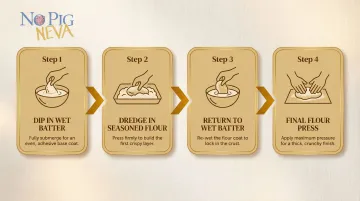
A single coat of batter produces thin, inconsistent crust. Double-dredging (wet → dry → wet → dry) dramatically improves crust thickness and crunchiness by creating multiple layers.
- First dry layer absorbs surface moisture, preventing batter slip
- Creates rough texture for mechanical interlocking
- Builds a craggier crust with increased surface area
- Dip marinated patty in wet batter, coating completely
- Dredge in seasoned flour, pressing gently to adhere
- Return to wet batter for second coat
- Final dredge in flour, pressing firmly
Let coated patties rest on a wire rack for 5–10 minutes before frying. This allows the coating to set and reduces blow-off.
Frying at 325–350°F
Once your patties are coated and rested, oil temperature determines whether you get a shatter-crisp crust or a greasy one.
Maintaining oil temperature between 325°F and 350°F is critical. At these temperatures, water in the batter rapidly converts to steam, creating outward pressure that prevents oil from seeping in. Drop below this range and steam pressure weakens — oil soaks in and the crust turns greasy.
Frying technique:
- Heat 2–3 inches of vegetable or peanut oil in heavy-bottomed pot
- Use thermometer to verify temperature
- Fry one patty at a time for 3–4 minutes, flipping halfway
- Look for deep golden-brown color and firm crust
- Place on wire rack, never paper towels
Resting on paper towels traps steam underneath, causing condensation that immediately softens the crust. Wire racks keep air circulating underneath so your crust stays crisp all the way through.
Toppings, Spreads, and Sandwich Assembly
Once your patty is hot and crispy, how you build the sandwich matters just as much as how you cook it. Strategic layering prevents sogginess and keeps every bite balanced.
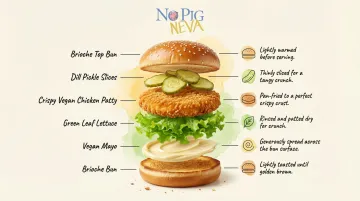
Classic Build (Bottom to Top)
- Toasted brioche or sesame seed bun – Toast cut sides in dry skillet or under broiler for 60–90 seconds
- Vegan mayo – Spread generously on bottom bun (2 tablespoons minimum)
- Crisp green leaf lettuce – One large leaf, patted dry
- Crispy vegan chicken patty – Place immediately after frying
- Sliced dill pickles – 3–4 chips, arranged in single layer
- Top bun
Vegan Mayo: The Essential Spread
Vegan mayo adds creaminess and richness while creating a moisture barrier that protects the bun. Major brands like Follow Your Heart Vegenaise and Hellmann's Plant-Based Mayo are certified vegan and widely available.
Flavor variations:
- Stir 1 minced garlic clove per ¼ cup mayo for a quick garlic aioli
- Add 1 tablespoon sriracha for a spicy kick
- Fold in 1 tablespoon fresh dill or basil for a bright herb version
Alternative spreads:
- Mashed avocado or guacamole
- Hummus (adds protein and fiber)
- Dairy-free yogurt-herb sauce
Popular Topping Upgrades
Cheese:
- Vegan cheddar or pepper jack (melt on patty right after frying)
- NoPigNeva stocks several meltable vegan cheese varieties — including cheddar and pepper jack — available for nationwide delivery
Add-ons:
- Sliced tomato (pat dry to prevent sogginess)
- Crispy vegan bacon strips
- Pickled jalapeños for heat
- Tangy coleslaw for crunch and contrast
Toast the Bun
Never skip this step. Toasting creates a structural barrier that holds up against juicy patties and sauces, keeping the bottom bun intact through every bite. The brief contact with the skillet also brings out a subtle nuttiness that plain bread can't deliver.
Air Fryer vs. Deep Frying: Which Method Works Best?
Both methods work — but the right choice depends on your batter type and the texture you're after.
Deep Frying: The Gold Standard
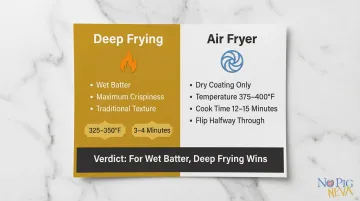
Deep frying in vegetable or peanut oil delivers the most authentic, crispy-shelled result and is the recommended method for achieving fast-food-level crunch. Oil immersion provides rapid, 360-degree heat transfer that instantly sets wet batter into a solid crust.
Best for:
- Double-dredge wet batter technique
- Maximum crispiness
- Traditional fried chicken texture
Air Fryer: The Lower-Fat Alternative
Air fryers use convective hot air rather than oil immersion. Wet batters fail in air fryers because hot air can't replicate the rapid heat transfer of hot oil — causing batter to drip before it sets.
Air fryer guidelines:
- Use only dry flour coating or pre-breaded store-bought patties
- Set temperature to 375–400°F
- Cook for 12–15 minutes, flipping halfway
- Spray lightly with cooking oil for crispness
Brands like Beyond Meat and Impossible Foods formulate their frozen nuggets and tenders specifically for air frying, with recommended cook times of 6–10 minutes at 350–400°F.
Make-Ahead, Storage, and Reheating Tips
Proper prep and storage maximize convenience without sacrificing quality.
What to Prep Ahead
Vegan chicken base:
- Homemade seitan: Refrigerate up to 48 hours before frying
- Marinated tofu: Prepare and refrigerate 24 hours in advance
- Store-bought patties: Keep frozen until ready to use
Dry flour mix: Pre-mix and store in airtight container for up to 4 weeks.
Storage Guidelines
Cooked leftovers should be refrigerated within 2 hours and consumed within 3–4 days, per USDA food safety guidelines.
Refrigerator storage (3–4 days):
- Store fried patties in airtight container
- Keep sandwich components separate to prevent sogginess
- Buns and toppings stored separately stay fresh longer
Freezer storage (1–3 months optimal quality): Fried patties hold best quality for 1–3 months in the freezer, per FDA guidance. While freezing keeps food safe indefinitely, texture and moisture degrade over time.
- Wrap individual fried patties in plastic wrap, then foil
- Label with date
- Freeze flat for even freezing
Reheating for Crispness
Reheat in a 375°F oven or air fryer for 5–8 minutes to restore crispy texture. Avoid microwaving — it generates steam that turns breaded coatings soggy.
Frequently Asked Questions
What is vegan chicken made out of?
Vegan chicken is most commonly made from vital wheat gluten (seitan), soy protein concentrate, tofu, or pea protein. These plant proteins are processed, seasoned, and textured to mimic the fibrous chew and savory flavor of real chicken.
What is a vegan substitute for chicken?
Seitan provides the most authentic texture and chew, extra-firm tofu works as a gluten-free option, and jackfruit offers a pulled, stringy texture for shredded applications. Store-bought plant-based chicken patties offer the most convenience with consistent results.
What is a good vegan sandwich filling?
Crispy vegan chicken is an excellent sandwich filling, especially when paired with vegan mayo, pickles, lettuce, and avocado. Other strong options include marinated and grilled tofu, roasted chickpea salad, or seasoned jackfruit for a pulled texture.
What spreads can vegans eat?
Vegan mayo, hummus, mashed avocado, tahini, dairy-free cream cheese, mustard, and hot sauce all work well. Creamy options like vegan mayo and avocado are especially good for keeping sandwiches moist without overpowering the filling.
What is the best vegan chicken brand?
Daring Foods, Gardein, and Simulate (NUGGS) are consistently top-rated for texture and flavor. Your best pick depends on whether you need gluten-free or soy-free options — NoPigNeva carries a curated selection of plant-based chicken products shipped nationwide if you can't find them locally.
Can I make a vegan chicken sandwich in an air fryer?
Yes, but pre-breaded store-bought patties or a dry flour coating work better than wet liquid batter. Wet batters require oil submersion to set properly and will drip through air fryer baskets before crisping. Use 375–400°F for 12–15 minutes, flipping halfway.