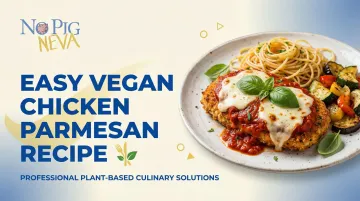
Wondering if vegan chicken parm actually tastes like the real thing? It does—when you nail the fundamentals. This recipe works for beginners and experienced cooks alike, and you can have dinner on the table in under an hour if you use a store-bought shortcut.
Three elements make this recipe stand out: flexible protein base options (homemade seitan, frozen tofu, or ready-to-use vegan chicken), a crispy Italian herb breadcrumb coating, and a gooey dairy-free cheese melt that finishes perfectly in the oven.
TLDR
- Make vegan chicken parm with breaded seitan, tofu, or store-bought vegan cutlets topped with marinara and dairy-free mozzarella
- Store-bought vegan cutlets cut total cook time to under an hour, pasta included
- Naturally dairy-free and easily adaptable for gluten-free diets with a few simple ingredient swaps
- Leftovers keep for 3–4 days refrigerated; cutlets freeze well for up to 2 months
- Seitan and tofu bases are high in protein and naturally cholesterol-free
Why You'll Love This Vegan Chicken Parmesan
This is a true comfort food transformation. You get all the crispy, saucy, cheesy satisfaction of classic Italian-American chicken parm—without any animal products. Whether you're fully vegan or just trying to eat less meat, this one's genuinely crowd-pleasing.
It's also a surprisingly strong nutritional option. Seitan from vital wheat gluten packs 75 grams of protein per 100g raw—more than double the 31g in cooked chicken breast—and contains zero cholesterol compared to 85 mg in chicken. Even prepared seitan, diluted with broth and flour, holds up as a high-protein, cholesterol-free base.
This recipe also works across a range of meals:
- Serve over spaghetti for a classic weeknight dinner
- Stuff into toasted hoagie rolls for a chicken parm sandwich
- Bread and freeze a batch for quick meals later in the week
Choosing Your Vegan Chicken Base
Three main options work well here: homemade seitan, frozen-then-thawed tofu, and store-bought vegan chicken. Your choice comes down to how much time you have and what texture you're after.
Homemade Seitan Cutlets
Seitan produces the closest texture to real chicken: chewy, meaty, and firm. Made by hydrating vital wheat gluten and removing the starch, seitan mimics the chewy, spongy texture of meat and soaks up marinades well. It holds breading better than any other plant-based option and takes about 30–45 minutes to make from scratch.
Plain seitan tastes mildly savory and wheat-like on its own, but when seasoned with poultry seasoning, garlic powder, and Italian herbs it becomes convincingly chicken-like. Important: Seitan is pure wheat gluten, making it strictly unsuitable for anyone with celiac disease, non-celiac gluten sensitivity, or wheat allergies.
Frozen and Thawed Tofu Cutlets
The "freezer trick" transforms tofu's texture completely. Tofu is approximately 86% water by composition. When frozen overnight, that water crystallizes and expands, creating hydraulic pressure that ruptures the soy protein network and cell walls.
After thawing and pressing, you're left with a spongy, porous texture with permanent microfractures—noticeably different from fresh tofu's soft sponginess. It crisps up evenly when breaded and baked, delivering a chewier, more meat-like bite than anything fresh tofu can offer.
Store-Bought Vegan Chicken (Quick Shortcut)
Store-bought vegan chicken cutlets make this recipe achievable in under an hour—no seitan-making required. Choose unseasoned or lightly seasoned scallopini-style cuts so the Italian herb breading can shine. NoPigNeva carries vegan chicken options including Bartleby's Spicy Seitan Chicken Cutlets, so you can order plant-based proteins alongside other specialty vegan ingredients in a single shipment.
Most commercial vegan chicken achieves its texture through a combination of:
- Soy protein, wheat gluten, or pea protein (often blended)
- Binders like methylcellulose
- Various starches for structure and chew
Ingredients You'll Need
Organize your ingredients into four main groups:
- Vegan chicken base – homemade seitan, frozen-thawed tofu, or store-bought cutlets
- Herbed breadcrumb breading – breadcrumbs, Italian seasoning, garlic powder, salt, pepper, vegan parmesan
- Dairy-free cheese layer – vegan mozzarella shreds or sauce, vegan parmesan for garnish
- Pasta and marinara – spaghetti and your favorite marinara sauce
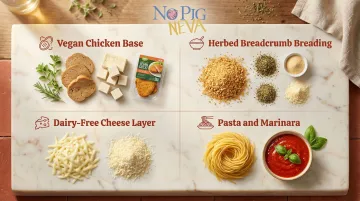
The ingredient list looks long but most items are pantry spices. The complexity comes from seasoning, not technique.
A few items — vital wheat gluten (for homemade seitan), vegan mozzarella shreds, and vegan parmesan — can be harder to find at a standard grocery store. NoPigNeva ships these specialty vegan products nationwide, with free shipping on orders over $99.99.
Simple substitutions:
- Panko breadcrumbs → extra crispiness
- Cornstarch → replaces tapioca starch in breading
- Any dairy-free milk (oat, almond, soy) → dredging liquid
- Gluten-free breadcrumbs → makes the coating GF-friendly
How to Make Easy Vegan Chicken Parmesan – Step by Step
Prepare Your Vegan Chicken
If using homemade seitan:
Combine vital wheat gluten with blended tofu and spices (poultry seasoning, garlic powder, Italian seasoning, salt) in a mixing bowl. Stir just until a smooth dough ball forms—don't over-knead or the texture becomes rubbery. Divide the dough into cutlet shapes, about ½-inch thick.
Simmer the cutlets in vegetable broth for 15 minutes, then transfer to a baking sheet and bake at 350°F for 20 minutes. Alternatively, skip simmering and bake covered for 25 minutes, then uncovered for 10 minutes.
If using frozen tofu:
Freeze extra-firm tofu overnight. Thaw completely, then press out all excess water—this step is critical. Slice into ½-inch cutlets. Marinate in a mixture of olive oil (or water), vegan chicken-style bouillon, and minced garlic for at least 30 minutes.
If using store-bought:
Frozen vegan chicken cutlets can go straight from freezer to the breading station—no thawing needed.
Bread and Bake
Once your cutlets are prepped, set up a simple breading station with two shallow dishes:
- Dairy-free milk
- Breadcrumbs mixed with Italian seasoning, salt, pepper, and grated vegan parmesan
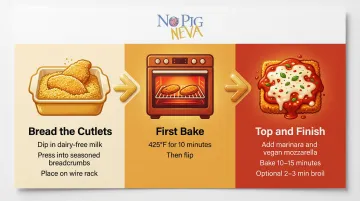
Pat each cutlet completely dry—excess moisture makes breading fall off. Dip in milk, let excess drip off, then press firmly into breadcrumbs on both sides. Place on a wire rack set over a baking sheet. Drizzle or spray lightly with olive oil.
Bake at 425°F for 10 minutes, then flip each cutlet.
Spread 2–3 tablespoons marinara sauce on top and sprinkle generously with vegan mozzarella shreds. Return to the oven for another 10–15 minutes until the cheese is bubbly and golden. For extra browning, broil for the final 2–3 minutes.
Assemble and Serve
While the cutlets finish baking, pull together the rest of the dish:
- Cook spaghetti according to package instructions
- Warm extra marinara in a saucepan over low heat
- Plate the pasta and spoon marinara over it
- Top with a vegan chicken parm cutlet
- Finish with fresh basil and a generous grating of vegan parmesan
Tips for the Best Results
Press and dry your protein thoroughly. Excess moisture is the number one reason breadcrumbs fall off during baking. Whether using tofu or seitan, pat the surface completely dry with paper towels before dredging.
Bake on a wire rack, not directly on the pan. Place breaded cutlets on a wire rack set over the baking sheet. This allows 360-degree air circulation, prevents the bottom from sitting in moisture, and promotes even Maillard browning on all sides.
Use vegan mozzarella shreds, not slices. Shreds melt more evenly and cover the surface better. If making a homemade cheese sauce (vegan butter, flour, dairy-free milk, melted vegan mozzarella), prepare it while the cutlets bake. Broiling the final 2–3 minutes creates that golden, restaurant-style top.
Serving Suggestions and Storage
Once your cutlets are ready, here are a few ways to serve them:
- Classic presentation over spaghetti with warm marinara
- Chicken parm sandwiches on toasted hoagie rolls
- Alongside a simple green salad for a lighter meal
- Garnish with fresh basil and vegan parmesan just before serving
Storage: Store cooled cutlets in an airtight container in the refrigerator for 3–4 days according to USDA guidelines. Reheat in an oven or toaster oven at 375°F for 8–10 minutes to restore crispiness—avoid the microwave, which makes breading soggy.
These cutlets also freeze well. Bread and bake them without sauce and cheese, cool completely, then freeze flat on a baking sheet before transferring to a freezer bag. Use within 1–3 months for best quality. To serve, thaw the cutlets, top with sauce and cheese, and bake at 375°F until heated through.
Frequently Asked Questions
What is a vegan alternative to chicken parmesan?
Vegan chicken parmesan replaces the chicken cutlet with plant-based protein such as homemade seitan, frozen-and-thawed tofu, or store-bought vegan chicken, and swaps dairy cheese for vegan mozzarella and parmesan. The marinara and pasta remain naturally vegan.
What's a vegan substitute for Parmesan cheese?
Store-bought vegan parmesan like Violife's Just Like Parmesan works well, or make your own by pulsing raw cashews or almonds with nutritional yeast, garlic powder, and salt in a food processor. Nutritional yeast alone also delivers a cheesy, umami-rich finish.
Can you use a vegan chicken patty for vegan chicken parmesan?
Yes—an unseasoned or lightly seasoned vegan chicken patty or scallopini works perfectly. Choose one that isn't pre-breaded so you can add the Italian herb coating fresh.
What is a vegan chicken patty made of?
Most store-bought vegan chicken patties use soy protein, wheat gluten (seitan), or pea protein, along with binders like methylcellulose and starches. They're high in protein and hold up well to breading and baking.
What does seitan chicken taste like?
Plain seitan has a mild, slightly savory, wheat-like flavor on its own. It readily absorbs whatever seasonings and marinades it's cooked with, so when seasoned with poultry spice, garlic, and Italian herbs, it tastes remarkably similar to chicken.
Is seitan healthier than chicken?
Seitan is comparable to chicken in protein content (75g per 100g raw vs. 31g per 100g cooked chicken breast), typically lower in fat and calories, and cholesterol-free. However, it's unsuitable for those with celiac disease or gluten sensitivity due to its wheat gluten base.