Introduction: Why Vegan Meal Prep Is a Game-Changer
Introduction: Why Vegan Meal Prep Saves Your Week
The average person makes over 200 food-related decisions every day — and most of them happen when you're already hungry, tired, or short on time. That's when vegan eating gets hard. Not because the food is complicated, but because the decision is.
A 5-day plant-based meal prep plan compresses all those decisions into one focused session. According to a 2020 study published in the International Journal of Behavioral Nutrition and Physical Activity, people who plan meals ahead show stronger adherence to nutritional guidelines and eat a wider variety of foods. In practice, that means less food waste, fewer last-minute takeout orders, and a much easier week.
This guide gives you a complete 5-day vegan meal plan, a practical batch-cooking strategy, simple whole-food recipes, nutrition guidance, and grocery tips — whether you're new to plant-based eating or just looking to get more organized.
TLDR: What You'll Get From This Guide
- Complete 5-day vegan meal plan covering breakfast, lunch, dinner, and snacks
- One 60–90 minute batch-cooking session preps your entire week upfront
- Simple recipes built around affordable pantry staples — lentils, chickpeas, and tofu
- Balanced macros built in: adequate protein, fiber, and key nutrients covered daily
- Grocery and timing strategies to cut costs and eliminate last-minute guesswork
Before You Start: Pantry Staples and Tools You'll Need
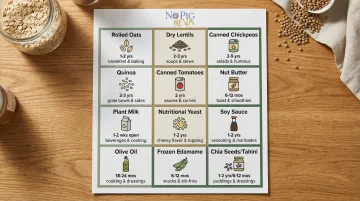
Stocking your pantry with versatile vegan staples allows you to build multiple meals without extra shopping trips. These 12 essentials form the foundation of your 5-day plan:
- Rolled oats — base for breakfasts and energy bites; shelf-stable up to 12 months
- Dry lentils — cook in 20 minutes, no soaking needed; keep for 12 months
- Canned chickpeas — ready to use straight from the can; use within 3-4 days after opening
- Quinoa — complete protein; cooks in 15 minutes and stores well in the fridge for 5 days
- Canned tomatoes — the backbone of soups, stews, and sauces; shelf-stable for 12-18 months
- Peanut or almond butter — adds protein and healthy fats to sauces, smoothies, and snacks
- Plant-based milk (shelf-stable) — keeps 6+ months unopened; open cartons last about a week
- Nutritional yeast — adds a cheesy, savory flavor; choose a fortified variety for B12
- Soy sauce or tamari — use tamari for a gluten-free option; both last up to 3 years unopened
- Olive oil — for roasting and dressings; best quality within 6-12 months of opening
- Frozen edamame — high in protein; goes straight from freezer to bowl with no prep
- Chia seeds and tahini — essential for protein, healthy fats, and homemade dressings
If any of these are hard to source locally — especially specialty items like vegan seafood, plant-based meat alternatives, or unique plant proteins — NoPigNeva ships 100% vegan, Non-GMO groceries nationwide, with free shipping on orders over $99.99 and no membership required.
Essential Tools:
A few basic tools make plant-based meal prep efficient. None need to be expensive:
- Large pot — for batch-cooking grains and legumes
- Sheet pan — for roasting vegetables
- Airtight glass containers — for storing prepped meals in the fridge
- Blender — for smoothies, dressings, and sauces
- Rice cooker or Instant Pot (optional) — speeds up grain and legume cooking considerably
Your 5-Day Vegan Meal Plan at a Glance
This plan is built around overlapping ingredients to minimize waste and cooking time — batch-cook once, eat across multiple days.
Quick Overview:
| Day | Breakfast | Lunch | Dinner | Snack |
|---|---|---|---|---|
| 1 | PB Banana Overnight Oats | Lentil & Veggie Grain Bowl | One-Pan Chickpea Tomato Stew | Roasted chickpeas |
| 2 | Green Smoothie | Leftover Chickpea Stew | Tofu Stir-Fry with Brown Rice | Apple with nut butter |
| 3 | Overnight Oats (batch 2) | Lentil-Stuffed Pita | Black Bean Tacos | Edamame |
| 4 | Tofu Scramble | Brown Rice Bowl with Edamame | Red Lentil Soup | Handful of nuts |
| 5 | Smoothie Bowl | Leftover Red Lentil Soup | Quinoa-Stuffed Bell Peppers | Fresh fruit |
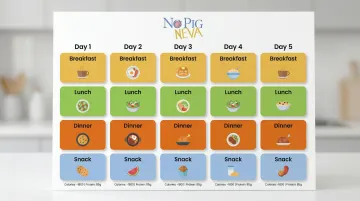
Every recipe here takes under 30 minutes of active cooking — most components are batch-prepped on Day 0. The focus is whole foods over processed substitutes, which makes the plan beginner-friendly without sacrificing nutrition.
That said, nutrition isn't an afterthought. Each day delivers protein from legumes, tofu, nuts, and seeds, alongside fiber and healthy fats to keep energy steady. Scale portions up or down based on your calorie needs — most adults will find the base plan lands between 1,800–2,200 calories per day.
Days 1–5: Easy Plant-Based Recipes
Each day below is designed around a core prep principle: batch cook once, eat well all week. Grains, legumes, and sauces made on Days 1 and 4 carry through multiple meals, keeping daily effort under 30 minutes. Follow the days in order for maximum efficiency.
Day 1: Fuel Up and Get Familiar
Breakfast: Peanut Butter Banana Overnight Oats
This 5-minute prep delivers high protein and fiber to start your day right.
Ingredients:
- ½ cup rolled oats
- 1 cup soy milk
- 1 tbsp chia seeds
- 2 tbsp peanut butter
- 1 sliced banana
- Optional: maple syrup, cinnamon
Instructions: Combine oats, soy milk, chia seeds, and peanut butter in a jar. Stir well, cover, and refrigerate overnight. Top with sliced banana before eating.
Lunch: Big Lentil & Veggie Grain Bowl
A hearty bowl using batch-prepped lentils and roasted sweet potato.
Ingredients:
- 1 cup cooked lentils
- ½ cup roasted sweet potato cubes
- 2 cups fresh spinach
- 2 tbsp tahini dressing (tahini, lemon juice, water, garlic)
Instructions: Arrange lentils, sweet potato, and spinach in a bowl. Drizzle with tahini dressing.
Dinner: One-Pan Chickpea Tomato Stew
A simple 6-ingredient recipe ready in 25 minutes.
Ingredients:
- 1 can (15 oz) chickpeas, drained
- 1 can (14 oz) diced tomatoes
- 1 onion, diced
- 2 garlic cloves, minced
- 1 tsp cumin
- Salt, pepper, olive oil
Instructions: Sauté onion and garlic in olive oil until soft. Add chickpeas, tomatoes, cumin, salt, and pepper. Simmer 15 minutes. Serve with crusty bread or rice.
Snack: Handful of roasted chickpeas or edamame.
Day 2: Leftovers Done Right
Tonight's chickpea stew does double duty at lunch — no cooking needed. Dinner is the only new recipe today, and it comes together in under 20 minutes using pre-prepped rice.
Breakfast: Green Smoothie
Blend 1 cup spinach, 1 frozen banana, 1 tbsp almond butter, and 1 cup plant milk until smooth. Quick, nutrient-dense, and portable.
Lunch: Leftover chickpea stew from Day 1.
Dinner: Tofu Stir-Fry with Broccoli and Brown Rice
Use pre-pressed tofu to save time — or press it 15 minutes ahead if using standard firm tofu.
Ingredients:
- 8 oz firm tofu, cubed
- 2 cups broccoli florets
- 1 bell pepper, sliced
- 2 cups cooked brown rice
- Soy-ginger sauce (2 tbsp soy sauce, 1 tbsp grated ginger, 1 tsp sesame oil)
Instructions: Cube pre-pressed tofu and stir-fry in sesame oil until golden. Add broccoli and bell pepper, cook 5 minutes. Add sauce, toss, and serve over brown rice.
Snack: Apple with nut butter.
Day 3: Quick Midweek Wins
Midweek is where meal prep earns its keep. Breakfast is already done (second batch of overnight oats from Day 1), lunch takes 5 minutes to assemble, and tacos are on the table in 15.
Breakfast: Overnight oats (second batch from Day 1 prep).
Lunch: Lentil-Stuffed Pita
Stuff a whole wheat pita with ½ cup cooked lentils, cucumber slices, diced tomato, and 2 tbsp hummus.
Dinner: Black Bean Tacos
Canned black beans make this dinner fast and affordable.
Ingredients:
- 1 can (15 oz) black beans, drained
- 4 small corn tortillas
- ½ avocado, sliced
- 1 cup shredded cabbage
- Lime wedges
- Salsa
Instructions: Warm black beans in a pan with cumin and garlic powder. Fill tortillas with beans, cabbage, avocado, and salsa. Squeeze lime on top.
Snack: Handful of edamame.
Day 4: Batch Cooking Pays Off
Day 4 is your second big cooking day. The tofu scramble preps in 10 minutes and reheats perfectly all week. The red lentil soup is worth making a double batch — it freezes well and solves future weeknight dinners.
Breakfast: Tofu Scramble
Ingredients:
- 8 oz firm tofu, crumbled
- ½ tsp turmeric
- ½ onion, diced
- 1 bell pepper, diced
- 1 cup spinach
- Salt, pepper, olive oil
Instructions: Sauté onion and bell pepper in olive oil. Add crumbled tofu and turmeric, cook 5 minutes. Stir in spinach until wilted. Season with salt and pepper.
Lunch: Brown Rice Bowl with Edamame
Combine 1 cup cooked brown rice, ½ cup shelled edamame, shredded carrots, and miso-tahini dressing (1 tbsp miso, 2 tbsp tahini, water to thin).
Dinner: Red Lentil Soup with Coconut Milk
Freezes well, making it ideal for batch cooking.
Ingredients:
- 1 cup red lentils
- 1 can (14 oz) coconut milk
- 1 can (14 oz) diced tomatoes
- 1 onion, diced
- 2 garlic cloves, minced
- 1 tbsp curry powder
- 4 cups vegetable broth
Instructions: Sauté onion and garlic. Add curry powder, cook 1 minute. Add lentils, tomatoes, coconut milk, and broth. Simmer 20 minutes until lentils are tender.
Snack: Handful of nuts or seeds.
Day 5: Make-Ahead Dinners for Next Week
You've made it to Friday with minimal daily cooking. Tonight's stuffed peppers double as next-week lunches, so you're already ahead. If your pantry is running low on staples — tahini, miso, canned beans, or coconut milk — NoPigNeva ships plant-based pantry essentials nationwide, making it easy to restock before the next prep cycle.
Breakfast: Smoothie Bowl
Blend 1 cup frozen berries, 1 banana, and ½ cup plant milk. Pour into a bowl and top with granola, sliced fruit, and hemp seeds.
Lunch: Leftover red lentil soup.
Dinner: Quinoa-Stuffed Bell Peppers
Visually impressive but easy to prep, and doubles as great leftovers.
Ingredients:
- 4 bell peppers, tops cut off and seeds removed
- 2 cups cooked quinoa
- 1 can (15 oz) black beans, drained
- 1 cup corn (frozen or canned)
- 1 can (14 oz) diced tomatoes
- 1 tsp cumin
- Salt, pepper
Instructions: Preheat oven to 375°F. Mix quinoa, black beans, corn, tomatoes, cumin, salt, and pepper. Stuff peppers with mixture. Place in baking dish, cover with foil, and bake 30 minutes.
Snack: Fresh fruit.
Your Weekly Meal Prep Game Plan
The "Day 0" Prep Concept
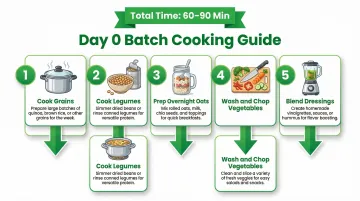
Dedicate 60-90 minutes on a Sunday (or the night before Day 1) to batch-cook the staples for the week. Research shows that structured meal preparation programs reduce weekly cooking time from 7 hours to just 4 hours, saving you 3 hours per week compared to daily cooking.
Day 0 Checklist:
- Cook grains: Prepare 4 cups quinoa and 4 cups brown rice
- Cook legumes: Batch-cook 3 cups lentils and open/drain canned chickpeas and black beans
- Prep overnight oats: Make 2 batches in separate jars
- Wash and chop vegetables: Cut sweet potato, bell peppers, onions, and wash greens
- Blend dressings: Make tahini and miso-tahini dressing, store in sealed jars
Storage Guidelines for Maximum Freshness
- Cooked grains and legumes: Store in airtight containers for 4-5 days in the fridge
- Soups and stews: Last up to 5 days refrigerated or freeze for 2-3 months
- Sliced vegetables: Keep fresh in water-filled containers, use within 3-5 days
- Dressings: Store in sealed jars for up to 1 week
- Tofu dishes: Best consumed within 4-5 days (freezing changes texture)
All items should be stored at or below 40°F (4°C). When reheating, ensure food reaches 165°F for safety.
The Ingredient Overlap Strategy
Choosing recipes that share core ingredients reduces both cost and prep time. In this 5-day plan:
- Lentils appear in Day 1 lunch, Day 3 lunch, and Day 4 dinner
- Chickpeas are used in Day 1 dinner and Day 1 snack
- Black beans feature in Day 3 dinner and Day 5 dinner
- Brown rice serves as the base for Day 2 dinner and Day 4 lunch
- Tofu appears in Day 2 dinner and Day 4 breakfast
Simplified Grocery List
Produce:
- Bananas (3)
- Spinach (1 large bag)
- Sweet potatoes (2 large)
- Broccoli (1 head)
- Bell peppers (6 total)
- Onions (3)
- Garlic (1 bulb)
- Cucumber (1)
- Tomatoes (2)
- Cabbage (½ head)
- Avocado (1)
- Carrots (1 bag shredded)
- Apples (2)
- Mixed berries (frozen)
- Limes (2)
Grains & Legumes:
- Rolled oats
- Quinoa
- Brown rice
- Red lentils
- Green/brown lentils
Canned Goods:
- Chickpeas (2 cans)
- Black beans (2 cans)
- Diced tomatoes (3 cans)
- Coconut milk (1 can)
Refrigerated:
- Firm tofu (16 oz)
- Plant-based milk (soy recommended)
- Hummus
Pantry Staples:
- Peanut butter
- Tahini
- Nutritional yeast
- Soy sauce
- Olive oil
- Chia seeds
- Cumin, turmeric, curry powder
- Frozen edamame
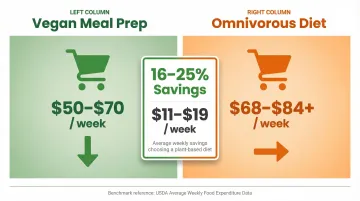
This list is intentionally budget-friendly. Studies show that vegan diets cost 16-25% less than omnivorous diets, with weekly savings of $11-$19. For one person following this plan, expect to spend $50-$70 per week. That sits well within the USDA Thrifty Food Plan benchmark of approximately $68-$84 per week.
Time-Saving Tips
- Use canned beans and pre-washed greens to cut 20+ minutes of prep time
- Cook double portions of dinner to cover the next day's lunch automatically
- Label all containers with meal name and date for quick grab-and-go access during the week
Key Nutrients to Watch on a Vegan Meal Prep Plan
Protein
Well-planned vegan meal prep easily meets daily protein needs. The Recommended Dietary Allowance (RDA) is 0.8 grams per kilogram of body weight per day—about 56g for a 70kg (154 lb) person. Plant sources provide complete protein when varied throughout the day.
Protein Content of Key Ingredients:
- 1 cup cooked lentils: 18g protein
- 1 cup cooked chickpeas: 15g protein
- 100g firm tofu: 17g protein
- 1 cup cooked black beans: 15g protein
- 1 cup shelled edamame: 18g protein
- 1 cup cooked quinoa: 8g protein
Ways to Add Protein to Each Meal:
- Add 2 tbsp hemp seeds or chia seeds to breakfast oats or smoothies (+6-8g)
- Include ½ cup legumes in every lunch and dinner (+7-9g per meal)
- Use soy milk instead of almond milk (+4-5g more per cup)
- Snack on roasted chickpeas, edamame, or nut butter (+5-8g)
Vitamin B12, Iron, Calcium, Omega-3s, and Zinc
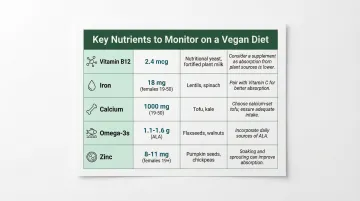
These five nutrients deserve the most attention on a plant-based diet. The table below covers your daily targets, best food sources, and one practical tip for each.
| Nutrient | Daily RDA | Top Plant Sources | Key Tip |
|---|---|---|---|
| Vitamin B12 | 2.4 mcg | Fortified nutritional yeast, fortified plant milks | Supplement if intake is inconsistent (25–100 mcg/day) |
| Iron | 18 mg (women 19–50); 8 mg (men) | Lentils, chickpeas, tofu, pumpkin seeds, quinoa | Pair with vitamin C (bell peppers, citrus) to boost absorption; avoid coffee or tea at meals |
| Calcium | 1,000 mg (1,200 mg for women 50+) | Fortified soy milk (300 mg/cup), calcium-set tofu, leafy greens | Check labels — not all plant milks are fortified equally |
| Omega-3s | No official RDA; 200–300 mg DHA recommended in pregnancy | Flaxseeds, chia seeds, hemp seeds, walnuts (ALA form) | ALA converts poorly to EPA/DHA; algae-based DHA is the most reliable food-first option |
| Zinc | 11 mg (men); 8 mg (women) | Pumpkin seeds (7 mg/cup roasted), lentils, chickpeas, whole grains | Soak, sprout, or ferment legumes and grains to improve absorption |
For personalized advice on supplementation, consult a registered dietitian familiar with plant-based nutrition.
Tips for Staying Consistent With Your Vegan Meal Prep Routine
Three habits make the difference between a meal prep routine that lasts and one that fizzles out by week three.
Rotate, don't overhaul. Swap one or two new recipes each week while keeping "anchor" meals like overnight oats or lentil bowls constant. Research shows meal planners have better adherence to nutritional guidelines and increased food variety — variety keeps things interesting without rebuilding your whole plan from scratch.
Lean on shortcuts. Pre-seasoned tofu, canned beans (drained and rinsed to cut sodium by up to 41%), frozen vegetables, and store-bought hummus all belong in a healthy vegan kitchen. None of them make your meals less nutritious — they make your routine more sustainable.
Spend 10 minutes on Day 5 planning the next week. Check what you enjoyed, what fell flat, and what's still in the fridge. Meal planning reduces household food waste by 5-15%, saving consumers around $1,900 per year — and starting from leftovers means less shopping and less waste.
Frequently Asked Questions
How long does vegan meal prep take per week?
Most people spend 60-90 minutes on a single batch-cooking session per week. Prepping staples like grains, legumes, and chopped vegetables upfront makes assembling daily meals take only 5-10 minutes. This consolidated approach saves approximately 3 hours compared to daily cooking.
What are the best plant-based protein sources for meal prep?
Top options include lentils, chickpeas, black beans, tofu, tempeh, edamame, quinoa, and hemp seeds. All are easy to batch-cook or keep on hand, and each provides 15-18g protein per cup (cooked).
How do I make sure I get enough nutrients on a vegan meal prep plan?
Focus on whole foods and include a variety of legumes, vegetables, grains, and seeds to cover most needs. Pay special attention to Vitamin B12 (supplement or fortified foods), iron (pair with vitamin C), and calcium (fortified plant milks and tofu).
Can I freeze my vegan meal prep meals?
Yes. Soups, stews, grain dishes, and legume-based meals freeze well for up to 3 months when stored at 0°F. Dishes with tofu or fresh greens are better refrigerated and consumed within 4-5 days.
Is vegan meal prepping expensive?
No. Plant-based staples like oats, lentils, rice, and canned beans are among the most affordable foods available. Vegan diets cost 16-25% less than omnivorous diets, with weekly grocery costs for this plan ranging from $50-$70 per person.
What's the difference between a vegan and vegetarian meal plan?
A vegan plan excludes all animal products, including dairy, eggs, and honey. A vegetarian plan allows dairy and/or eggs. All recipes in this guide are fully vegan.