Introduction
When traditional pepperoni is made from pork, Muslim consumers often wonder whether the new wave of plant-based pepperoni is automatically halal. The question isn't as straightforward as it seems. While plant-based pepperoni contains no pork or animal meat—removing the primary haram concern—certain additives, flavorings, and manufacturing conditions can complicate its halal status under Islamic law.
Plant-based doesn't automatically equal halal-compliant. Hidden ingredients—alcohol used as a flavor carrier, insect-derived colorants, or enzymes cultured on non-halal media—can make an otherwise permissible product questionable.
Below, you'll find a breakdown of the Islamic scholarly position on plant-based foods, the ingredient red flags to watch for, and practical guidance for navigating this growing market.
TLDR: Quick Answer
- Plant-based pepperoni contains no pork or animal meat, eliminating the main haram concern
- Plant-derived foods default to halal status — unless harmful, intoxicating, or contaminated — per Islamic scholarly consensus
- Some additives—alcohol-based extracts, carmine (E120), non-halal enzymes—can introduce haram elements
- Always verify ingredient lists for "natural flavors," colorings, and casing types
- Halal certification offers the strongest assurance; 100% vegan products are the next safest option
What Is Plant-Based Pepperoni?
Plant-based pepperoni is a meat-free product designed to replicate the taste, texture, and appearance of traditional pork pepperoni. Manufacturers typically build it from one or more of these protein bases:
- Soy protein isolate — a common, affordable base with dense texture
- Pea protein — popular in allergen-friendly formulations
- Wheat gluten (seitan) — creates a chewy, meat-like bite
- Mycoprotein — a fungi-derived protein with fibrous texture
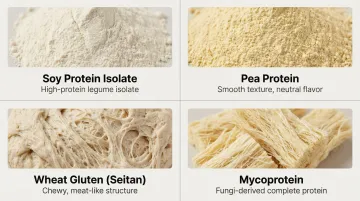
These are combined with paprika, garlic, and smoked flavorings to recreate that characteristic pepperoni flavor.
Because it contains no pork or animal meat, many Muslims assume it's halal by default. That assumption is often valid — but not always. The protein base itself is generally permissible; however, other ingredients and production conditions still require scrutiny.
Why Muslims Are Curious About It
The intersection of Muslim consumers and plant-based diets is expanding rapidly. According to a 2023 Institute for Social Policy and Understanding report, **83% of Muslims in the US either prefer or strictly require keeping a halal diet**, with 37% only purchasing halal-certified products. As plant-based pepperoni shows up on pizzas and in grocery aisles nationwide, Muslim consumers want to know whether they can enjoy these pork-free alternatives without compromising their dietary obligations. For families, students, and anyone navigating halal eating in everyday life, that question is becoming more pressing — and more practical.
The Islamic Ruling on Plant-Based Foods
In Islamic jurisprudence, all plant-derived foods are halal by default (asl al-ibaha — the principle of original permissibility), unless they are harmful, intoxicating, or contain an explicitly prohibited ingredient.
Scholarly Consensus
Ibn Hazm documented in Maraatib al-Ijmaa' (p. 150): "Scholars are agreed that all grains, fruits, and everything extracted from plants is halal, as long as it does not fall under the category of fermented or intoxicating drinks and is not toxic."
The "Reality" Principle
Ibn al-Qayyim explained in I'laam al-Muwaqqi'een (5/175-176) that rulings are based on the reality of a thing, not its name. A product called "pepperoni" made from plants is judged as a plant food, not as meat.
The word "pepperoni" carries no inherent Islamic prohibition — the ruling depends on what the product actually contains and how it was produced.
What This Means Practically
Plant-based pepperoni made from soy, wheat, or pea protein is permissible under the same rules as vegetables, grains, and legumes.
The International Islamic Fiqh Academy and the Assembly of Muslim Jurists of America both affirm this for modern food technology: plant-based foods are halal as long as their source is permissible and they pose no harm.
Key Conditions That Make Any Food Haram
- Contains an explicitly prohibited ingredient (alcohol, pork derivatives, non-halal animal products)
- Is harmful to the body or toxic
- Was produced in a way that introduces filth (najasah) or cross-contamination with haram substances
Hidden Ingredients That Could Make Plant-Based Pepperoni Haram
While the protein base in plant-based pepperoni is halal, several additives and processing agents require careful examination.
Natural Flavors
Most plant-based pepperoni brands list "natural flavors" on their labels. Under US FDA regulations (21 CFR 101.22), this term can legally include extracts derived from meat, poultry, or seafood without explicit disclosure.
Halal scholars classify undisclosed natural flavors as mashbooh (doubtful) and recommend contacting the manufacturer directly or looking for third-party halal certification before purchasing.
Carmine (E120)
Some plant-based pepperonis use carmine (E120), a red coloring extracted from crushed cochineal insects, to achieve that characteristic pepperoni color. Major US halal certifiers like IFANCA and HFSAA classify carmine as haram, though a minority of Maliki scholars permit it. Check ingredient lists for:
- Carmine
- E120
- Cochineal extract
- Natural Red 4
Enzymes and Fermentation Cultures
Plant-based pepperoni often uses fermentation to develop a tangy, cured flavor similar to traditional salami. Starter cultures from microbial sources are generally halal, but enzymes grown on animal-derived media (like porcine peptones) are problematic.
Since enzymes are frequently classified as processing aids and left off ingredient lists, third-party halal certification is the only reliable way to confirm their source.
Other Processing Risks to Know
Beyond flavoring agents, two physical aspects of plant-based pepperoni production can introduce haram elements: the casing and the solvents used during manufacturing.
Casings matter if the pepperoni comes in stick or log form. Collagen casings derived from non-halal animal sources (especially porcine collagen) are haram. Halal-compliant options include:
- Cellulose casings (plant-based)
- Synthetic casings
- Halal-certified bovine collagen (from properly slaughtered cattle)
Alcohol in processing is a separate concern. Some spice extracts and flavor solutions use ethanol as a solvent during manufacturing. IFANCA guidelines state that products with an alcohol content greater than 0.1% should be avoided. While trace amounts may be permissible according to some scholars, halal certification ensures these levels stay within permissible limits.
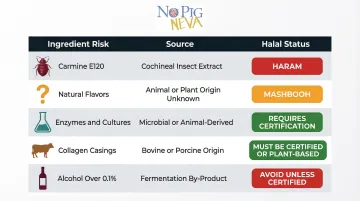
Quick Reference Table:
| Ingredient Risk | Source | Halal Status |
|---|---|---|
| Carmine (E120) | Crushed insects | Haram per IFANCA/HFSAA |
| Natural Flavors (undisclosed) | May include meat/poultry | Mashbooh—requires verification |
| Enzymes/Cultures | May be grown on porcine media | Requires certification |
| Collagen Casings | Animal-derived | Must be halal-certified bovine or plant-based |
| Alcohol (>0.1%) | Processing solvents | Avoid unless certified within limits |
Cross-Contamination and Manufacturing Concerns
Even if every ingredient in plant-based pepperoni is halal-compliant, manufacturing conditions matter. Islamic dietary law requires strict separation between halal and haram substances. Cross-contamination through shared equipment—grinders, slicers, conveyor belts—can affect a product's halal status.
The US plant-based food market was valued at $8.1 billion in 2023, and much of that production runs through shared infrastructure. The Good Food Institute identifies over 127 plant-based contract manufacturers — meaning a significant share of products are made on equipment that also processes animal proteins.
That's where halal certification becomes critical. Certifying bodies like IFANCA audit manufacturing processes, cleaning protocols, and facility separation — not just ingredient lists. A product with entirely plant-based ingredients can still fail halal standards if it shares a line with pork-derived products and lacks documented cleaning procedures between runs.
What to Do Without a Halal Label
If a product lacks halal certification, consumers can:
- Contact the manufacturer directly to ask about facility practices
- Look for "produced in a dedicated vegan/plant-based facility" claims on packaging
- Check for voluntary allergen statements like "made in a facility that also processes..." (though FDA allergen advisory statements are voluntary and not comprehensive)
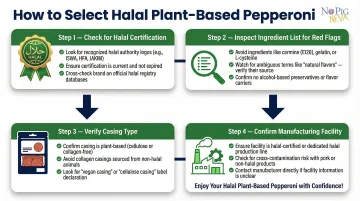
How to Choose a Halal-Compliant Plant-Based Pepperoni
Practical Checklist
When evaluating plant-based pepperoni:
Look for halal certification from recognized authorities:
- IFANCA (Islamic Food and Nutrition Council of America) — certifies over 20,000 products worldwide
- HFSAA (Halal Food Standards Alliance of America) — US-focused certification for foods and ingredients
If no halal certification exists, check the ingredient list for:
- Alcohol-based natural flavors
- Carmine (E120) or cochineal extract
- Gelatin or animal-derived casings
- Undisclosed enzymes
- Unclear "natural flavors" without plant-source specification
Verify casing type (for stick/log pepperoni):
- Cellulose or synthetic casings are safe
- Collagen casings require halal certification
- Contact manufacturer if unclear
Check manufacturing facility information:
- Dedicated vegan/plant-based facility claims reduce cross-contamination risk
- Contact company directly if facility information isn't disclosed
The 100% Vegan Advantage
Choosing products from 100% vegan brands reduces ingredient risk further. Since these brands use no animal products across their entire product line, the risk of animal-derived haram ingredients like non-halal gelatin, carmine, or animal casings is much lower. While vegan doesn't automatically mean halal—alcohol-based flavorings can still be present—it eliminates most animal-derived concerns.
NoPigNeva's 100% vegan, Non-GMO product range gives Muslim consumers a practical starting point for that reason. The fully vegan formulation eliminates many of the ingredient concerns outlined above — though consumers should still verify individual products for alcohol-based additives and halal certification where available.
What About Kosher Certification?
Kosher certification is not equivalent to halal. While both prohibit pork, the differences run deeper:
- Kosher law permits certain alcohols (like wine under specific conditions)
- Kosher slaughter doesn't require recitation of Allah's name
- Equipment sanitation requirements differ between the two standards
Kosher certification is useful as a supplementary signal that a product is pork-free and produced under supervised conditions, but it's not a substitute for halal certification.
Frequently Asked Questions
Is plant-based pepperoni halal?
Plant-based pepperoni is generally halal under Islamic law because it's derived from plants, not pork or meat. However, consumers should verify specific ingredients like natural flavors, colorings, and casings. Halal certification or a 100% vegan label provides the most reliable confirmation.
Can Muslims eat plant-based food?
Yes, Muslims can eat plant-based food. Islamic scholars broadly agree that plant-derived foods are halal by default, as long as they don't contain harmful, intoxicating, or haram ingredients added during processing.
Is vegan pepperoni automatically halal?
Being vegan doesn't automatically make a product halal. While vegan pepperoni contains no pork, it could still include alcohol-based flavorings, non-halal enzymes, or be manufactured in a facility that processes haram products. Ingredient and production verification is still recommended.
What ingredients in plant-based pepperoni could be haram?
Main concerns include alcohol-based natural flavor carriers, carmine (insect-derived red coloring, E120), animal-derived casings, and enzymes grown on non-halal mediums. Check labels carefully or contact manufacturers for clarification.
Does plant-based pepperoni contain alcohol?
Plant-based pepperoni itself doesn't typically contain alcohol as an ingredient, but some flavor extracts or spice solutions used in production may use alcohol as a processing solvent. Halal-certified products are vetted to ensure this isn't an issue.
Do I need halal certification on plant-based pepperoni to eat it?
Halal certification is the most reliable assurance but not always required. A 100% vegan product free from carmine, undisclosed natural flavors, and other doubtful ingredients is considered permissible by many scholars. When uncertain, consult a knowledgeable scholar or seek certified products.