Introduction
More Muslims today are exploring plant-based diets—driven by health goals, environmental ethics, or simply the desire to expand their culinary options. As plant-based chicken alternatives become more accessible in stores and online platforms across the USA, a question arises: Does plant-based chicken automatically qualify as halal, or is the answer more nuanced?
Many consumers assume that if a product contains no animal meat, it must be halal by default. That assumption overlooks critical factors — additives, flavorings, and manufacturing conditions — that can all affect Islamic dietary compliance.
Understanding where plant-based chicken can fall short of halal standards is the first step to making informed choices at the grocery shelf.
TLDR
- Plant-based chicken is generally halal under Islamic law because it comes from plants, not animals
- "Plant-based" doesn't automatically mean halal—alcohol, non-halal emulsifiers, or shared equipment can make products non-compliant
- Check labels for alcohol-derived ingredients, E-numbers like E471 and E476, and vague "natural flavors"
- Look for certification from recognized bodies (IFANCA, ISNA, Halal Food Council USA) and verify the symbol on packaging
What Is Plant-Based Chicken and How Is It Made?
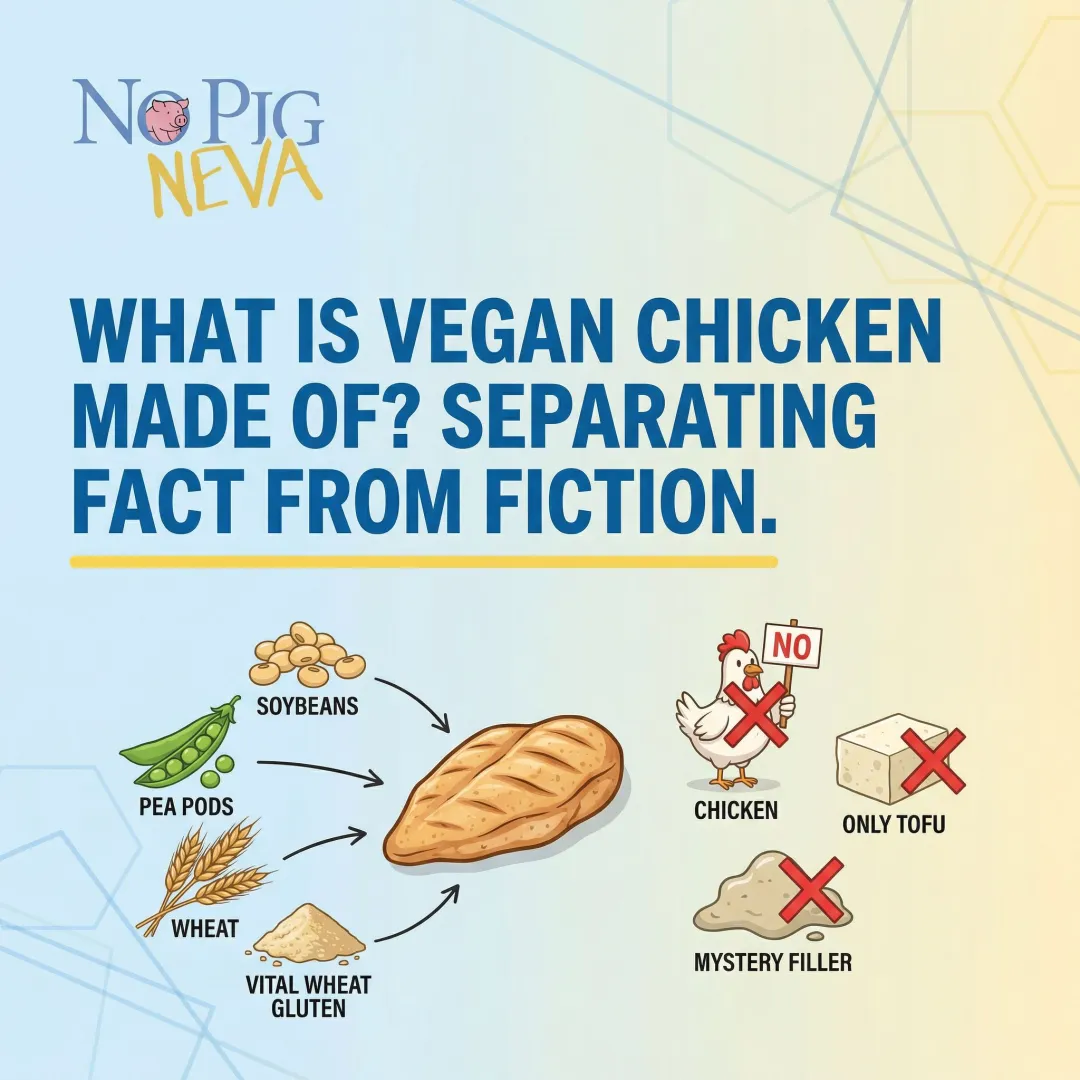
Plant-based chicken is a food product designed to replicate the taste, texture, and appearance of real chicken using plant-derived proteins. The most common protein bases include:
- Soy protein (textured soy protein or soy isolate)
- Pea protein (increasingly popular for its neutral taste)
- Wheat gluten (also known as seitan, prized for its chewy texture)
- Mycoprotein (derived from fungi, used in brands like Quorn)
These core ingredients are naturally plant-based and do not raise halal compliance concerns on their own. Where things get complicated is the secondary ingredients added to replicate chicken's flavor and texture.
Secondary ingredients typically include:
- Binders and emulsifiers
- Flavor compounds
- Colorants
- Preservatives
These secondary ingredients—not the core protein base—are where most halal compliance questions originate. A soy-based chicken patty can be halal-compliant at its core yet become non-compliant if alcohol-based smoke flavoring or animal-derived emulsifiers are included in the formula.
The Islamic Ruling: Is Plant-Based Chicken Halal?
Core Islamic Principle
According to Islamic jurisprudence, all plants and plant-derived foods are permissible (halal) by default, unless they are toxic, intoxicating, or contain something explicitly forbidden.
IslamQA Fatwa 334608 states clearly: "Plant-based meat is halal so long as it is manufactured from halal plants." The ruling continues: "All plants are halal; no plants are haram except those which are harmful or intoxicating. This is according to the consensus of the scholars."
Classical scholarly support:
- Ibn Hazm (Maraatib al-Ijmaa', p. 150) confirms consensus that all grains, fruits, flowers, gums, and their derivatives are halal, so long as none are toxic
- Ibn al-Qayyim (I'laam al-Muwaqqi'een 5/175-176) establishes that "what matters is the reality of things, and the ruling is to be based on that... Allah does not look at their outward forms... rather He looks at their reality and their essence"
The "Reality vs. Name" Principle
Even though a product is labeled "chicken," if its actual composition is 100% plant-based, Islamic law evaluates it as a plant food—not as meat requiring halal slaughter. The ruling is based on substance, not resemblance.
The Tashabbuh (Imitation) Question
That substance-first principle raises a related question: does naming a plant product "chicken" constitute forbidden imitation (tashabbuh) of haram food? The mainstream scholarly view is no—imitating the appearance or name of a haram food does not by itself make a product haram. The product contains no actual chicken, so substance governs the ruling.
However, some halal certification bodies take a stricter approach. Indonesia's LPPOM MUI will not certify products with names like "plant-based pork" or "vegan bacon," even if they are 100% plant-based, to avoid confusion.
Conditional Compliance
The halal ruling for plant-based chicken is conditional—the core plant ingredients are permissible by default, but overall compliance depends on every element of the product being halal-compliant.
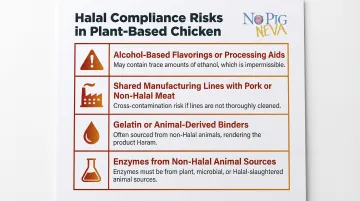
Before purchasing, check for these common compliance risks:
- Alcohol-based flavorings or processing aids
- Shared manufacturing lines with pork or non-halal meat products
- Gelatin or animal-derived additives used as binders
- Enzymes sourced from non-halal animals
Why "Plant-Based" Doesn't Automatically Mean Halal
The Vegan vs. Halal Distinction
Vegan certification ensures the absence of animal products—full stop. Halal compliance, however, covers a broader set of requirements including alcohol-derived substances, specific processing standards, and facility hygiene. A product can be certified 100% vegan and still contain alcohol-based flavorings or be processed on shared equipment with pork residue.
The Alcohol Issue
Many plant-based chicken products use flavor compounds dissolved in an alcohol base. Examples include:
- Smoke flavoring (often ethanol-based)
- Vanilla extract (FDA-mandated minimum 35% ethanol)
- Umami enhancers
- Natural flavor extracts
Even trace alcohol in flavoring agents is considered non-compliant by many Islamic scholars and certification bodies. While some halal certifiers accept incidental alcohol below specific thresholds (e.g., <0.5% in flavorings, <0.1% in final products), others maintain stricter standards.
Cross-Contamination Risk
If plant-based chicken is manufactured in a shared facility or on shared equipment that also processes pork derivatives or non-halal meats, the product may still be non-halal due to contamination—even if its ingredient list is clean.
ISNA Halal guidelines require separate work surfaces, utensils, and cooking oils to avoid cross-contamination with haram foods. Specifically, look for facilities that maintain:
- Dedicated halal production lines
- Segregated storage for halal ingredients
- Regular equipment sanitation validated by a halal certifier
The "Natural Flavors" Problem
FDA regulation 21 CFR 101.22(a)(3) defines "natural flavor" as flavoring derived from plant material, meat, seafood, poultry, eggs, dairy, or fermentation products.
In plant-based chicken products, "natural chicken flavor" may be derived from actual chicken extract or chicken fat, which would require halal slaughter compliance. To verify the source, contact the manufacturer directly or choose products bearing a recognized halal certification mark—that's the only reliable way to know what's actually in the flavoring.
Ingredients in Plant-Based Chicken That Could Make It Haram
High-Risk Additives
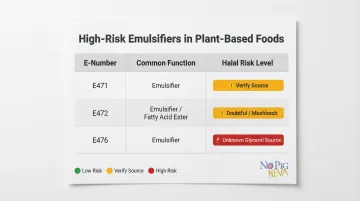
Emulsifiers and stabilizers:
| E-Number | Function | Halal Risk Factor |
|---|---|---|
| E471 | Emulsifier (mono- and diglycerides) | Can be derived from plant oils, pork fat, or non-zabiha beef fat. Requires verification. |
| E472 (a-f) | Emulsifier (various fatty acid esters) | Same sourcing risk as E471. E472d is classified as Mushbooh (doubtful) by SANHA. |
| E476 | Emulsifier (polyglycerol polyricinoleate) | Made from castor oil and glycerol esters; glycerol source often unknown. |
Alcohol-Based Flavorings
- Liquid smoke flavoring
- Vanilla and other extracts
- Certain yeast extracts
- "Natural flavor" blends using alcohol as a carrier solvent
Enzymes and Processing Aids
Some plant-based proteins are processed using enzymes derived from non-halal animal sources, such as proteases from pig or cow pancreas. Labels rarely disclose them, but formal halal audits review enzyme sourcing explicitly.
Other Problematic Ingredients
- Carmine (E120): Derived from insects. SANHA classifies it as Haram, though MUI (Indonesia) and JAKIM (Malaysia) permit it under specific transformation rules.
- Gelatin: 60–80% of Western commercial gelatin is pork-derived. Only fish-derived, plant-based (pectin/agar), or certified zabiha bovine gelatin is halal.
- Yeast Extract: May be grown on brewer's yeast (a beer byproduct) or cultured on non-halal media. The American Halal Foundation lists brewer's yeast as haram.
Note on "Vegetable Broth" and "Yeast Extract"
Even ingredients that sound clearly plant-based may contain alcohol residues or be cultured on non-halal media. When in doubt, look for a recognized halal certification mark — it means these details have already been audited on your behalf.
How to Choose Halal-Compliant Plant-Based Chicken
Look for Recognized Halal Certification
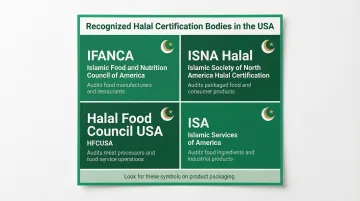
The most reliable indicator that ingredients, processing aids, and facility practices comply with Islamic standards is a halal certification symbol from an accredited body:
- IFANCA (Islamic Food and Nutrition Council of America) – Audits facilities globally for ingredient compliance and cross-contamination controls
- ISNA Halal (Islamic Society of North America) – Verifies suppliers, HACCP procedures, and facility hygiene
- Halal Food Council USA – Certifies plant-based foods by verifying halal ingredients, production facilities, and labeling transparency
- ISA (Islamic Services of America) – Analyzes additives, flavors, and processing aids (including ethyl alcohol solvents)
Label-Reading Checklist (When Certification Is Absent)
If halal certification is not displayed:
- Scan for alcohol in any form: ethanol, ethyl alcohol, wine extract, beer extract
- Check all E-numbers against a halal E-number guide
- Flag "natural flavors" — these may derive from animal sources or alcohol-based solvents; request clarification from the manufacturer
- Contact the manufacturer for clarification on emulsifier sources and processing aids
Shop at Specialty Retailers
Muslim consumers can browse curated plant-based chicken options — including breaded pieces, cutlets, and drumstick alternatives — at NoPigNeva, a retailer specializing in 100% vegan and Non-GMO products. Since vegan and halal standards are complementary but distinct, confirm halal certification status on individual product pages or packaging before purchasing.
Frequently Asked Questions
Is plant-based chicken halal?
Plant-based chicken is halal in principle under Islamic law because it comes from plants. However, the final product is only halal if all ingredients—including flavorings, emulsifiers, and processing aids—are free from alcohol, non-halal animal derivatives, and cross-contamination with haram substances.
Is 100% vegan halal?
Vegan and halal are overlapping but not identical categories. A 100% vegan product avoids animal ingredients, which satisfies one halal requirement. However, halal also prohibits alcohol-based ingredients and requires a clean manufacturing environment, so vegan certification alone is not sufficient proof of halal compliance.
Can artificial meat be halal?
Plant-based artificial meat can be halal if it meets all halal ingredient and processing requirements. Lab-grown (cultivated) meat is a separate category — scholars are still debating its status, and the International Islamic Fiqh Academy has ruled it permissible only if cells come from halal-slaughtered animals and growth media avoids impure (najis) substances.
Can Muslims eat Quorn?
Quorn's main ingredient is mycoprotein, a fungal protein that is not an animal product. Some Quorn products carry halal certification in certain markets, but formulations vary by country and product line. Muslims should check the halal certification of the specific Quorn product before buying.
What ingredients in plant-based chicken can make it haram?
The main culprits are alcohol-based flavorings, emulsifiers derived from animal fat (E471/E472 from pork fat), carmine coloring (E120), gelatin, and undisclosed "natural flavors" that may originate from animal sources or alcohol carriers. Enzymes from non-halal animal sources also present a risk.
Does plant-based chicken need halal certification to be considered halal?
While a product without halal certification is not automatically haram, certification provides verified assurance that all ingredients and manufacturing practices comply with Islamic standards. It is the most practical and trustworthy way for Muslim consumers to confirm compliance without needing to audit ingredient sources themselves.
Final Guidance: Plant-based chicken occupies a permissible category in Islamic dietary law, but not all plant-based chicken products are halal-compliant. Muslim consumers should prioritize products with recognized halal certification, read ingredient labels carefully, and contact manufacturers when in doubt.