Introduction
Muslim consumers across the USA face a real challenge in the grocery aisle: finding verified halal bacon alternatives that actually satisfy. The smoky, savory appeal of bacon shows up everywhere — BLT sandwiches, pasta carbonara, breakfast wraps — yet most mainstream options leave you second-guessing whether "pork-free" or "turkey bacon" is enough.
It often isn't. Under USDA FSIS regulations, any product labeled "Halal" requires third-party certification, meaning a simple "no pork" claim carries no legal weight on its own.
That said, satisfying alternatives do exist. Both meat-based and plant-based options can replicate the salty, smoky experience without compromising Islamic dietary laws — as long as you know what to look for beyond surface-level claims. This guide covers the best halal bacon alternatives in the USA, what makes each one genuinely compliant, and how to verify certification before you buy.
TL;DR
- Traditional pork bacon is haram; halal substitutes use permissible meats (turkey, beef, chicken, lamb) or plant-based ingredients
- "Pork-free" doesn't automatically mean halal; certification, processing methods, and hidden additives all require scrutiny
- Plant-based bacon alternatives are the most universally halal-friendly option, with fewer cross-contamination risks
- Always verify third-party halal certification from recognized bodies like IFANCA, ISNA, or ISA
- Watch for alcohol-derived natural flavors and animal-sourced emulsifiers in plant-based products
What Makes Bacon "Halal"?
Halal dietary law establishes strict requirements for permissible meat: the animal must be halal-certified (beef, chicken, turkey, lamb) and slaughtered according to Islamic rites known as zabiha. Pork and its by-products are explicitly prohibited under Quranic guidance — specifically in Surah Al-Baqarah 2:173, Al-Ma'idah 5:3, Al-An'am 6:145, and An-Nahl 16:115.
Halal compliance extends far beyond species selection. A product must also be free of haram additives such as alcohol-based flavorings, porcine-derived emulsifiers like animal-sourced E471, and porcine gelatin.
ISNA and IFANCA require comprehensive verification of slaughter methods, ingredient origins, and cross-contamination controls before granting certification. Facilities must use separate equipment and avoid shared cooking oils to prevent mixing halal ingredients with haram substances.
This means "pork-free" does not automatically equal halal. A turkey bacon product might contain no pork meat, yet include alcohol-based smoke flavoring or be processed on equipment shared with non-halal meats. Without third-party halal certification from an accredited body, buyers have no reliable way to verify compliance.
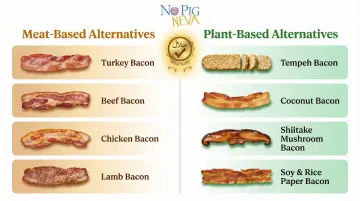
That's where understanding your options becomes critical. Halal bacon alternatives fall into two main categories:
- Meat-based alternatives — turkey, beef, chicken, and lamb bacon that require halal-certified sourcing
- Plant-based alternatives — tempeh, coconut, mushroom, and soy-based options that are inherently pig-free but still require ingredient scrutiny
Best Meat-Based Halal Bacon Alternatives
When properly sourced and halal-certified, certain meats can replicate much of bacon's savory, fatty, smoky character — making them the closest 1:1 substitute for pork bacon in most recipes.
Turkey Bacon
Turkey bacon is the most widely available halal-friendly bacon substitute in the USA. It's made by seasoning and pressing reformed turkey meat into strips, then curing and smoking it to mimic pork bacon's taste. Many Middle Eastern and halal grocery stores stock certified halal versions.
Important certification note: Despite their market dominance, mainstream retail turkey bacon from Butterball and Jennie-O do not carry consumer-facing halal certifications as of 2026. Butterball uses conventional slaughter methods, and Jennie-O's retail packaging lacks halal marks. Instead, look for:
- Crescent Foods: Zabiha halal, hand-slaughtered, certified by IFANCA
- Midamar: Halal turkey strips, certified by ISA
Turkey bacon is lower in fat than pork bacon — pork bacon contains 12.6g total fat per 36g serving, while turkey bacon contains just 2.4g per 14g slice. It's often high in sodium and slightly less crispy, so it's best used in sandwiches, wraps, or breakfast scrambles.
| Attribute | Details |
|---|---|
| Flavor Profile | Smoky, mildly savory; less rich than pork bacon |
| Halal Certification | Available in halal-certified versions; always verify packaging |
| Best Used For | Breakfast sandwiches, BLTs, wraps, salads |
Beef Bacon
Beef bacon is a halal-friendly alternative made from cured and smoked beef belly or brisket cuts. It offers a bolder, beefier flavor compared to pork bacon, naturally lower in fat and free from pork entirely. This makes halal certification more straightforward.
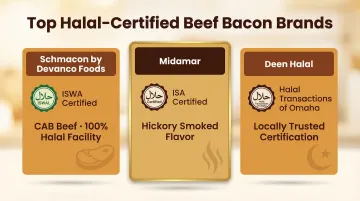
Schmacon (produced by Devanco Foods) is halal-certified and holds certification from ISWA Halal Certification Department (valid through 2026). Devanco Foods operates a 100% halal facility, and their Schmacon CAB (Certified Angus Beef) beef bacon is marketed as a halal-certified product.
Other readily available halal-certified beef bacon brands:
- Godshall's: Real Wood Smoked Beef Bacon (No MSG, Gluten-Free)
- Midamar: Halal Hickory Smoked Breakfast Beef (Certified by ISA)
- Deen Halal: Sliced Beef Bacon (Certified by Halal Transactions of Omaha)
Beef bacon crisps up well and can substitute directly for pork bacon in most recipes.
| Attribute | Details |
|---|---|
| Flavor Profile | Rich, beefy, and smoky with a slightly chewier texture |
| Halal Certification | Widely available in halal-certified versions from dedicated halal butchers and online retailers |
| Best Used For | Burgers, pasta dishes, breakfast plates, sandwiches |
Chicken Bacon
Chicken bacon is made from seasoned, formed chicken breast or thigh meat — often smoked and sliced into rashers. It's leaner than pork bacon and frequently available in halal-certified versions at mainstream supermarkets.
Composition note: Many chicken bacon products use Mechanically Separated Chicken as a primary ingredient. According to USDA FSIS (9 CFR 381.173), mechanically separated poultry is a paste-like product resulting from the mechanical separation of bone from attached skeletal muscle.
Zabiha Halal Breakfast Chicken Strips are certified by the Canadian Halal Food Certifying Agency (CHFCA) and Halal Monitoring Organization (HMO). Chicken bacon's neutral flavor takes on marinades and seasonings well.
| Attribute | Details |
|---|---|
| Flavor Profile | Mild, lightly smoky; absorbs added seasonings well |
| Halal Certification | Commonly halal-certified; widely stocked in halal grocery stores |
| Best Used For | Breakfast dishes, pasta carbonara, salads, sandwiches |
Lamb Bacon
Lamb bacon is a lesser-known but authentic halal alternative made from cured and smoked lamb belly, popular in specialty halal markets and certain Middle Eastern food stores. Lamb is inherently halal when properly slaughtered, making sourcing more straightforward.
Studies show lamb's distinct flavor comes from aliphatic aldehydes (such as hexanal and nonanal) and aliphatic ketones produced during lipid oxidation. In practice, this means lamb bacon delivers a richer, more intense taste that sets it apart from turkey or chicken bacon — ideal for those who want something bold and meaty.
Lamb bacon may be harder to find in mainstream grocery stores and is best sought from halal butchers like 4th Ave Halal Meat Market (NJ) or BillyDoe Meats (IL), or through online halal retailers.
| Attribute | Details |
|---|---|
| Flavor Profile | Bold, rich, distinctly lamb-like; fattier and more intense than turkey or chicken bacon |
| Halal Certification | Inherently halal-compliant when sourced from halal butchers; check certification |
| Best Used For | Grilled dishes, breakfast plates, heartier sandwiches and stews |
Best Plant-Based Halal Bacon Alternatives
Plant-based bacon alternatives are naturally free of pork and animal-slaughter concerns, making them among the safest halal choices — provided they're free of alcohol-based flavorings and other haram additives. These options suit Muslim consumers who prefer a lighter or health-conscious diet, and many are simple enough to make at home with clean, verifiable ingredients.
Tempeh Bacon
Tempeh bacon is made from fermented soybeans pressed into strips and marinated with smoky, salty flavorings. It's high in protein, rich in fiber, and has a hearty, meaty texture that holds up well in cooking. Research shows that fermentation of soybeans into tempeh enhances protein digestibility and bioavailability while reducing antinutritional factors.
Watch for: Lightlife Smoky Tempeh Strips contain organic tamari soy sauce made with organic alcohol, which may concern strict halal observers. IFANCA and MUIS guidelines permit ethanol as a solvent in flavorings, provided it doesn't exceed 0.5% in the flavoring and 0.1% in the final product. Always check ingredient lists.
| Attribute | Details |
|---|---|
| Flavor Profile | Smoky, nutty, savory with a firm, chewy texture |
| Halal Certification | Generally halal-compliant; check ingredient list for alcohol-derived additives |
| Best Used For | Breakfast bowls, BLTs, salads, grain bowls |
Coconut Bacon
Coconut bacon is a DIY-friendly vegan alternative made from unsweetened coconut flakes baked or pan-fried with liquid smoke, soy sauce, and maple syrup, yielding crispy, smoky bits that mimic bacon crumbles. At 350°F, coconut flakes typically crisp up in 10–15 minutes — watch them closely, as they burn fast.
This option works best as a topping or garnish rather than a full rasher substitute. It's high in saturated fat from coconut but free from animal products or haram substances, and naturally halal-compliant.
| Attribute | Details |
|---|---|
| Flavor Profile | Sweet, smoky, crispy; lighter flavor profile than meat-based bacon |
| Halal Certification | Naturally halal; verify any packaged versions for haram additives |
| Best Used For | Salad toppings, soups, grain bowls, brunch dishes |
Mushroom Bacon
Shiitake or portobello mushroom caps can be thinly sliced, marinated in liquid smoke, tamari, and oil, then roasted or pan-fried to produce deeply savory, crispy strips that mirror bacon's umami quality. Naturally halal and whole-food based.
Mushroom bacon has a particularly meaty, satisfying chew and is the most "whole food" option on this list — minimal processing, no questionable additives, easy to make at home.
| Attribute | Details |
|---|---|
| Flavor Profile | Deep umami, earthy, smoky; chewy to crispy depending on cooking method |
| Halal Certification | Fully halal; no animal products or haram ingredients |
| Best Used For | Sandwiches, ramen, pasta, rice dishes, breakfast plates |
Soy or Rice Paper Bacon
Soy-based strip bacon (e.g., MorningStar Farms) and rice paper rashers are convenient ready-to-cook alternatives that visually and texturally resemble pork bacon strips more closely than other plant-based options.
Watch for: MorningStar Farms Veggie Bacon contains vegetable glycerin and unspecified natural flavors — check for alcohol-derived natural flavors or non-halal additives before purchasing.
Rice paper bacon is a viral home-cooking phenomenon with no mainstream commercial presence in the US market. The DIY version hydrates rice paper, cuts it into strips, marinates with liquid smoke, soy sauce, and nutritional yeast, then bakes or fries until crisp. Ingredient control makes it one of the cleanest halal options available.
| Attribute | Details |
|---|---|
| Flavor Profile | Salty, smoky, with a strip-like texture; soy version closely mimics pork bacon appearance |
| Halal Certification | Check labels carefully for haram additives; rice paper version generally cleaner |
| Best Used For | BLTs, breakfast sandwiches, pasta, anywhere pork bacon strips would be used |
What to Look for When Buying Halal Bacon Alternatives
Pork-free doesn't automatically mean halal. Before buying, check for these red flags:
Hidden Haram Additives
- Alcohol-based "natural flavors": Common in processed and plant-based products
- E471 (Mono- and Diglycerides): May be derived from pork or non-zabiha beef; considered mashbooh unless halal-certified
- Gelatin: Usually pig-derived; only halal when sourced from zabiha animals, fish, or plants
- Glycerin/Glycerol (E422): Can come from pork or beef tallow; look for "vegetable glycerin" or a halal certification
- Cross-contamination: Shared equipment with non-halal meats can compromise otherwise clean products
Recognized US Halal Certifiers
Look for these logos on packaging:
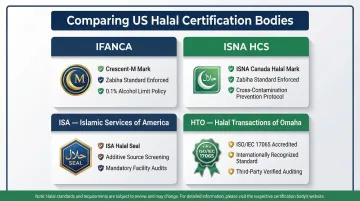
- IFANCA — "Crescent-M" mark: Requires zabiha slaughter, strict additive screening (under 0.1% alcohol in final products), and facility audits
- ISNA HCS — "ISNA Canada Halal" mark: Enforces zabiha standards, hygiene protocols, and cross-contamination prevention
- ISA — ISA Halal seal: Screens additives by source of origin and conducts on-site facility audits
- Halal Transactions of Omaha (HTO): ISO/IEC 17065 accredited; one of the few US certifiers with internationally recognized accreditation
Plant-Based Product Considerations
If you're shopping plant-based alternatives, slaughter practices aren't the concern — ingredient sourcing is. Here's what to verify:
- Confirm no ethanol-based flavorings exceeding permissible limits
- Verify no cross-processing with pork-containing products
- Look for Non-GMO or certified organic standards as secondary trust signals
- Check for vegan certification, which eliminates animal-derived additives
Conclusion
Both meat-based and plant-based halal bacon alternatives are widely available and can satisfy the craving for smoky, savory flavor. The key is knowing what to look for: certification labels and ingredient lists, not just the absence of pork. From turkey and beef bacon certified by IFANCA, ISA, or HTO, to tempeh, mushroom, and coconut-based plant alternatives, Muslim consumers have more options than ever.
For those leaning toward plant-based choices, online retailers like NoPigNeva stock a range of vegan bacon alternatives and ship nationwide, with free shipping on orders over $99.99.
Frequently Asked Questions
Frequently Asked Questions
What are halal bacon alternatives?
Halal bacon alternatives include pork-free, halal-certified substitutes such as turkey, beef, chicken, or lamb bacon, as well as plant-based options like tempeh, mushroom, or coconut bacon. All replicate bacon's smoky, salty flavor without violating Islamic dietary law.
What type of bacon can Muslims eat?
Muslims can eat bacon made from halal-certified meats (turkey, beef, chicken, lamb) slaughtered according to Islamic rites. Plant-based bacon is also permitted, provided it contains no haram additives like alcohol-based flavorings or animal-derived emulsifiers.
What's the difference between bacon and halal bacon?
Traditional bacon is made from pork belly (haram in Islam), while halal bacon uses a permissible meat or plant-based ingredient instead. All processing, flavorings, and additives must also comply with halal standards, verified through third-party certification.
What can Muslims eat instead of pork?
Muslims can freely consume beef, lamb, chicken, turkey, and most seafood (with some scholarly variation on the latter), along with all plant-based proteins.
Is turkey bacon always halal?
No, turkey bacon is not automatically halal. It must be sourced from halal-certified producers who follow proper zabiha slaughter practices, and the product must also be free of any haram additives or alcohol-based flavoring agents. Always check for third-party certification.
Are plant-based bacon alternatives halal?
Most plant-based bacon alternatives are halal-friendly by nature since they contain no animal products, but buyers should still check ingredient labels for alcohol-derived natural flavors, animal-sourced emulsifiers, or other potentially haram additives before buying.