Introduction
Can you really get enough protein without meat? For many people, that question is the biggest barrier to going plant-based — and the data says yes. According to the Academy of Nutrition and Dietetics, well-planned vegan diets meet protein requirements at every life stage — and many whole plant foods pack fiber, healthy fats, and micronutrients alongside that protein.
The real challenge is knowing which sources are most effective, nutritionally complete, and easy to work into daily meals. This guide covers the top vegan protein alternatives, their nutritional profiles, and practical strategies for hitting your protein goals consistently.
TLDR
- Plant-based diets easily meet daily protein needs when built around diverse, protein-dense sources
- Top sources: legumes, soy foods, seitan, ancient grains, and nuts/seeds
- Complete proteins exist in plant form: soy, quinoa, and seitan provide all nine essential amino acids
- Most adults need 0.8g of protein per kilogram of body weight; active individuals typically need 1.2–2.0g per kilogram
- Variety throughout the day ensures full amino acid coverage without strict meal planning
Why Your Body Needs Protein — and How Much
Protein builds and repairs cells, produces enzymes and hormones, supports immune function, and maintains muscle mass. Without adequate intake, you risk slower recovery, weakened immunity, and muscle loss over time.
The Recommended Dietary Allowance (RDA) is 0.8g of protein per kilogram of body weight. For a 150-pound adult, that's roughly 54g daily. Most vegans and vegetarians already exceed this threshold without tracking.
Athletes and highly active individuals may need 1.2–2.0g per kilogram, but this doesn't require a dramatic shift in macronutrient ratios. Slightly larger portions of protein-rich foods are usually enough.
The Complete Protein Myth
You've probably heard that plant proteins are "incomplete" and must be carefully combined at every meal. That's outdated advice. While it's true that most plant foods lack one or more of the nine essential amino acids, your body pools amino acids throughout the day. Eating a variety of protein sources — legumes at lunch, tofu at dinner, nuts as a snack — naturally covers all your needs.
Plant-based complete proteins include:
- All soy foods (tofu, tempeh, edamame)
- Quinoa
- Amaranth
- Buckwheat
Even without these daily, combining grains and legumes across 24 hours covers all nine essential amino acids.
Best Vegan Protein Alternatives
Getting enough protein on a vegan diet is easier than most people assume — if you know where to look. These five categories cover the most reliable plant-based protein sources, with real numbers on what each delivers per serving and practical guidance on how to use them.
Legumes (Lentils, Chickpeas, Black Beans)
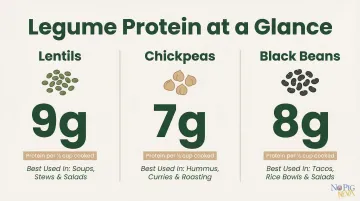
Legumes are among the most affordable and widely available vegan protein sources, delivering 8–18g of protein per cooked cup depending on variety. They're also packed with fiber, iron, potassium, and folate — nutrients that support heart health, blood sugar regulation, and energy production.
Lentils stand out as the highest-protein legume and cook in 15–20 minutes without soaking, making them ideal for quick weeknight meals. Chickpeas and black beans are incredibly versatile, working in everything from curries and salads to burger patties and dips.
| Legume | Protein Per ½ Cup Cooked | Best Used In |
|---|---|---|
| Lentils | ~9g | Soups, stews, grain bowls |
| Chickpeas | ~7g | Hummus, salads, curries |
| Black Beans | ~8g | Vegan burgers, tacos, dips |
Soy-Based Foods (Tofu, Tempeh, Edamame)
Soy is the gold standard of vegan protein because it's a complete protein, providing all nine essential amino acids in optimal ratios. Tofu, tempeh, and edamame are the three most common whole-soy foods, each with distinct textures and cooking uses.
Tempeh delivers the highest protein density at roughly 17g per 3oz serving and offers probiotics from fermentation, supporting gut health. Tofu is a blank canvas that absorbs marinades beautifully, while edamame works as a convenient whole-food snack straight from the freezer.
| Soy Food | Protein Per Serving | Best Used In |
|---|---|---|
| Tempeh | ~17g per 3oz | Stir-fries, sandwiches, tacos |
| Firm Tofu | ~10g per 3oz | Grain bowls, marinades, scrambles |
| Edamame | ~17g per cup cooked | Snacking, salads, smoothies |
Seitan and Vegan Meat Alternatives
At over 25g of protein per 3oz serving, seitan is the most protein-dense whole-food option on this list. Made from vital wheat gluten, it has a firm, chewy texture that holds up in stir-fries, stews, and BBQ-style dishes where you'd normally reach for meat.
While seitan isn't suitable for those with gluten sensitivity, it's an excellent choice for most vegans seeking a satisfying, high-protein meat substitute. Ready-to-eat vegan meat alternatives, like those available through specialty retailers such as NoPigNeva, now match the protein levels of conventional meat — making them a practical option when you want convenience without compromising nutrition.
| Option | Protein Per Serving | Best Used In |
|---|---|---|
| Seitan | ~25g per 3oz | Stir-fries, BBQ sandwiches, stews |
| Packaged vegan meat alternatives | Varies by brand (~15–25g) | Burgers, sausages, vegan steaks |
Quinoa and Ancient Grains (Amaranth, Buckwheat)
Unlike most grains, quinoa is a complete protein with all essential amino acids, providing roughly 8g per cooked cup. Amaranth and buckwheat are similarly nutrient-dense ancient grains that add protein alongside complex carbohydrates, magnesium, and fiber.
These grains function as both a carbohydrate and protein source in a meal, reducing reliance solely on legumes or soy for protein. They're gluten-free, making them suitable for a wider range of dietary needs.
| Grain | Protein Per Cup Cooked | Best Used In |
|---|---|---|
| Quinoa | ~8g | Buddha bowls, grain salads |
| Amaranth | ~9g | Breakfast porridge, soups |
| Buckwheat | ~6g | Pancakes, noodles, rice substitute |
Nuts, Seeds, and Nut Butters (Hemp, Pumpkin, Almonds)
Nuts and seeds provide moderate but meaningful protein — particularly hemp seeds (~10g per 3 tablespoons) and pumpkin seeds (~9g per ounce) — along with healthy unsaturated fats, omega-3s, zinc, and magnesium.
Hemp seeds are unique because they're a complete protein and can be sprinkled into virtually any dish without altering taste or texture. Nut butters provide a concentrated protein source in a format that's easy to portion and use daily, from smoothies to toast spreads.
| Nut / Seed | Protein Per Serving | Best Used In |
|---|---|---|
| Hemp Seeds | ~10g per 3 tbsp | Smoothies, oatmeal, salad toppings |
| Pumpkin Seeds | ~9g per oz | Snacking, sauces, grain bowls |
| Almond Butter | ~7g per 2 tbsp | Toast, smoothies, sauces |
How to Hit Your Daily Protein Goals on a Vegan Diet
Rather than obsessing over protein at every meal, the goal is to spread protein-rich foods across breakfast, lunch, and dinner. Here's a sample one-day breakdown that easily exceeds the ~54g RDA for an average adult:
Breakfast: Oatmeal with 3 tbsp hemp seeds (10g) Lunch: Lentil soup with ½ cup cooked lentils (9g) + quinoa side (4g) Dinner: Tempeh stir-fry with 3oz tempeh (17g) + 1 cup edamame (17g) Snack: 2 tbsp almond butter (7g) Total: 64g protein
The 30g Protein-Per-Meal Strategy
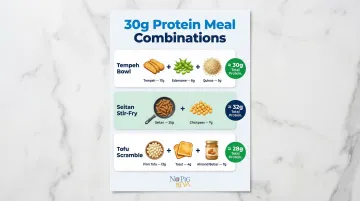
Some nutrition approaches recommend targeting 25–30g of protein per meal to optimize muscle protein synthesis. Vegans can achieve this with strategic combinations:
- Tempeh bowl (3oz tempeh) + ½ cup edamame + ½ cup quinoa = ~30g
- Seitan stir-fry (3oz seitan) + ½ cup chickpeas = ~32g
- Tofu scramble (6oz firm tofu) + 2 slices whole grain toast + 2 tbsp almond butter = ~28g
Vegan Protein Powders as a Supplementary Tool
Pea protein and brown rice protein are the most common vegan protein powders. When combined, they approximate a complete amino acid profile. This makes them a practical option for athletes or anyone with elevated protein needs — though whole foods should anchor the diet first.
Variety is the Most Practical Strategy
Rotating between legumes, soy foods, grains, and nuts/seeds throughout the week naturally ensures full amino acid coverage — no meticulous meal-by-meal combining required. It's a practical approach that holds up long-term without turning every dinner into a math problem.
How We Chose These Vegan Protein Alternatives
Each source was evaluated across six criteria:
- Protein density per serving
- Amino acid completeness (full or combinable profiles)
- Bioavailability (how much your body actually absorbs)
- Accessibility for everyday shoppers in the USA
- Cooking versatility across different meal types
- Supporting nutrition — fiber, iron, calcium, and healthy fats
Total grams alone don't tell the full story. Some plant proteins are less bioavailable than animal proteins, but eating a variety of sources and hitting adequate total intake closes that gap. Every option listed here was chosen with both factors in mind.
Conclusion
Meeting protein needs on a vegan diet is not only achievable but straightforward when the right mix of sources — legumes, soy foods, seitan, ancient grains, and nuts/seeds — is incorporated consistently. No single source needs to do all the heavy lifting. Combining different vegan proteins throughout the week ensures optimal nutrition without perfection.
For those looking to make vegan eating more convenient, NoPigNeva carries a curated selection of 100% vegan, non-GMO products — including hard-to-find seitan, soy-based proteins, and vegan meat alternatives — shipped nationwide across the USA.
Free shipping applies to orders over $99.99, and members save 10% on every purchase. It's a practical way to stock a protein-rich vegan pantry without hunting down specialty items store by store.
Frequently Asked Questions
How to get 30g protein without meat?
Combining high-density plant proteins makes 30g per meal achievable. A lentil-quinoa bowl with hemp seeds (½ cup lentils + 1 cup quinoa + 3 tbsp hemp seeds) delivers roughly 27g, and pairing tempeh with edamame easily clears 30g. Build meals around 2–3 anchor protein sources to hit that target consistently.
What are protein alternatives for vegans?
The main categories include legumes (lentils, chickpeas, black beans), soy-based foods (tofu, tempeh, edamame), seitan, whole grains (quinoa, amaranth), and nuts and seeds. Together, these sources cover all essential amino acids while also contributing fiber, iron, and zinc to a balanced diet.
What plant-based food is highest in protein?
Seitan is the single highest-protein plant food at roughly 25g per 3oz, followed by tempeh and edamame at around 17g per serving. Among whole foods, these three are the closest plant-based equivalents to the protein density of meat.
What is the 30/30/30 rule for vegans?
The 30/30/30 rule targets 30g protein, 30g fiber, and 30 minutes of morning activity — a wellness framework popular in plant-based communities. Vegans can hit the protein target at breakfast with a tofu scramble, beans, and whole grain toast.
Which protein powder is best for menopause?
Soy-based protein powders are often suggested for menopause due to their isoflavone content, but research shows effects on hot flashes are modest, and NAMS does not recommend them as standalone treatments. Whole food soy sources like tempeh and edamame are a better starting point — consult a healthcare provider before adding any supplement.