
This guide solves that problem by walking you through everything you need to make incredible gluten-free vegan pizza at home. We'll cover three crust options, a reliable go-to recipe, topping ideas that actually taste great, and baking tips to avoid the dreaded soggy crust. By the end, you'll have a repeatable system for pizza night that works every time.
TLDR: Key Takeaways
- Gluten-free vegan pizza is achievable at home with satisfying texture and flavor
- Yeast-risen GF all-purpose flour crusts deliver the closest texture to traditional pizza
- Pre-bake your crust for 7-10 minutes before adding toppings to prevent sogginess
- Broil vegan cheese for 1-2 minutes (after trapping steam with foil) for the best melt
- The full recipe below takes 30-50 minutes and is completely customizable
What Makes Gluten-Free Vegan Pizza Different (and Why It's Worth Getting Right)
Gluten-free vegan pizza stacks two distinct challenges on top of each other. Gluten gives traditional dough its structure and chew — it traps gas, creates oven spring, and produces that satisfying pull when you bite in. Eggs and dairy, meanwhile, add binding, richness, and emulsification that help dough hold together and brown.
Without these elements, crusts can turn out crumbly, dense, or gummy if you use the wrong ingredients or ratios.
What "Gluten-Free Vegan" Actually Means
On pizza, this means:
- No wheat, barley, or rye in the crust or toppings
- No meat, dairy, or eggs anywhere on the pizza
Most traditional pizza crusts are accidentally vegan (just flour, water, yeast, salt, and olive oil) but contain gluten. The gluten-free requirement is where things get complicated — you're essentially rebuilding dough structure from the ground up, which is why ingredient choice matters so much.
Why Modern Ingredients Make This Easier Than It Used to Be
Ingredient development over the past decade has made gluten-free vegan pizza legitimately satisfying — not a compromise. The right pantry staples do real structural work:
- GF flour blends with xanthan gum that mimic gluten's binding properties
- Almond and tapioca flour combinations that create chew and structure
- Cashew-based cheeses that melt and brown under high heat
- Nutritional yeast for savory, umami depth
According to a 2023 Statista survey, 11% of U.S. consumers follow a gluten-free diet, while Gallup reports that 1% identify as vegan. This overlap is small but growing, and the ingredient quality available today makes home cooking the most reliable path to great pizza.
Your GF Vegan Pizza Crust Options — Which One Is Right for You?
Not all gluten-free vegan crusts behave the same way. The right choice depends on your desired texture, time available, and pantry staples.
Yeast-Risen GF All-Purpose Flour Crust
This is the closest option to traditional pizza dough in texture—chewy, slightly airy, with a golden crust that crisps beautifully in a hot oven.
Ingredients:
- GF all-purpose flour blend with xanthan gum (brands like Pillsbury GF or Cup4Cup work well)
- Instant yeast, olive oil, warm water, sugar, and salt
Results:
- Requires 1 hour of rise time
- Produces a crowd-pleasing result with authentic pizza texture
- Best for those who want a "real pizza" experience
Note: Cup4Cup's original blend contains dairy powder, so check labels carefully. Pillsbury's GF All-Purpose Flour Blend is vegan-compatible and includes xanthan gum already mixed in.
Almond + Tapioca Flour Crust (Yeast-Free)
This is the quick-prep option: 5 ingredients, no waiting for yeast to rise, and naturally paleo-friendly.
Ingredients:
- Almond flour (provides richness and some bite)
- Tapioca starch (provides chew and helps the crust hold together)
- Olive oil, salt, and water
Results:
- Thin, crispy crust—not doughy
- Ready in about 30 minutes from start to finish
- Best for weeknights or when time is short
- Tapioca starch gelatinizes when heated, binding the almond flour and creating the crust's characteristic chew
Grain-Based Alternative Crusts (Amaranth, Quinoa, Buckwheat)
These higher-protein flours are staples in oil-free and whole-food plant-based cooking.
Ingredients:
- Amaranth, quinoa, or buckwheat flour
- Ground chia or flaxseed as a binding agent (1 tablespoon ground flax to 3 tablespoons water replaces 1 egg)
Results:
- Heartier, more rustic texture with an earthy or nutty flavor
- Higher protein content (buckwheat contains 12.62g protein per 100g)
- Works well with vegetable-heavy toppings
- Best for whole-food, oil-free, or high-protein diets
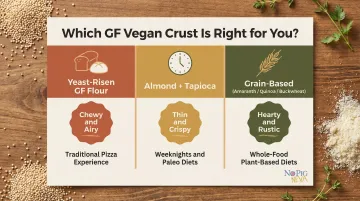
Quick Comparison
| Crust Type | Texture | Best For |
|---|---|---|
| Yeast-Risen GF Flour | Chewy, airy, golden | Traditional pizza experience, family-friendly |
| Almond + Tapioca | Thin, crispy, quick | Weeknights, paleo diets, low time commitment |
| Grain-Based (Amaranth/Quinoa/Buckwheat) | Hearty, rustic, dense | Whole-food plant-based diets, high protein |
Classic Gluten-Free Vegan Pizza Recipe (Step-by-Step)
This recipe uses a yeast-risen GF all-purpose flour crust, which delivers a crispy-bottomed, chewy result. It's ready in under an hour and pairs with any toppings you like.
Ingredients
For the Dough:
- 2 cups GF all-purpose flour blend (with xanthan gum)
- 1 packet (2¼ teaspoons) instant yeast
- 1 teaspoon sugar
- 1 teaspoon salt
- ¾ cup warm water (110°F)
- 2 tablespoons olive oil
For the Toppings:
- ½ cup pizza sauce (store-bought marinara works well)
- 1 cup shredded vegan mozzarella
- Fresh basil leaves
- Optional: mushrooms, bell peppers, olives, vegan pepperoni, or your favorite toppings
Instructions
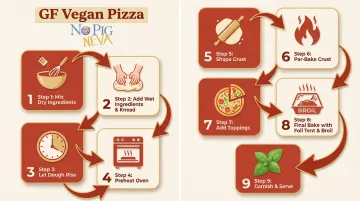
Mix dry ingredients: In a large bowl, whisk together GF flour, instant yeast, sugar, and salt.
Add wet ingredients: Pour in warm water and olive oil. Stir with a wooden spoon, then knead by hand for 5-7 minutes until smooth. The dough should be slightly sticky but hold together.
Let it rise: Lightly oil the dough ball, cover the bowl with a damp towel, and let rise in a warm spot for 1 hour. The dough won't double like wheat dough, but it should puff slightly.
Preheat your oven: Set oven to 475°F. Place a pizza stone or inverted baking sheet inside to preheat for at least 15 minutes.
Shape the crust: On a piece of parchment paper, flatten the dough into a 12-inch circle using your hands or a rolling pin. GF dough is less elastic, so press gently.
Par-bake the crust: Transfer the parchment with the dough onto the preheated stone or baking sheet. Bake for 7-10 minutes until the crust is set and lightly golden.
Add toppings: Remove the crust, spread pizza sauce evenly, sprinkle vegan mozzarella, and add your toppings.
Final bake: Return to the oven and bake for 10-12 minutes until the crust is golden and the cheese is melted. For better cheese melt, tent loosely with foil for the first 8 minutes, then remove and broil for 1-2 minutes.
Garnish and serve: Top with fresh basil and let cool for 2 minutes before slicing.
Dough Troubleshooting
- Too sticky? Add GF flour 1 tablespoon at a time until manageable.
- Too dry or crumbly? Add warm water 1 tablespoon at a time.
GF flour blends vary by brand, so small adjustments are common.
Nutrition Note
Approximate per-serving nutrition (1/4 of a 12-inch pizza):
- Calories: 320-380
- Carbohydrates: 45-50g
- Protein: 4-6g
- Fat: 12-15g
These estimates vary based on your specific GF flour brand and toppings. Most shredded vegan mozzarella options run around 90-110 calories per 28g serving — NoPigNeva carries several varieties if you need a reliable gluten-free option shipped to your door.
Best Vegan Pizza Toppings and Dairy-Free Cheese Tips
The crust gets you started, but toppings are where gluten-free vegan pizza really comes together. Here's how to build layers of flavor without any animal products.
Dairy-Free Cheese: Store-Bought vs. Homemade
Store-bought shredded options like Violife Just Like Mozzarella Shreds or Miyoko's Classic Cashew Milk Mozzarella are the most convenient—they melt well and deliver good flavor straight from the bag. Homemade cashew-based mozzarella often melts better and tastes richer, but it takes more prep time.
Melting tip: Drizzle olive oil or spray with avocado oil over the cheese before baking. Even better, loosely tent the pizza with foil for the last 8 minutes of baking to trap steam (vegan cheese relies on starch gelatinization, which requires moisture). Remove the foil and broil for 1-2 minutes to finish.
NoPigNeva carries a range of 100% vegan, non-GMO dairy-free cheeses delivered across the USA, making it easy to stock your fridge with ready-to-use options.
Vegetables and Savory Toppings
A few proven combinations to get you started:
- Classic: Mushrooms, onions, fresh basil
- Colorful: Roasted bell peppers, artichoke hearts, olives, broccoli
- White pizza: Roasted garlic, caramelized onions, fresh thyme
Important: Sauté or roast vegetables before adding them to the pizza. High-moisture veggies like mushrooms, peppers, and zucchini release water during baking, which prevents the crust from browning and results in a soggy, gummy texture.
Plant-Based Protein Options
Add heartiness with:
- Vegan sausage crumbles
- Plant-based pepperoni
- Marinated tofu cubes
NoPigNeva carries vegan pepperoni, sausage, and other plant-based alternatives shipped nationwide—useful if these items are hard to find locally.
Sauce Variations
Beyond classic red sauce, try:
- Concentrated marinara: Cook store-bought marinara for 10 minutes to reduce moisture and intensify flavor
- Oil-free tomato paste: Spread thinly directly on the crust for a bold, concentrated tomato base
- Dairy-free pesto: Basil, garlic, pine nuts, olive oil, and nutritional yeast
- Balsamic-garlic white base: Olive oil, minced garlic, balsamic reduction, and a pinch of salt
Pro Tips for a Perfect Bake Every Time
Crust Texture: Pre-Bake for Success
Pre-bake the crust for 7-10 minutes before adding toppings. Gluten-free vegan crusts have no gluten or egg to repel moisture, so par-baking creates a sealed surface that stays crispy under sauce.
For the crispiest bottom, bake on a preheated pizza stone or baking steel. Research shows that a baking steel stores more than 18 times the heat energy of a ceramic stone and transfers heat faster, resulting in superior crisping and charring.
Bake at the highest temperature your oven allows (typically 500–550°F for home ovens). High heat drives off moisture quickly and creates a crisp exterior.
Cheese Melting Trick
Once your crust is set, cheese becomes the next challenge. If vegan cheese isn't melting fully:
- Loosely tent the pizza with foil for the last 8 minutes of baking to trap steam
- Remove the foil and broil for 1-2 minutes to finish
- Watch closely — vegan cheese can scorch quickly
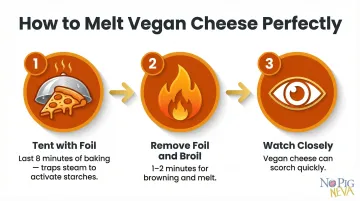
Trapped steam helps the starches in vegan cheese soften and melt evenly.
Make-Ahead and Storage
Dough storage:
- Refrigerate dough after rising for up to 2 days in an airtight container
- Freeze dough (pressed flat) for up to 1 month
- Thaw frozen dough in the refrigerator overnight, then bring to room temperature before shaping
Baked pizza storage:
- Store baked pizza in an airtight container in the fridge for up to 3 days
- Reheat in an oven, toaster oven, or air fryer (not the microwave) to preserve crust crispness
Reheating methods:
- Oven: Place slices on a baking sheet, cover tightly with foil, place in a cold oven, set to 275°F, and heat for 25-30 minutes
- Skillet: Place slice in a nonstick skillet, add ½ teaspoon water (not touching the pizza), cover and heat on medium-low for 5-6 minutes. Uncover, add ½ teaspoon oil, and crisp on medium-high for 1-2 minutes
- Air fryer: 350°F for 3-4 minutes. Moisten the crust with damp hands before reheating to prevent drying out
Frequently Asked Questions
Is there such a thing as gluten-free vegan pizza?
Yes, gluten-free vegan pizza is very real and increasingly popular. It's made with GF flour blends or nut-based crusts and topped with plant-based cheese and vegetables—no dairy, eggs, or gluten required.
Can vegans eat gluten-free pizza?
Gluten-free and vegan are separate dietary requirements. GF pizza can still contain dairy or eggs, so vegans need to confirm that the crust, cheese, and all toppings are plant-based—just like the recipes in this guide.
What is the best gluten-free flour for vegan pizza crust?
GF all-purpose blends with xanthan gum (like Pillsbury GF or Cup4Cup) produce the most traditional dough texture. Almond + tapioca flour is best for a quick yeast-free crust. The right choice depends on your texture preference and available time.
How do I stop my gluten-free vegan pizza crust from being soggy?
A few steps make the biggest difference:
- Pre-bake the crust for 7–10 minutes before adding toppings
- Bake on a preheated pizza stone or the lowest oven rack for direct bottom heat
- Sauté wet vegetables like mushrooms and peppers first to remove excess moisture
Can I freeze gluten-free vegan pizza dough?
Yes, dough freezes well after the first rise—shape it flat, then thaw overnight in the fridge before topping and baking. Par-baked crusts also freeze well; wrap in plastic and foil and use within 2 weeks.
Ready to make your best gluten-free vegan pizza yet? Stock your pantry with quality plant-based ingredients, follow the steps above, and enjoy pizza night done right. For hard-to-find vegan cheeses, plant-based meats, and specialty pantry staples, explore NoPigNeva's curated selection—100% vegan, delivered nationwide.