
For many people, fish and chips represents pure comfort—a nostalgic connection to seaside holidays, Friday night dinners, or pub meals with friends. Finding a vegan version that actually delivers on both crispiness and flavor can feel impossible. Most attempts result in soggy batter, bland tofu, or a disappointing texture that bears no resemblance to the real thing.
This guide covers everything you need to nail vegan fish and chips at home: the best plant-based "fish" bases (tofu, heart of palm, and banana blossom), the science behind a shatteringly crisp batter, how to recreate that unmistakable briny flavor without seafood, and which chip alternatives work best.
TLDR
- Tofu, heart of palm, and banana blossom each offer different textures—pick based on prep time and how flaky you want the result
- Cornstarch mixed with flour and carbonated liquid creates the crispiest batter by limiting gluten formation
- Nori, miso, and caper brine replicate seafood's briny umami flavor
- Air-frying reduces fat by 48–80% compared to deep-frying while maintaining crunch
- NoPigNeva carries ready-made vegan seafood alternatives if you'd rather skip the prep entirely
The Best Plant-Based Bases for Your Vegan "Fish"
The base ingredient determines everything—texture, how well the batter sticks, and how closely the final result mimics white fish. Each option delivers a distinctly different eating experience.
Tofu (The Flaky Classic)
Firm tofu remains the most popular choice for vegan fish because its neutral flavor absorbs marinades deeply and its porous structure allows moisture to escape during frying. The key technique is scoring—making parallel shallow cuts across the surface creates layers that separate during cooking, mimicking the flaky texture of cod or haddock.
Pressing tofu for 20–30 minutes before marinating is non-negotiable. Excess moisture prevents crisping, and removing it allows the tofu to soak up the briny marinade that delivers seafood flavor.
Heart of Palm (The Tender Alternative)
Canned heart of palm naturally shreds into fibrous, stringy pieces that closely resemble flaked white fish. It requires minimal prep—just drain, pat dry, and marinate—making it a practical choice for weeknight cooking. Most recipes using heart of palm come together in under 45 minutes from start to finish.
Nutritionally, heart of palm is exceptionally lean: just 41 calories per cup with 0.2g saturated fat and zero cholesterol, compared to 280 calories and 45mg cholesterol in battered cod fillets.
Banana Blossom (The Pub-Style Option)
Banana blossom has become a UK vegan pub staple, appearing on menus at establishments like Sutton & Sons and St Austell Brewery. When canned, it delivers a soft, slightly chewy texture that mimics beer-battered fish. It's increasingly available in US specialty stores through brands like Upton's Naturals, which stocks Whole Foods locations nationwide.
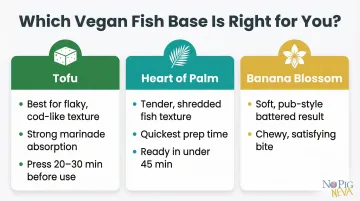
Not sure which base to start with? Here's a quick comparison:
- Tofu: Best for flaky, cod-like texture with strong marinade absorption
- Heart of Palm: Best for tender, shredded fish; quickest prep time
- Banana Blossom: Best for soft, pub-style battered fish with a chewy bite
If sourcing these ingredients feels like too much work, NoPigNeva stocks a range of ready-made vegan seafood alternatives that make the whole process considerably easier.
The Secret to a Seriously Crispy Batter
This is where most homemade vegan fish and chips fails. The batter goes soggy, slides off during frying, or comes out dense instead of crunchy. Three variables control the outcome: carbonation, starch ratio, and oil temperature. Get those right and the rest follows.
Why Carbonation Is Non-Negotiable
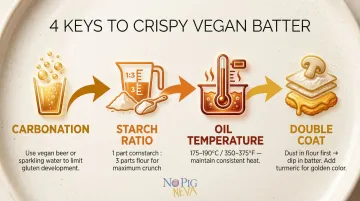
Carbonation creates air bubbles in the batter that expand rapidly in hot oil, producing a light, airy, crispy shell rather than a dense coating. Beer or sparkling water also makes the batter slightly acidic (pH ~4), which limits gluten formation. Gluten forms most readily at pH 5–6, so dropping below that range keeps the coating light. Use vegan beer or ice-cold sparkling water for equally effective results.
The Cornstarch and Flour Ratio
Replacing some all-purpose flour with cornstarch significantly increases crispiness. Cornstarch contains no protein, doesn't brown, and doesn't form gluten. When heated, pure starch absorbs water and forms a gel; when that water boils off, it leaves behind an airy, crispy structure.
Recommended ratio: 1 part cornstarch to 3 parts all-purpose flour (or use a 50/50 blend for maximum crispiness).
Oil Temperature Is Everything
Frying temperature between 175–190°C (350–375°F) is critical. Too cool and the batter absorbs oil and turns greasy; too hot and the outside burns before the inside cooks. Use a thermometer or test with a drop of batter—it should sizzle immediately and float to the surface within 2–3 seconds.
Final Touches: Coating and Color
Two last details that make a real difference:
- Double-coat the base: Dust your vegan fish in dry flour before dipping into wet batter. This gives the batter something to grip, prevents sliding, and creates a craggy, extra-crispy exterior.
- Add turmeric for color: A pinch of turmeric (1–3% of total batter weight) delivers the classic golden-yellow finish without affecting flavor—making homemade vegan fish look just like a deep-fried restaurant fillet.
How to Get That "Fishy" Flavor Without Fish
Even perfectly crispy batter falls flat without the right briny, oceanic notes. The solution is layering umami-rich ingredients at multiple stages—in the marinade, on the surface, and in the batter itself.
Nori (Seaweed) as the Flavor Foundation
Nori contains 170–1,350mg of glutamate per 100g, the compound responsible for umami flavor. Blend or crumble nori sheets and press them against the tofu or heart of palm surface before battering. Adding finely ground nori directly to the batter builds another layer of oceanic depth.
The Brine-Acid Marinade
Three ingredients cover the flavor pillars of seafood—saltiness, umami, and acidity:
- Lemon juice — bright acidity that mimics the citrus note in classic fish dishes
- Caper brine — sharp, briny saltiness without any fishy smell
- Miso paste — deep umami that rounds out the marinade
Marinating overnight deepens the flavor considerably compared to a 30-minute soak, as the acids and salts have time to penetrate the plant-based base.
Seasoning Blends That Deliver
Old Bay seasoning is vegan-friendly and delivers classic seafood flavor in one shake. Round it out with:
- Dried dill — fresh, herbaceous contrast
- Celery salt — subtle brininess
- Garlic powder — savory backbone
Apply these at two points: once in the marinade and once dusted over the batter just before frying.
Vegan Chip Alternatives Beyond Basic Fries
The "chips" half of fish and chips deserves equal attention — and there are more options than basic fries.
Classic Thick-Cut Chips (The Original)
The par-boiling method produces chips with fluffy interiors and crispy exteriors:
- Boil cut potatoes for 3–4 minutes
- Drain and steam-dry for 2–3 minutes, shaking the pan to rough up edges
- Air-fry or bake at 400°F for 25 minutes
Maris Piper or Russet potatoes work best due to their high starch content, which creates fluffiness inside while crisping beautifully outside.
Sweet Potato and Alternatives
Not every chip has to be a white potato. A few alternatives worth trying:
- Sweet potato wedges — natural sweetness with a denser, creamy interior
- Cassava fries — neutral flavor, extra crispy edges when baked or air-fried
- Parsnip chips — earthy and slightly sweet, great for a thinner, crunchier cut
Air-Frying for Lower Fat
With nearly 60% of US households owning an air fryer, this cooking method has become the go-to for healthier chips. Air-frying reduces fat content by 48–80% compared to deep-frying while still delivering satisfying crunch. Set your air fryer to 365°F for best results.
Serving Your Vegan Fish and Chips
Complete the fish-and-chips experience with classic accompaniments:
- Vegan tartar sauce: vegan mayo blended with capers, diced pickles, lemon juice, and fresh dill
- Lemon wedges: essential for brightness and cutting through the batter
- Malt vinegar: the traditional British condiment, naturally vegan
- Mushy peas: marrowfat peas simmered down to a vibrant, creamy side
If you're sourcing ingredients for the full spread, NoPigNeva carries vegan seafood alternatives and pantry staples shipped nationwide across the USA. No membership or minimum order required.
Frequently Asked Questions
What is a good alternative to cod and chips?
Tofu, heart of palm, and banana blossom are the top plant-based alternatives to cod. Each offers a flaky texture when prepared correctly, with nori and lemon-miso marinades delivering a convincing seafood flavor.
What can I have instead of chips with fish?
Sweet potato fries, air-fried parsnip chips, cassava fries, and baked potato wedges all pair well with vegan fish — and none require deep-frying.
What gives vegan fish that "fishy" taste?
Nori (seaweed), caper brine, lemon juice, and miso paste are the key flavor-builders. Together, they recreate the briny, umami-rich taste of seafood — most effectively when combined in both the marinade and batter.
Can I make vegan fish and chips without deep-frying?
Yes—both an air fryer and high-heat oven (200°C/400°F) work for the chips, and vegan fish can also be air-fried. Deep-frying produces the crispiest batter coating, but air-frying delivers excellent results with significantly less oil.
Is vegan fish and chips healthier than the traditional version?
Vegan versions using tofu or heart of palm are generally lower in saturated fat and cholesterol than cod (0mg vs. 45mg cholesterol). Air-frying can reduce calorie content by up to 80% compared to deep-frying, though the batter means it's still a treat rather than an everyday light meal.