Introduction
Salmon earns its place on grocery store fish counters: it's rich in omega-3 fatty acids, easy to cook, and one of the most recognized health foods around. But that reputation comes with a real cost.
Farmed salmon averaged $10.25 per pound in 2025, and concerns over sustainability, contaminant levels, and fish welfare push many shoppers to look elsewhere. Others simply want more variety without giving up nutritional value.
Whether you're cutting costs, matching that omega-3 profile, or skipping animal products altogether, this guide covers the strongest alternatives — including fish-based options and plant-based picks that hold up on taste and nutrition.
TL;DR
- Plant-based salmon alternatives replicate the texture, flavor, and omega-3 benefits — no fish required
- Steelhead trout and arctic char are the closest whole-fish substitutes in flavor and texture
- Mackerel and sardines pack the highest omega-3s at the lowest price point
- Sablefish mirrors salmon's rich, buttery profile for special-occasion cooking
- Your best pick depends on whether you're prioritizing nutrition, cost, or a fully plant-based plate
Why People Look for Salmon Alternatives
The two most common motivations for seeking salmon substitutes are cost and sustainability. Farmed salmon retails for approximately $10.25 per pound, while wild-caught varieties often exceed $15–20 per pound. For families eating fish 2–3 times weekly, that expense adds up fast. On the sustainability side, certain fisheries face serious environmental challenges — farmed Atlantic salmon from Scotland's Western Isles is rated "Avoid" by Monterey Bay Aquarium Seafood Watch due to escapes and parasitic sea lice impacts on wild populations.
Health concerns round out the picture. The FDA classifies salmon as low-mercury (averaging 0.022 PPM for fresh/frozen varieties), but questions around farmed salmon persist. The FDA permits color additives like astaxanthin (up to 80 mg/kg) and canthaxanthin in feed to enhance flesh color.
A 2004 peer-reviewed study found organochlorine contaminants significantly higher in farmed salmon than wild — a finding that still shapes how health-conscious shoppers approach the fish counter.
Beyond cost and health, many people simply want variety. Vegans, flexitarians, and pescatarians alike are looking for options that match salmon's nutritional profile without the drawbacks — and plant-based seafood alternatives have stepped up to fill that gap.
Best Fish Alternatives to Salmon
The following fish were selected based on three criteria: similar nutritional profile (omega-3 fatty acids, protein, vitamin D/B12), comparable cooking versatility, and accessible pricing in the US market. They're listed roughly in order of similarity to salmon — starting with the closest match and moving toward broader alternatives.
Steelhead Trout
Steelhead trout is a migratory rainbow trout that delivers the closest visual and nutritional match to salmon. It features similar pink flesh, flaky texture, and mild flavor, and is widely available fresh and frozen in US grocery stores.
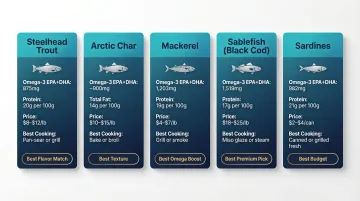
Why it stands out: Steelhead trout typically costs $1-2 per pound less than farmed Atlantic salmon, cooks identically (baking, grilling, pan-searing, poaching), and carries a comparable omega-3 and protein profile. Per 100g cooked, steelhead provides 23.8g protein and 875mg of EPA+DHA omega-3s—nearly matching salmon's nutritional punch. It's also rated "Best Choice" by Seafood Watch when farmed in the US.
| Nutrition Highlights | Price Range (US avg per lb) | Best Cooking Methods |
|---|---|---|
| Protein: 23.8g, Omega-3: 875mg EPA+DHA, Vitamin D: 19 mcg (per 100g) | $10.49 - $17.42/lb | Baking, grilling, pan-frying, poaching |
Arctic Char
Arctic char is a cold-water fish that tastes like a cross between salmon and trout—slightly milder and less oily than Atlantic salmon, with a firmer texture closer to wild sockeye. It's also known as Alpine Trout or Sea Trout.
Why it stands out: Arctic char is sustainably farmed in many regions and carries lower contaminant risk than some wild salmon. A 2026 multi-matrix screening in Iceland found total PFAS load in wild salmon was 2.5 times higher than in farmed Arctic char. Its mild, clean flavor suits dishes like pan-seared fillets with herb butter or baked with white wine. It's generally less expensive than wild-caught salmon but may cost slightly more than farmed Atlantic salmon.
| Nutrition Highlights | Price Range (US avg per lb) | Best Cooking Methods |
|---|---|---|
| Protein: 21g, Total Fat: 14g (per 113g serving) | $8.19 - $15.99/lb | Baking, grilling, pan-frying, poaching |
Mackerel
Mackerel is one of the most omega-3-dense fish available and often significantly cheaper than salmon. Atlantic mackerel in particular is considered one of the most sustainable seafood choices by major environmental organizations.
Why it stands out: Mackerel delivers a stronger, more pronounced flavor than salmon—rich and savory—making it ideal for bold marinades, smoking, and grilling. Per 100g cooked, mackerel provides 1,203mg of EPA+DHA omega-3s. Canned mackerel is an especially affordable format, retailing around $3.76 per 3.75 oz can.
| Nutrition Highlights | Price Range (US avg per lb) | Best Cooking Methods |
|---|---|---|
| Protein: 23.85g, Omega-3: 1,203mg EPA+DHA, Vitamin D: 0 mcg (per 100g) | $3.76 per 3.75oz can (canned) | Grilling, smoking, pan-frying, canned for salads and spreads |
Sablefish (Black Cod)
Sablefish—also marketed as black cod or butterfish—is a deep-sea fish prized for its exceptionally high fat content and buttery, melt-in-the-mouth texture. It's widely available on the US West Coast and online.
Why it stands out: The rich fat content (16.7g per 3 oz) makes sablefish nearly impossible to overcook, closely mimicking the lush texture of king salmon. It absorbs marinades (especially miso-based) beautifully and is a favorite in upscale restaurants. Sablefish delivers 1,519mg of EPA+DHA omega-3s per 85g serving. It may be priced similarly to or higher than wild salmon, making it a premium alternative rather than a budget option.
| Nutrition Highlights | Price Range (US avg per lb) | Best Cooking Methods |
|---|---|---|
| Protein: 14.6g, Omega-3: 1,519mg EPA+DHA, Total Fat: 16.7g (per 85g) | $19.00/lb | Baking, broiling, pan-frying, steaming, grilling with miso glaze |
Sardines
Sardines are the most budget-friendly and nutrient-dense option on this list. These small, oily fish are packed with omega-3s, calcium (when eaten with bones), vitamin D, and B12. They're available fresh, frozen, or canned across virtually all US grocery stores.
Why they stand out: Sardines are one of the few fish with a carbon-negative footprint, naturally low in mercury (mean of 0.013 PPM), and extremely versatile when prepared well. Fresh sardines grilled with lemon have a cleaner, less pungent flavor than their canned counterpart. Per 100g canned in oil, sardines provide 982mg of EPA+DHA omega-3s and 382mg of calcium.
| Nutrition Highlights | Price Range (US avg per lb/can) | Best Cooking Methods |
|---|---|---|
| Protein: 24.62g, Omega-3: 982mg EPA+DHA, Calcium: 382mg, Vitamin D: 4.8 mcg (per 100g) | $1.50 - $3.99 per can | Grilling, baking, pan-frying (fresh); spreads, salads, pasta (canned) |
How to Choose the Right Salmon Substitute
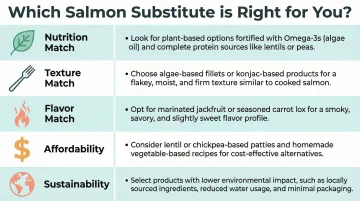
The right plant-based salmon substitute depends on what you're trying to replicate — the nutrition, the texture, or the flavor experience. Each goal points to a different type of product.
Matching the nutrition: Look for plant-based options fortified with omega-3s (ALA or algae-derived DHA) and protein. Algae-based products are the closest match to salmon's cardiovascular benefits, since algae is actually where fish get their omega-3s in the first place.
Matching the texture: Flaky, firm-textured alternatives work best in recipes like salmon patties, pasta, or grain bowls. Hearts of palm and whole-cut plant-based fillets tend to hold up better than crumbled or minced formats.
Matching the flavor: Smoked or cured plant-based salmon products (often made from carrots, beets, or konjac) replicate the savory, slightly briny flavor profile that makes salmon distinctive in dishes like bagels, sushi, or salads.
For affordability: Canned or shelf-stable plant-based seafood alternatives are the most budget-friendly entry point. Many options fall in the $4–$8 range per serving — comparable to mid-tier canned fish.
For sustainability: Plant-based salmon alternatives have a significantly lower environmental footprint than farmed or wild-caught fish. No bycatch, no ocean habitat disruption, and no risk of overfishing concerns that affect some fisheries.
One thing to watch: Not all plant-based salmon products are nutritionally equivalent. Check labels for added protein, omega-3 content, and sodium levels — some heavily processed options trade nutritional density for convenience.
A Plant-Based Option: Vegan Salmon Alternatives
For readers who want to avoid fish entirely—whether for ethical, environmental, or dietary reasons—the market for plant-based salmon alternatives has expanded fast. The US plant-based seafood market was valued at $122.42 million in 2024 and is projected to reach $258.44 million by 2033.
Today's vegan salmon products do a solid job of replicating the texture and smokiness of the real thing. Common formats include:
- Tomato-based "smoked salmon" — thin-sliced and cured for a close lox texture
- Carrot lox — naturally rich color with a mild, smoky flavor
- Soy or konjac-based fillets — designed to mimic flaky cooked salmon
That variety matters beyond just taste. Plant-based seafood has a greenhouse gas footprint one-third less than conventionally farmed fish, making these alternatives a meaningful swap for environmentally conscious shoppers.
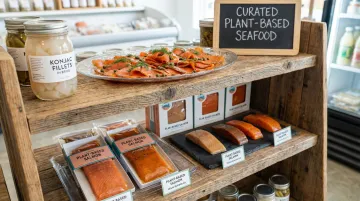
NoPigNeva carries a curated selection of plant-based vegan seafood products—including vegan salmon alternatives—that are 100% vegan, Non-GMO, and delivered nationwide. Orders over $99.99 ship free, with no membership required to buy.
Conclusion
The best alternative to salmon isn't a single fish—it depends on budget, cooking goals, and health priorities. Steelhead trout offers the most seamless swap for recipes, mackerel and sardines deliver the best nutritional value per dollar, and sablefish is the premium indulgence for special occasions.
If you're also open to plant-based options, NoPigNeva carries a curated selection of vegan seafood alternatives—including plant-based salmon—shipped nationwide with free delivery on orders over $99.99. It's a practical addition to the mix, especially for anyone reducing animal products without sacrificing variety.
Frequently Asked Questions
What fish is very similar to salmon?
Steelhead trout is the closest match in terms of flavor, color, and texture, followed by arctic char. Both are pink-fleshed, omega-3-rich fish that cook the same way as salmon and are widely available in the US.
What's the healthiest fish to eat besides salmon?
Mackerel and sardines are top contenders due to their very high omega-3 content, low mercury levels, and rich vitamin D and B12 profiles. Sablefish is also a strong choice for healthy fats.
What fish is good for lowering triglycerides?
Fatty fish like mackerel, sardines, and steelhead trout are associated with lowering triglyceride levels thanks to their high omega-3 content. The American Heart Association confirms that 4g/day of EPA/DHA reduces triglycerides by ≥30%. Consult a healthcare provider for personalized dietary guidance.
Should I eat salmon if I have high cholesterol?
Salmon is heart-healthy — its omega-3 content may help improve HDL cholesterol levels. That said, anyone with specific cholesterol concerns should consult a doctor or dietitian. Mackerel and trout offer comparable benefits.
Is steelhead trout a good substitute for salmon in recipes?
Yes, steelhead trout is virtually interchangeable with salmon in most recipes. It has a comparable texture, similar cook times, and a mild flavor that takes on marinades and seasonings the same way salmon does.
Are there plant-based alternatives to salmon?
Yes, plant-based salmon alternatives made from ingredients like tomatoes, carrots, or soy/konjac are widely available. NoPigNeva carries a range of vegan seafood options — including smoked salmon and salmon fillet alternatives — shipped nationwide with no minimum order required.