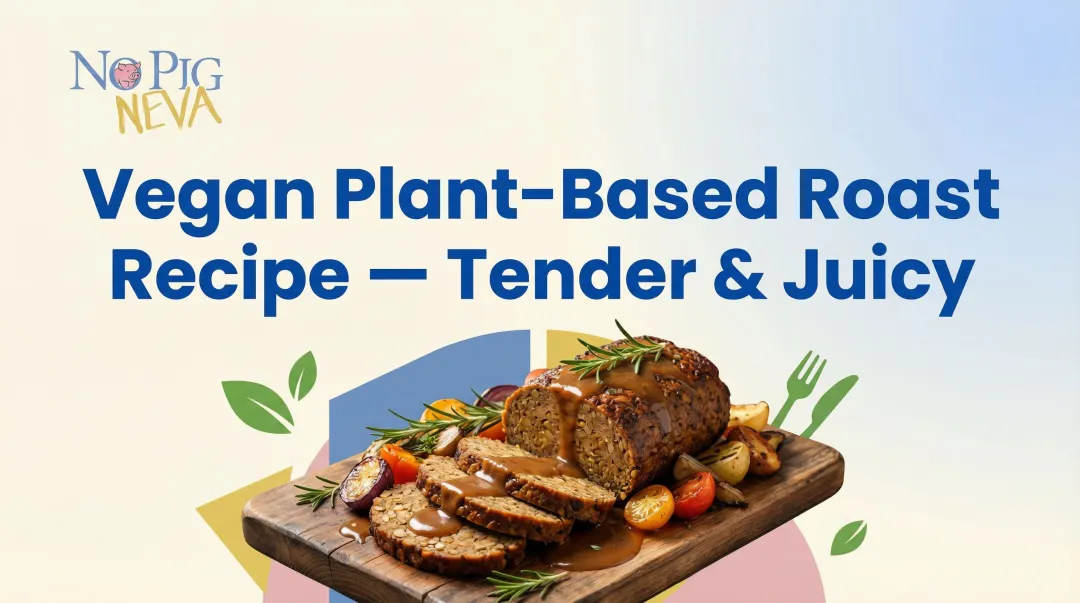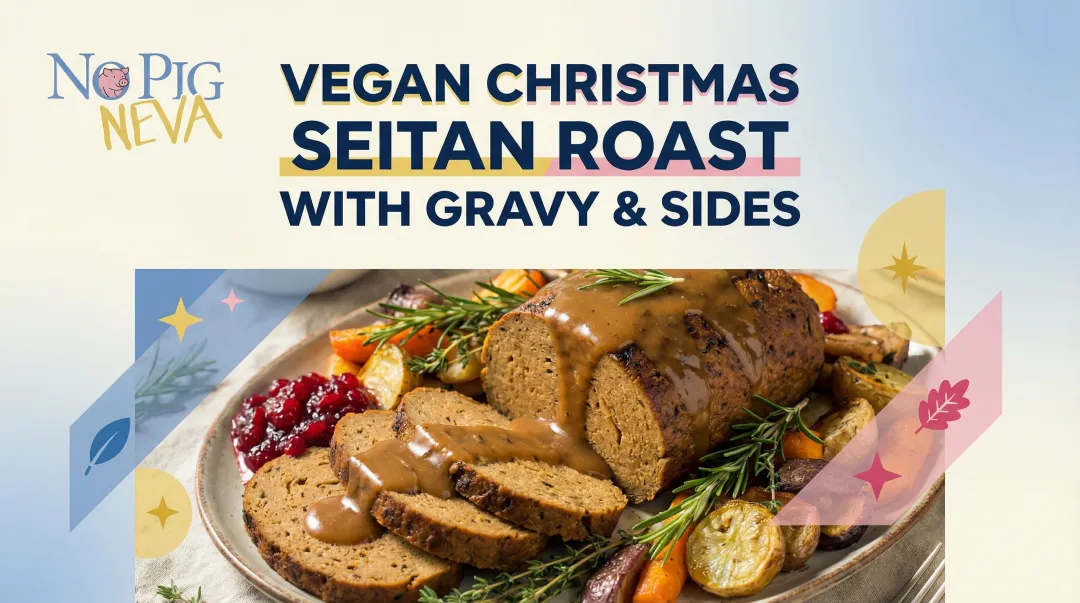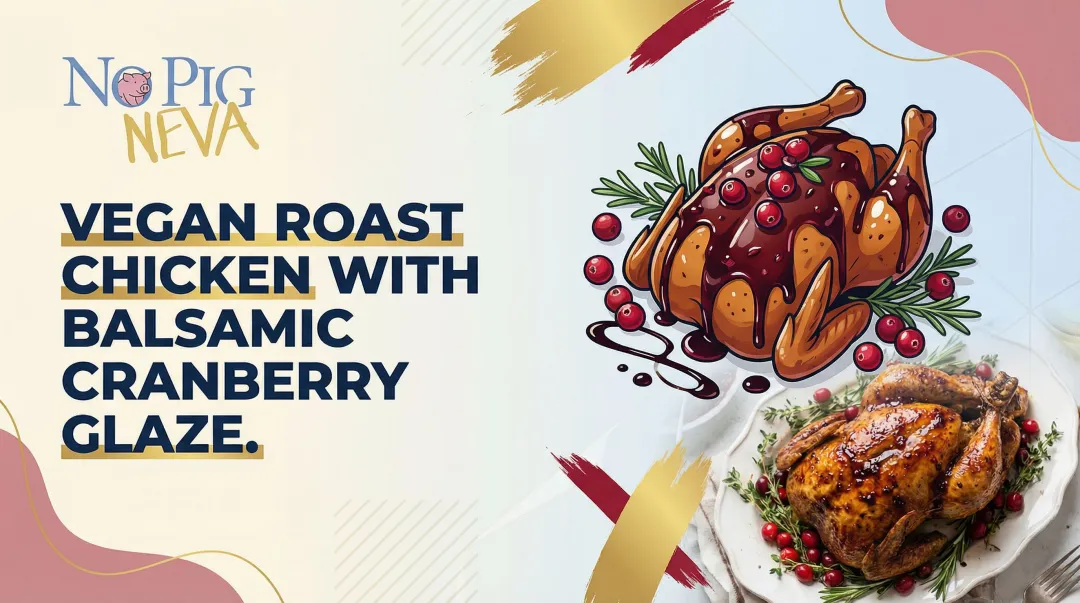

You'll discover the main types of vegan Christmas roasts, proven techniques for nailing texture and flavor, the best sides to complete your feast, and where to find quality ready-made options. Whether you're a seasoned vegan or hosting your first plant-based holiday, you'll finish with a clear plan and the confidence that your vegan roast can absolutely steal the show.
TLDR:
- Seitan delivers the closest texture to meat; nut roasts offer gluten-free tradition
- Build umami with mushrooms, soy sauce, and miso before roasting
- Glaze and rest your roast for juiciness and caramelized crust
- Pair with crispy potatoes, maple-glazed vegetables, and rich vegan gravy
- NoPigNeva stocks premium vegan roasts and specialty ingredients with free shipping over $99.99
Your Vegan Christmas Roast Options: From Nut Roast to Seitan Wellington
"Vegan Christmas roast" isn't a single dish—it's a versatile category with multiple delicious routes, each offering distinct textures, flavors, and skill levels. Plant-based mains are showing up at more holiday tables every year, driven by vegans, flexitarians, and hosts who want something genuinely impressive for mixed-diet crowds. The five options below cover every skill level, dietary need, and budget—find the one that fits your table.
Seitan Roast (The Meaty Option)
Seitan, made from vital wheat gluten, produces the closest texture to a traditional meat roast—dense, sliceable, and built for carving. Vital wheat gluten delivers 75.2g of protein per 100g, well ahead of tofu and most other plant proteins. Shape it into a log, stuff it with herbs and vegetables, or wrap it Wellington-style for a dramatic presentation.
Important note: Seitan is unsuitable for gluten-free diets.
Nut Roast (The Classic)
The nut roast is a classic plant-based centerpiece—a hearty loaf-style bake made from mixed nuts, seeds, vegetables, and binding agents like flax eggs or flour. It's naturally gluten-free with the right flour, high in protein, and endlessly customizable with festive herbs. This option works well for guests avoiding processed proteins or anyone who prefers a whole-food main.
Wellington-Style Roast (The Showstopper)
A Wellington wraps a savory filling—seitan, mushroom duxelles, chestnuts, or lentils—in flaky puff pastry. The result is visually stunning and impressive enough to win over non-vegans at mixed-diet holiday tables. Store-bought vegan puff pastry makes this option straightforward, and the golden, crispy exterior delivers restaurant-quality presentation.
Stuffed Roasted Vegetables (The Whole-Food Option)
For a lighter, whole-food approach, consider stuffed butternut squash, whole roasted cauliflower, or stuffed portobello mushrooms. These options avoid processed proteins entirely while still delivering hearty satisfaction. A wild rice or lentil stuffing adds substance, and roasted chestnuts or dried cranberries bring the festive flavor home.
Lentil or Bean Loaf (The Budget-Friendly Option)
Lentil and bean loaves offer an accessible, affordable centerpiece similar in concept to nut roasts but made with protein-rich legumes. Cooked lentils provide 9.02g of protein and 7.9g of dietary fiber per 100g, making them nutritionally robust. They're nut-free (perfect for allergy-conscious households) and can be made gluten-free with oat flour or gluten-free breadcrumbs.
How to Make Any Vegan Roast Tender, Juicy, and Packed with Flavor
The biggest concern with vegan roasts—seitan especially—is ending up with something dry, rubbery, or bland. The techniques below cover flavor building, moisture control, glazing, and baking method, so you get results worth centering a holiday table around.
Build Flavor from the Base
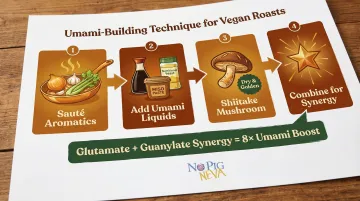
Start by building umami depth before your roast goes in the oven. Sauté aromatics like onion, garlic, and celery until soft and golden. Add umami-rich ingredients like soy sauce or tamari, nutritional yeast, and miso paste. Fresh or dried herbs—sage, rosemary, thyme—bring festive warmth.
Don't skip mushrooms. Combining glutamate-rich soy sauce with guanylate-rich dried shiitake mushrooms triggers umami synergy, amplifying savory depth far beyond what either ingredient achieves alone. Always cook mushrooms until golden and dry before adding them—this concentrates their flavor and prevents a soggy texture.
Moisture Management: The Secret to Juiciness
Liquid ingredients prevent dryness from the inside out. Add vegetable broth, vegan Worcestershire sauce, or blended beans to your mixture for internal moisture. For seitan, wrap tightly in parchment and foil before baking to trap steam and prevent a dry crust.
Rest your roast for at least 20 minutes after baking—slicing too early releases all the moisture. Chilling seitan overnight allows the gluten network to set and firm up, giving you cleaner slices and a noticeably firmer texture.
Glazing for Color, Crust, and Caramelization
A simple glaze transforms the exterior of any vegan roast. Try these formulas:
- Soy sauce + maple syrup + mustard
- Cranberry + orange juice + balsamic
- Balsamic vinegar + brown sugar + garlic
Brush the glaze on during the last 15-20 minutes of baking, then finish under the broiler for 2-3 minutes to caramelize. This step is especially important for seitan and nut roasts, which can look pale without it.
Kneading and Resting Seitan Correctly
For seitan roasts specifically: knead the dough for around 5 minutes—no more, no less. Kneading develops the gluten structure needed for a meaty bite. Over-kneading creates rubbery texture; under-kneading results in spongy, soft texture. Let the dough rest for 10 minutes after kneading to relax the gluten before shaping.
Wrapping and Baking Techniques
Wrapping technique matters:
- Seitan: Wrap tightly in cheesecloth, then foil, to hold shape while steaming
- Nut/lentil roasts: Press mixture firmly into a loaf pan to avoid crumbling
- Wellingtons: Assemble on parchment paper for easy transfer
Most roasts bake well at 350–400°F. Finish at a higher temperature or under the broiler for a crispy, golden exterior.
Building Your Vegan Christmas Roast: A Recipe Framework
This section provides a practical framework you can adapt to suit your preferred base and flavor profile. We'll focus on the seitan-style roast — the most versatile option for Christmas — with notes for nut or lentil roast adaptations.
The Core Components
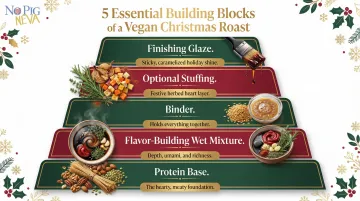
Every successful vegan Christmas roast needs:
- Protein base: Vital wheat gluten for seitan, mixed nuts/seeds for nut roast, lentils for lentil loaf
- Flavor-building wet mixture: Sautéed aromatics, umami-rich liquids, spices
- Binder: Flax egg, cannellini beans, or breadcrumbs
- Optional stuffing or filling: Mushrooms, spinach, cranberries, chestnuts
- Finishing glaze: Soy-maple, cranberry-orange, or balsamic-brown sugar
Festive Herb and Spice Combinations
Pick one flavor profile and commit to it through both the roast and the gravy for a cohesive result from roast to gravy:
- Sage + onion: Classic British, earthy, comforting
- Rosemary + thyme + garlic: Mediterranean, aromatic, elegant
- Smoked paprika + cranberry + orange: Sweet-smoky, festive, bright
- Mushroom + miso + balsamic: Deep umami, rich, sophisticated
Timing and Make-Ahead Tips
Once your flavor profile is set, plan ahead — most vegan roasts actually improve with time. Here's how each style handles make-ahead prep:
- Seitan: Chilling overnight firms the texture for cleaner slicing
- Nut and lentil roasts: Bake 1–2 days ahead; reheat covered in foil to retain moisture
- Wellingtons: Assemble and refrigerate unbaked, then bake fresh on Christmas Day for maximum flakiness
Scaling for a Crowd vs. an Intimate Dinner
A standard seitan loaf serves 6–8 people. For larger gatherings, make two smaller roasts rather than one very large one—this ensures more even cooking and easier slicing. Nut roasts scale more easily and slice cleanly in larger batches.
The Best Sides to Complete Your Vegan Christmas Dinner
A great vegan Christmas dinner is about the whole table, not just the roast. Think of your meal in layers: starch, roasted vegetables, greens, and a sauce.
Classic Sides That Work with Any Vegan Roast
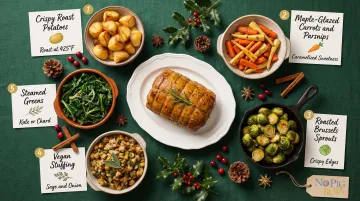
Essential side dish lineup:
- Crispy roast potatoes: Toss in olive oil or vegan butter, roast at 425°F until golden
- Maple-glazed carrots and parsnips: Roast with maple syrup for caramelized sweetness
- Roasted Brussels sprouts: Toss with olive oil and a pinch of smoked salt, roast until the edges crisp up
- Vegan stuffing: Sage and onion, baked until crispy on top
- Steamed or roasted greens: Kale, chard, or green beans
Bonus: Vegan Yorkshire puddings using aquafaba are a festive international addition worth trying if you want to impress guests.
Vegan Gravy: Don't Skip It
Good gravy makes or breaks the plate. A few reliable approaches:
- Red wine and mushroom gravy
- Onion and balsamic gravy
- Walnut-based gravy
Pro tip: The braising liquid from a seitan roast makes an exceptional gravy base—strain it and reduce down with a splash of red wine.
Cranberry Sauce and Other Festive Condiments
Homemade (or quality store-bought) cranberry sauce cuts through the richness of the roast. Other festive additions:
- Apple sauce
- Pickled red cabbage
- Fresh herb oil
Even one or two of these on the table makes the meal feel intentional and complete.
No Time to Cook? Find Premium Vegan Roasts and Ingredients at NoPigNeva
Not everyone has the time or confidence to make a seitan roast from scratch—and that's completely fine. Premium ready-made vegan roasts, plant-based meat alternatives, and specialty ingredients like vital wheat gluten or vegan puff pastry are increasingly available online.
NoPigNeva carries 100% vegan, non-GMO plant-based products shipped nationwide, including everything you need for a holiday table. Key reasons shoppers turn to them for Christmas:
- Ready-made vegan roasts and seitan-based options for a stress-free centerpiece
- Specialty ingredients (vital wheat gluten, vegan puff pastry) that are hard to find locally
- Free nationwide shipping on orders over $99.99
- No membership fees or minimum orders required
Even if you're making your roast from scratch, NoPigNeva is worth a browse for hard-to-find ingredients, premium sides, and accompaniments—cutting down on the number of stores you need to visit before the big day.
Frequently Asked Questions
What is a vegan alternative to turkey for Christmas dinner?
The best turkey alternatives are seitan-based roasts (closest in texture and presentation), stuffed butternut squash, or a Wellington. These options can be glazed and carved at the table just like a traditional turkey.
What is the best vegan roast?
It depends on what you're after. Seitan delivers the meatiest texture; nut roasts are the go-to for a gluten-free table; Wellington-style roasts make the strongest visual impression. Any of them works beautifully when well-seasoned and glazed.
What do vegans eat for a roast?
A full vegan roast dinner includes a plant-based centerpiece (seitan, nut roast, Wellington, or stuffed vegetable), paired with roast potatoes, seasonal vegetables, vegan stuffing, and a rich plant-based gravy.
What is a good vegan meal for Christmas?
A vegan Christmas roast with classic accompaniments is a natural fit for the holiday table. The key is choosing a showstopping centerpiece—seitan, Wellington, or a stuffed squash—and building the rest of the menu around it.
Can I make a vegan Christmas roast ahead of time?
Yes. Most vegan roasts can be prepared 1-2 days in advance. Seitan improves after chilling overnight, nut roasts reheat well covered in foil, and Wellingtons can be assembled and refrigerated unbaked until Christmas Day.
What sides go well with a vegan Christmas roast?
Crispy roast potatoes, maple-glazed root vegetables, Brussels sprouts, vegan stuffing, and a rich mushroom or red wine gravy are the ideal accompaniments for a complete holiday feast.