
Introduction
Many plant-based eaters struggle to find bacon alternatives that deliver authentic smoky, salty, crispy satisfaction on both texture and taste. 59% of U.S. households now purchase plant-based foods, yet commercial vegan bacon options often fall short on texture or protein content.
Seitan bacon solves this problem. Made from vital wheat gluten, it delivers a meaty chew and contains approximately 25g of protein per 4-strip serving—far exceeding tempeh, tofu, or rice paper alternatives. The concept is simple, but getting it right depends on a few variables: how you knead the dough, how you balance the marinade, and how you cook it.
This guide walks you through each of those variables—so your results are consistently good, not hit-or-miss.
TL;DR
- Seitan bacon uses vital wheat gluten kneaded into dough, cooked via steaming or baking, then pan-fried with a smoky-sweet marinade
- Knead for 6–8 minutes minimum; under-kneading produces a spongy, bready texture instead of meaty chew
- Liquid smoke, tamari, and maple syrup create the essential smoky-salty-sweet bacon profile
- Stores up to 1 week refrigerated or 3 months frozen
- Not suitable for gluten-free diets; tempeh or rice paper bacon are better alternatives
What You Need to Make Seitan Bacon
Core Ingredients
- Vital wheat gluten (non-negotiable) — contains 75.2g protein per 100g, creating the dense, meaty texture
- Secondary flour — chickpea, whole wheat, or all-purpose (10-14% protein content)
- Nutritional yeast — adds savory, umami depth
- Smoked paprika — contributes color and mild smokiness
- Garlic and onion powder — foundational savory notes
- Liquid smoke — concentrated smoky flavor from condensed hardwood smoke
- Tamari or soy sauce — provides saltiness and umami
- Maple syrup — balances with sweetness and aids caramelization
- Tomato paste — adds color and subtle acidity
- Vegetable broth or water — hydrates the dough
Specialty vegan pantry staples like vital wheat gluten, liquid smoke, and nutritional yeast are available through NoPigNeva's online store, which offers curated 100% vegan ingredients with free nationwide shipping on orders over $99.99.
Essential Equipment
- Large mixing bowls (one for dry, one for wet ingredients)
- Stand mixer with dough hook OR strong hands for kneading
- Steamer basket and pot OR metal loaf pan with foil for oven method
- Sharp knife (serrated bread knife works well)
- Non-stick frying pan
Of all the equipment above, none matters if you start with the wrong protein source. Here's why vital wheat gluten is the one ingredient you can't swap out.
Why Vital Wheat Gluten Cannot Be Substituted
Vital wheat gluten is isolated wheat protein—nearly 76% pure protein by weight. That's a stark contrast to all-purpose or whole wheat flour, which top out around 14% protein at best.
The structural difference is critical. Gluten forms from two proteins: glutenin (provides elasticity) and gliadin (provides extensibility). Vital wheat gluten is the concentrated protein mass left after washing away water-soluble starches from wheat flour dough. Using regular flour produces bread dough behavior, not the dense, springy, meat-like texture seitan requires.
How to Make Seitan Bacon: Step-by-Step
Step 1: Mix the Dough
Combine dry ingredients in a large bowl:
- Vital wheat gluten
- Secondary flour
- Nutritional yeast
- Smoked paprika
- Garlic powder
- Onion powder
Whisk wet ingredients separately until smooth:
- Vegetable broth or water
- Tamari
- Tomato paste
- Maple syrup
- Liquid smoke
Pour wet mixture into dry ingredients. Stir until a thick, firm dough forms that pulls away from bowl edges. If too wet or loose, the final seitan will be too soft—adjust with small amounts of extra flour if needed.
Step 2: Knead the Dough
Under-kneading is the number one cause of spongy, bread-like seitan—don't rush this.
Knead for 6–8 minutes by hand on a wooden board (or up to 10 minutes for a very firm texture).
If using a stand mixer, knead 5–6 minutes on medium speed with the dough hook.
The dough should progressively become firmer, denser, and more elastic. Kneading provides mechanical energy that hydrates the protein, causing glutenins to unfold and interconnect into a continuous polymeric network.
The dough is ready when:
- It feels firm to the touch
- Springs back noticeably when stretched
- Resists further kneading
When in doubt, knead longer.
Step 3: Cook the Seitan
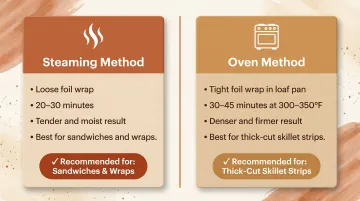
Steaming method:
- Shape dough into a square or rectangular block
- Wrap loosely in foil (must be loose to allow expansion)
- Place in steamer basket over boiling water
- Steam for 20–30 minutes from when water reaches full boil
Oven method:
- Press dough firmly into an oiled loaf pan
- Cover tightly with foil to trap steam
- Bake at 300–350°F for 30–45 minutes
Method trade-offs: Steaming produces slightly more tender, moist results. Oven-baking creates a denser, firmer block that slices cleanly into thick-cut strips. Choose steaming for sandwiches and wraps; go oven-baked when you want crisp, thick-cut strips that hold their shape in a skillet.
Step 4: Cool and Slice
Allow the cooked seitan block to cool completely at room temperature for at least 1 hour, or refrigerate overnight. The block firms up significantly as it cools, making it easier to cut into even, clean slices.
Use a sharp knife (serrated bread knife works well) to slice into strips:
- Thin slices (3–4mm) — crisp up more during frying
- Thick slices (6–8mm) — stay chewier and meatier in the center
Step 5: Marinate and Pan-Fry
Whisk together the marinade until smooth:
- Tamari
- Maple syrup
- Smoked paprika
- Tomato paste
- Garlic powder
- Onion powder
- Small amount of liquid smoke
Brush marinade generously onto both sides of each slice before frying. The tamari and liquid smoke penetrate the seitan surface, while the maple syrup sets up a smoky-sweet crust once it hits the pan.
Heat a skillet with high-smoke-point oil (grapeseed or avocado oil) over medium-high heat. Add 4–5 slices at a time and cook 1–2 minutes per side, flipping regularly, until strips develop dark, caramelized char marks.
Watch the heat: Maple syrup caramelizes fast. If edges are burning rather than charring, reduce heat slightly and give each side a few extra seconds instead.
Key Variables That Affect Your Seitan Bacon
Even with the right ingredients, small technique differences produce dramatically different results. The four variables below account for most failed batches — and most great ones.
Kneading Time and Intensity
Kneading organizes and tightens the gluten protein strands, creating the structure that gives seitan its meaty, chewy consistency. Without it, those strands stay disorganized and the dough behaves like leavened bread.
- Under-kneaded dough: spongy, porous, "bready" seitan
- Properly kneaded dough: dense, firm, sliceable block with real bite and chew
Cooking Method and Temperature
Seitan continues to develop its structure during cooking. Too much dry heat causes the outer layer to toughen while the center dries out — steaming or oven-steaming (foil-wrapped) keeps moisture inside throughout.
Cooking at too high a temperature without moisture protection leads to tough, rubbery seitan that may puff up unevenly. Moist-heat cooking produces a uniform, dense, sliceable block.
Marinade Balance
The interplay of smoky, salty, and sweet elements is what makes seitan taste like bacon rather than seasoned wheat. Both ends of the spectrum cause problems: too little liquid smoke and the flavor falls flat; too much and it turns harsh and chemical.
Liquid smoke is highly concentrated — start with the recipe's stated quantity (usually a few drops to 1/4 teaspoon) and adjust from there. Watch the maple syrup ratio too: excess sugar burns quickly in the pan before strips are cooked through.
Frying Temperature and Oil Selection
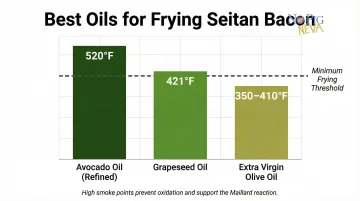
The char and crust that develop during pan-frying are what sell the bacon illusion. Low-smoke-point oils break down before the pan reaches the temperature needed to properly char the marinade.
Recommended oils by smoke point:
- Avocado oil (refined): 520°F
- Grapeseed oil: 421°F
- Extra virgin olive oil: 350–410°F (not ideal for high-heat frying)
High-smoke-point oils stay stable at the temperatures needed to trigger the Maillard reaction (browning and flavor development) without oxidizing or leaving behind bitter, rancid flavors. Medium-high heat produces the best results — too low and strips stay soft, too high and the marinade burns before the interior heats through.
Common Mistakes and How to Fix Them
Most seitan bacon problems trace back to one of five fixable missteps. Here's what to watch for:
- Under-kneaded dough produces a spongy, open crumb instead of a dense, meaty texture. Knead until the dough is noticeably resistant, elastic, and firm — not soft or pliable.
- Wrapping too tightly in foil restricts the expansion seitan needs during steaming, resulting in uneven texture or a misshapen block. Leave slack in the wrap.
- Slicing while still warm causes the seitan to compress unevenly and tear. Cool at room temperature for at least 1 hour, or refrigerate overnight — the cold set produces noticeably cleaner slices.
- Too much liquid smoke overwhelms the marinade with a harsh, almost chemical flavor. Liquid smoke is highly concentrated; start at the low end of the recipe's range and taste before adding more.
- Frying on too-high heat burns the maple syrup in the marinade before the strips have time to caramelize properly. Use medium-high heat, flip frequently, and reduce the heat at the first sign of rapid darkening.
Alternatives to Seitan Bacon
Seitan bacon delivers strong flavor and protein, but it isn't the right fit for everyone. Those with celiac disease or gluten intolerance can't eat it, and sometimes the prep time isn't practical. If either applies, NoPigNeva carries ready-made vegan bacon-style products that skip the dough-making entirely. These three alternatives also cover different needs depending on your priorities.
Tempeh Bacon
A fermented whole-food option with a firm, nutty bite — and 19.9g of protein per 100g. Best for:
- Gluten-free diets that still need a protein-dense bacon substitute
- Cooks who want minimal prep without sacrificing nutrition
Worth noting: tempeh has a grainy texture rather than seitan's meaty chew, and it needs a good marinade to develop smoky-sweet depth.
Rice Paper Bacon
Thin, shatteringly crispy strips that look nearly identical to traditional bacon — ideal for BLTs or any dish where visual presentation matters. No dough involved, so prep is fast. The trade-offs:
- Very low in protein (0.25g per 5g sheet) — not filling on its own
- Fragile during cooking and doesn't reheat well; best served immediately
Tofu Bacon
Firm tofu sliced thin and marinated with smoky-sweet seasonings is the most accessible gluten-free option — widely available and straightforward to prepare. It carries roughly 15.8–17.3g of protein per 100g and works well in scrambles, wraps, and salads. The trade-offs:
- Softer texture — doesn't replicate seitan's meaty chew
- Needs pressing and adequate marinating to develop real flavor
Frequently Asked Questions
What is seitan bacon made of?
Seitan bacon is made primarily from vital wheat gluten—the protein component of wheat—combined with flavorings like smoked paprika, liquid smoke, tamari, maple syrup, and tomato paste to replicate the smoky, savory taste of traditional bacon.
What kind of meat is seitan?
Seitan is not meat at all—it is made entirely from wheat gluten, the protein found in wheat. It is called "wheat meat" informally because its dense, chewy texture resembles cooked meat when properly prepared.
Is seitan bacon healthy?
Seitan bacon is high in protein and lower in saturated fat than pork bacon, but can be high in sodium depending on how much soy sauce and salt the recipe contains. Pork bacon contains 1,030–2,193mg sodium per 100g, while plain seitan contains approximately 340mg per 76g serving. It is not suitable for those with gluten intolerance.
Is vegan bacon healthier than bacon?
Seitan bacon contains less saturated fat (0g vs. 12–14g per 100g) and no dietary cholesterol (0mg vs. 99–107mg per 100g) compared to pork bacon. Pork bacon also contains sodium nitrite for curing, which seitan does not. That said, sodium levels can be comparable or higher—check the nutritional label before assuming it's the healthier choice.
How much protein is in seitan bacon?
Seitan bacon delivers approximately 22–25g of protein per 4-strip serving, making it more protein-dense than most vegan bacon alternatives like tempeh (19.9g per 100g) or rice paper (0.25g per 5g sheet).
What is the best vegan substitute for bacon?
Seitan bacon is widely considered the top choice for its meaty texture and protein content. The right pick depends on your needs: tempeh works best for gluten-free diets, rice paper delivers maximum crispiness, and store-bought vegan bacon is the easiest option when you're short on time.